Thirubuvanam silk sarees are famous for their rich texture, vibrant colors, and unique craftsmanship. If you examine these traditional South Indian drapes closely, you will notice a distinct design choice: most Thirubuvanam sarees feature mostly a single-side border.
Here is a breakdown of what this design means, how it compares to double borders, and the specific reasons behind this weaving tradition.
What is a Single-Side Border Saree?
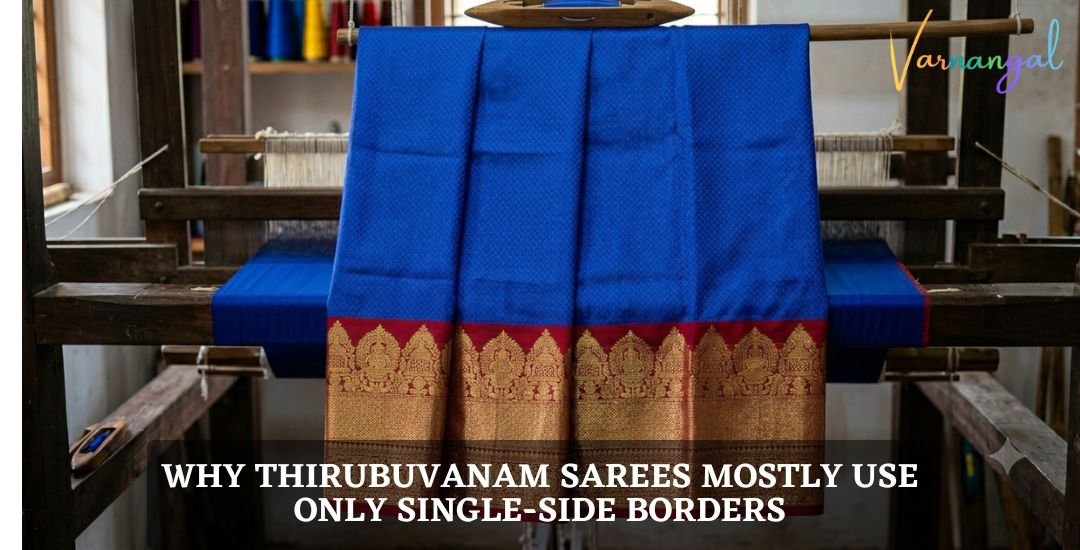
A single-side border saree features a decorative, wide border running exclusively along the bottom edge of the fabric (near the feet). The top edge of the saree (which wraps around the waist and goes over the shoulder/chest) has no border at all and remains plain, blending seamlessly with the body of the saree.
How Double-Side Bordered Sarees Look?
A double-side bordered saree features matching or symmetrical borders on both the top and bottom edges of the fabric length. When draped, one border frames the upper body across the chest and waist, while the second border runs along the bottom hemline near the feet, creating a framed visual structure.
Reasons Why Thirubuvanam Sarees Mostly Use Only Single-Side Borders
Discover why traditional Thirubuvanam silk sarees feature a unique single-side border. Explore the Korvai weaving technique, styling benefits, and histor
1. Traditional Korvai Weaving
Thirubuvanam sarees utilize the ancient Korvai technique, where the body and the border are woven separately and then joined together structurally. Weaving a single, massive border on one side creates a structurally sound joint that minimizes bulk and ensures the longevity of the handloom fabric.
2. Heavy Zari Ornamentation
These sarees are renowned for their opulent, dense pure gold and silver zari work. Incorporating such intense detailing on only one side keeps the overall weight of the saree manageable, ensuring it is comfortable to drape and carry during long wedding rituals.
3. Cost Efficiency
Authentic zari and premium 3-ply silk threads significantly increase production costs. Confining the elaborate craftsmanship to a single-side border drastically reduces the requirement for expensive precious metal threads, keeping the final retail price competitive without compromising on luxury.
4. Distinct Visual Aesthetic
Without a top border to interrupt the fabric, a single-side border provides a massive, continuous canvas of solid contrast color from the shoulder downward. This layout creates a dramatic visual contrast between the clean body and the intricate, temple-inspired bottom border.
5. Creates a Slimmer Look
From a styling perspective, removing the top border prevents the waist and chest area from looking bulky. The uninterrupted color flow combined with a bold focal point at the feet visually elongates the body, creating a taller and slimmer silhouette for the wearer.
Conclusion
The preference for single-side borders in Thirubuvanam silk sarees is a perfect blend of weaving practicality, cost management, and visual styling. By focusing all the artistic detail on a single edge, weavers preserve historical Korvai traditions while delivering a grand, lightweight, and flattering garment for modern wearers.
Abirami R – I grew up watching the women in my family drape themselves in vibrant colors, which made me realize that a saree carries both grace and history. With my husband Rajarajan’s encouragement, I turned this fascination into a mission to help you find truly authentic Tamil Nadu weaves. I’ve spent years learning the technical side, like zari weight and thread strength, to protect you from misinformation and help you find pieces worth passing down. My goal is to teach you the soul of the heavy Thirubuvanam silk saree so you can identify a real masterpiece for yourself.
Enjoyed this? Share the love with your network!Share this content


Pingback: How to Identify a Genuine Thirubuvanam Silk Saree?
Pingback: Why Buying Thirubuvanam Sarees Online is the Better Option
Pingback: Why one-side border Thirubuvanam pattu sarees are trending?
Pingback: Are Authentic Thirubuvanam Silk Sarees Handloom? What You Need to Know
Pingback: Why Thirubuvanam Pattu is the Best Choice for Long Wedding Events
Pingback: Understanding the Retta Pettu Border in Thirubuvanam Silk Sarees