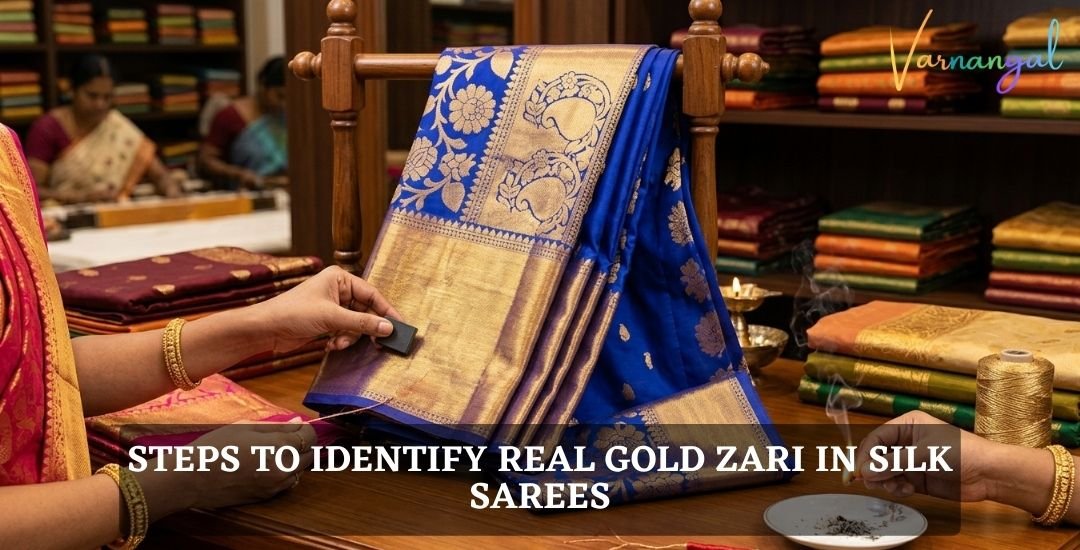
Investing in a Kanchipuram, Banarasi, or Thirubuvanam silk saree is more than just a purchase; it is an investment in an heirloom. However, with “tested zari” and “imitation zari” flooding the market, even seasoned shoppers can be misled. This guide provides a professional roadmap to distinguish pure gold zari from synthetic alternatives, optimized for on-the-spot checks and long-term verification.
How to Identify Real Gold Zari - On-the-Spot Checks (In-Store Inspection)
When you are at a boutique or weaving society, use these tactile and visual cues to verify the metallic thread quality before billing.
1. The Magnet Test
Real gold and silver are fundamentally non-magnetic materials. When you are in the showroom, carry a small fridge magnet and move it gently over the pallu or the heavy borders where the zari work is most concentrated. If the magnet sticks, pulls, or shows even the slightest attraction to the fabric, it is a clear sign that the zari contains cheap ferrous metals like iron or steel. Authentic zari will have absolutely zero reaction to the magnet, confirming the presence of precious silver and gold.
2. The Glow & Luster
The visual profile of real zari is distinct because it is made of electroplated gold over a silver wire. It emits a soft, warm, and understated glow that feels deep and elegant. In contrast, imitation zari is often made of copper or polyester films that create a harsh, “glittery,” or mirror-like yellow shine. This “plastic” luster lacks the sophisticated depth of real metal and often looks like tinsel under bright showroom lights.
3. Weight and Drape
Pure silver and gold have high density, which adds a significant “heft” to the garment. A handloom silk saree featuring real zari will feel notably heavier, usually ranging from 700g to 1.2kg. Beyond just the weight, the real metal allows the saree to drape fluidly against the body. Synthetic or copper-core zari is often stiff and rigid, making the pleats stand out awkwardly rather than falling with the natural grace of real silk and gold.
4. Reverse Side Inspection
One of the most reliable ways to check the warp and weft is to flip the fabric over and look at the back. Real zari traditionally uses a pure silk core—usually red or orange—around which the silver wire is twisted. On the reverse side, the zari should look like a dull reddish-silver. If the zari looks identical and bright yellow on both the front and the back, it is likely a synthetic thread that has been dyed to look like gold throughout.
5. The Rub Test
This is a simple tactile check you can perform on an inconspicuous corner of the saree. Gently rub a small area of the zari between your fingers or scratch it very lightly with a fingernail. Real zari is durable and its color is integrated into the metal plating. If the gold color easily flakes away or rubs off to reveal a white, blackish, or green base, you are dealing with a cheap imitation that will tarnish quickly.
Buying Real Silk Sarees Online
Online shopping requires a different set of verification tools. Use these digital checkpoints to ensure authenticity.
6. Silk Mark QR Code
Look for the Silk Mark Organization of India (SMOI) tag, which is a government-backed guarantee of purity. Authentic sellers will be happy to provide a photo of the specific tag attached to your saree. Use the Silk Mark mobile app to scan the QR code; this allows you to verify the weaver’s credentials and ensure the tag is not a counterfeit reproduction.
7. High-Resolution Zoom
When browsing the gallery, zoom in as closely as possible on the motifs. Real zari motifs are intricate and integrated seamlessly into the fabric by the weaver. In imitation sarees, the motifs often look “stamped on” or show loose, fuzzy threads at the edges. Genuine zari will show a clean, crisp metallic line where the thread turns during the weaving process.
8. Video Call Requests
Never rely solely on studio photos that can be color-corrected. Request a “motion video” or a live WhatsApp call. Observe how the light hits the gold work as the fabric moves. Real zari should reflect light with a consistent, warm shimmer. If the saree looks like it is covered in glitter or has a blinding, flat sparkle on camera, it is likely “tested” or plastic-based zari.
Post-Purchase & Expert Verification
Once the saree is in your possession, or if you are assessing an old family heirloom, these tests offer 100% certainty.
9. The Burn Test
This is the absolute “gold standard” of home testing. Carefully pull a single loose zari thread from the inner hem or the edge of the pallu and light it with a match. Real Zari will smell unmistakably like burnt hair because of its pure silk core and will leave behind a soft, dull grey ash which is the silver residue. Fake Zari will smell like burning chemicals or paper and will melt into a hard black plastic bead that does not crumble.
10. XRF Machine Analysis
For high-value investments like a bridal lehenga or an expensive Kanjivaram, take the saree to a reputable jeweler or a textile testing lab. They use an X-ray Fluorescence (XRF) scanner which can non-destructively determine the exact percentage of silver and gold used in the thread. This provides a scientific certificate of purity without damaging a single thread of your saree.
11. Aging & Patina
Real gold zari is an investment that changes beautifully over time. Unlike cheap alloys, it does not “rust” or flake. Instead, it develops a graceful, dark patina over decades, giving vintage sarees a rich, antique look. If your zari turns bright green, starts peeling, or develops a blackish crust, it is a sign of a copper-based alloy or imitation metal that has reacted with the oxygen in the air.
Conclusion
Whether you are looking for a bridal lehenga or a traditional Kanjivaram, understanding the nuances of pure zari vs. tested zari ensures your money is well-spent. Always prioritize buying from authorized weaving societies or trusted brands that provide a Zari Authenticity Certificate.
Abirami R – I grew up watching the women in my family drape themselves in vibrant colors, which made me realize that a saree carries both grace and history. With my husband Rajarajan’s encouragement, I turned this fascination into a mission to help you find truly authentic Tamil Nadu weaves. I’ve spent years learning the technical side, like zari weight and thread strength, to protect you from misinformation and help you find pieces worth passing down. My goal is to teach you the soul of the heavy Thirubuvanam silk saree so you can identify a real masterpiece for yourself.
Enjoyed this? Share the love with your network!Share this content





Pingback: Why Thirubuvanam Sarees Mostly Use Only Single-Side Borders?
Pingback: Why Buying Thirubuvanam Sarees Online is the Better Option
Pingback: Why Do Thirubuvanam Silk Sarees Not Crease Easily?
Pingback: What is the Porai Technique in Thirubuvanam Pattu Weaving?