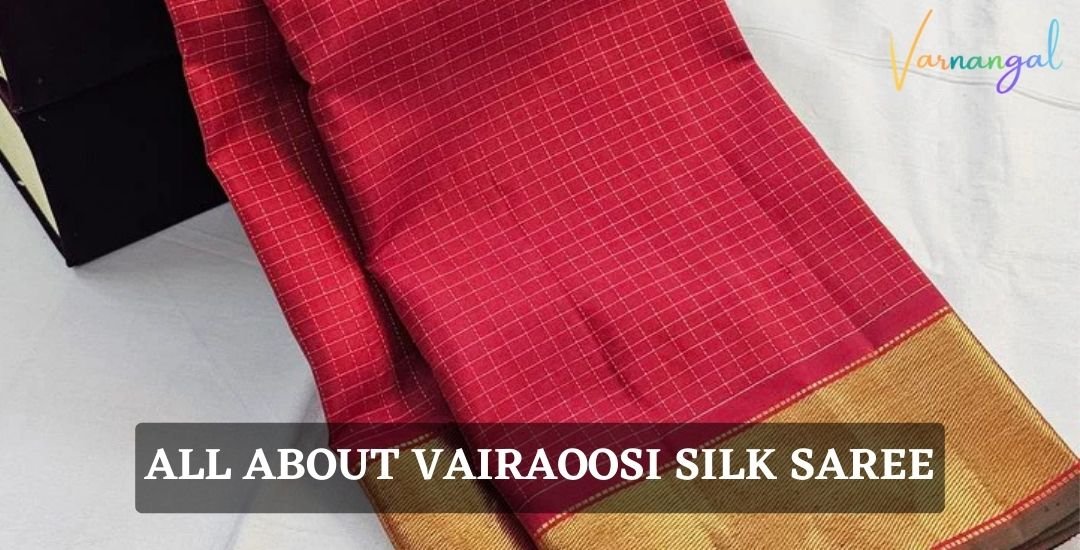
South Indian silk is famous for its bold colors and heavy gold borders, but there is a more subtle, highly prized style that collectors truly love: the Vairaoosi Silk Saree. If you’ve ever admired a Kanchipuram or Thirubuvanam saree and noticed delicate, vertical metallic threads shimmering across the fabric, you’ve seen this “diamond needle” masterpiece in person. It’s a design that feels both traditional and incredibly sophisticated.
Understanding the Name: "Vairaoosi"
The word “Vairaoosi” (often spelled Vaira Oosi) is derived from two Tamil words:
Vairam: meaning “Diamond.”
Oosi: meaning “Needle.”
Together, “Vairaoosi” translates literally to “Diamond Needle.”
This poetic name describes the core defining feature of the saree: extremely fine, parallel, vertical lines of metallic zari that are meticulously woven throughout the entire body of the silk. These lines are so thin and delicate that they are likened to a needle’s edge, yet they catch the light with a brilliance that evokes the shimmer of a diamond.
The Technique: How It is Made
The creation of a Vairaoosi pattern is a labor-intensive process that requires exceptional skill.
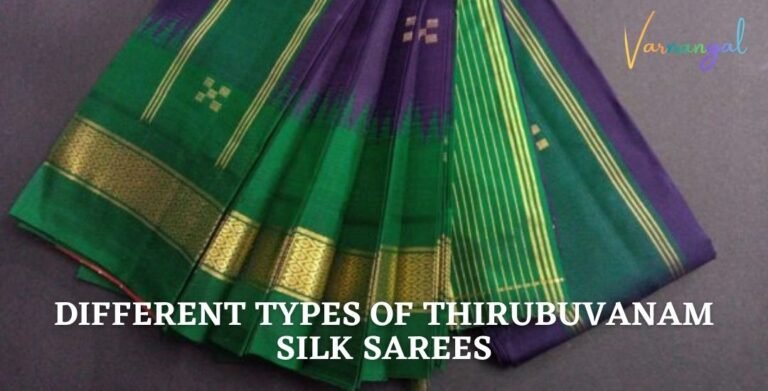
Unlike sarees where a large jacquard pattern is introduced during the weaving of the body, Vairaoosi requires the zari thread (which is silver thread coated in 24k gold) to be introduced as warp threads. This means the fine metallic threads run vertically alongside the silk warp threads, integrated seamlessly into the structural weave.
Each delicate vertical line is spaced just a few millimeters apart, running consistently from the shoulder pleats right down to the inner edge. This creates a fine, sophisticated pinstripe effect on the base silk color. The spacing must be perfectly uniform; even a slight misalignment would disrupt the delicate, linear flow of light across the fabric.
One Heritage, Two Pillars: Kanchipuram and Thirubuvanam
While the Vairaoosi technique is an ancient art form found throughout the heritage weaving belts of Tamil Nadu, two towns are synonymous with its perfection: Kanchipuram and Thirubuvanam. They represent two pillars of the same heritage, each adding its own unique accent to this magnificent style.
1. The Kanchipuram Vairaoosi: Subtlety and Structure
The world-famous Kanchipuram (Kanjivaram) weavers are legendary masters of structure and density. A classic Kanchipuram Vairaoosi saree often prioritizes contrast and definition.
In a Kanchipuram weave, the Vairaoosi lines are incredibly fine and densely spaced, designed to complement, not overpower, the grand Korvai borders and elaborate Pallu (end-piece). Kanchipuram is unique in using the separate-shuttle Korvai technique, where the heavy, elaborate border and the delicate pinstriped body are woven on separate looms and interlocked, creating a clear, dramatic separation.
A Kanchipuram Vairaoosi is beloved for its crisp drape and the structural elegance it lends to the wearer. The shimmer is a sophisticated shimmer-and-glint, a fine light dancing across a strong, substantial base.
2. The Thirubuvanam Vairaoosi: Luster and Fluidity
Just a few hours away near Thanjavur lies Thirubuvanam, a historic weaving center also renowned for producing spectacular Vairaoosi silk.
Thirubuvanam silk sarees are celebrated for an exceptional quality: their intense luster. This unique sheen comes from the high twist and superior quality of mulberry silk used, but it is magnified by the way they integrate Vairaoosi.
The Vairaoosi in a Thirubuvanam saree is often slightly bolder, utilizing heavy gold zari. The effect is a continuous, fluid pool of light rather than the defined glint seen in Kanchipuram. The Thirubuvanam saree is often made in one piece (without the dramatic Korvai technique), giving it a exceptionally smooth, unbroken, and flowing silhouette.
While a Kanchipuram Vairaoosi has a classic, defining structure, a Thirubuvanam Vairaoosi has a luxurious, soft drape and a shimmering surface that is unparalleled. It is often heavier in silk weight but feels incredibly fluid.
When to Wear a Vairaoosi Silk Saree
The beauty of the Vairaoosi pattern is its versatility. It is a technique that transcends trends, offering a balance of tradition and understated modernity.
Weddings and Grand Events: Traditionally, a Vairaoosi, especially the rich Thirubuvanam variant with heavy zari, is a spectacular choice for a bride, a wedding reception, or any major celebratory occasion where its unparalleled sheen can take center stage.
Festivals: A lighter Kanchipuram Vairaoosi in a vibrant color is perfect for festive wear, offering elegance without being overly ostentatious.
Formal Galas: Because the Vairaoosi is essentially a sophisticated pinstripe, it has an inherent formality that works beautifully for high-end galas and formal dinners.
Conclusion
The Vairaoosi silk saree is more than just a garment; it is a shimmering testament to Tamil Nadu’s living textile heritage. It represents the incredible skill of master weavers from Kanchipuram and Thirubuvanam who, with single, fine strokes of metallic thread, transform silk into a field of diamonds. Whether you prefer the architectural elegance and crisp drape of the Kanchipuram heritage or the luxurious, unmatched luster and fluid drape of Thirubuvanam, a Vairaoosi silk saree is an investment in timeless, understated beauty that will never fade.
Abirami R – I grew up watching the women in my family drape themselves in vibrant colors, which made me realize that a saree carries both grace and history. With my husband Rajarajan’s encouragement, I turned this fascination into a mission to help you find truly authentic Tamil Nadu weaves. I’ve spent years learning the technical side, like zari weight and thread strength, to protect you from misinformation and help you find pieces worth passing down. My goal is to teach you the soul of the heavy Thirubuvanam silk saree so you can identify a real masterpiece for yourself.