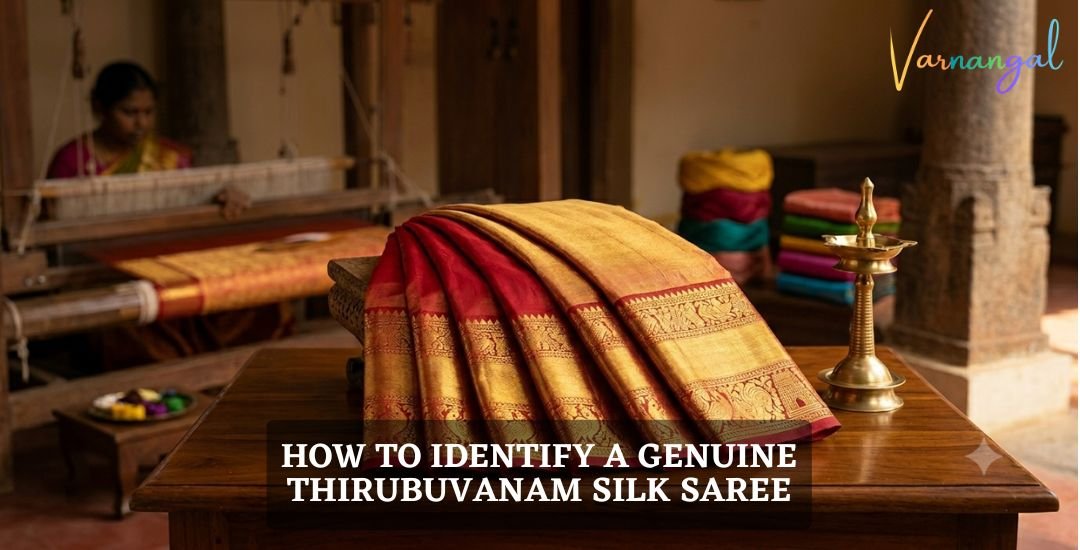
Short Answer: An authentic Thirubuvanam silk saree is a light, handloom masterpiece (500g–700g) woven with 3-ply filature silk and pure zari. Key identifiers include its signature single-side border, unique fan-fold (Visiri Madippu) packaging, slight handloom irregularities, and an official cooperative GI tag certification.
When it comes to South Indian handloom heritages, the heavy silk masterpieces woven in the temple town of Thirubuvanam hold a legendary status. Tucked away near Kumbakonam in the Thanjavur district of Tamil Nadu, this weaving cluster has produced some of the finest silks in India for generations. However, with powerloom imitations and counterfeit fabrics flooding the online and offline markets, finding a real masterpiece requires a trained eye.
If you are looking to invest in an authentic piece, this detailed guide will walk you through the history, unique traits, and exact technical checkpoints needed to verify a genuine Thirubuvanam pattu saree.
What is a Thirubuvanam Silk Saree? History and Heritage
Thirubuvanam silk sarees are heavy, lustrous heirlooms known for their rich texture, pure gold and silver zari work, and exceptional durability. The art of weaving in this region dates back several centuries, deeply intertwined with the patronage of the Chola dynasty. Local weavers, primarily belonging to the traditional Saurashtra community who migrated to Tamil Nadu, settled in this temple town and dedicated their craftsmanship to creating magnificent drapes for royalty and deities.
What sets Thirubuvanam apart from other weaving hubs is the strict institutional structure maintained by local weavers’ cooperative societies. To protect this ancient craft from being diluted by cheap machine-made alternatives, the Thirubuvanam silk saree was granted the prestigious Geographical Indication (GI) tag by the Government of India. This legal protection ensures that only sarees hand-woven within the defined geographic boundaries of Thirubuvanam using specific traditional techniques can rightfully bear the name.
How to Identify a Genuine Thirubuvanam Silk Saree
Identifying an authentic handloom piece involves looking closely at the structural engineering of the fabric, the behavior of the weave, and official government certifications. Use these key checkpoints to verify your purchase:
1. Visiri Madippu (The Fan Fold)
The most iconic and visual giveaway of a genuine Thirubuvanam saree is its unique folding style, known locally as Visiri Madippu. Unlike standard sarees that are folded in flat rectangles, a Thirubuvanam weaver folds the saree using a distinct hand-fan pleating method directly on the loom as soon as the weaving is completed.
This is not just for aesthetics; the fan fold is a functional tradition designed to protect the heavy, pure gold zari from friction and creasing. When you buy an authentic piece from a cooperative society, it will always be presented in this traditional fan-pleat format.
2. Single-Side Border
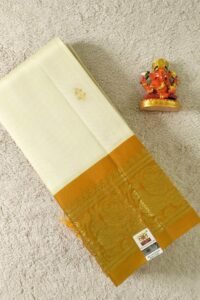
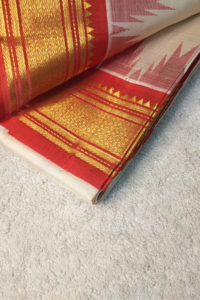
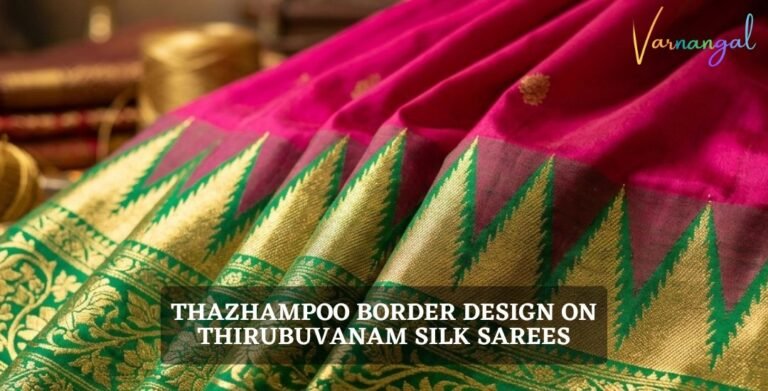
Traditional layout design is a primary indicator of origin. While Kanchipuram sarees are widely recognized for having symmetrical borders on both the top and bottom edges, a classic Thirubuvanam pattu saree features a distinct, wide border on only one side. The top edge (the part tucked into the waist) is usually kept minimal or entirely borderless, allowing the grand design on the bottom border to take full prominence.
3. Lightweight Comfort
Unlike traditional thick drapes, modern Thirubuvanam sarees are crafted to feel light, soft, and easy to wear. Woven with refined silk and flexible zari threads, they offer a comfortable, airy feel that is effortless to wear all day without sacrificing elegance.
4. Silk Mark Label
For absolute authenticity, look for the official Silk Mark label on your saree. Sourced through trusted channels, this official seal guarantees 100% pure natural silk tested for quality, ensuring your handloom saree is genuine, certified, and crafted by authentic artisans.
5. Slight Imperfections
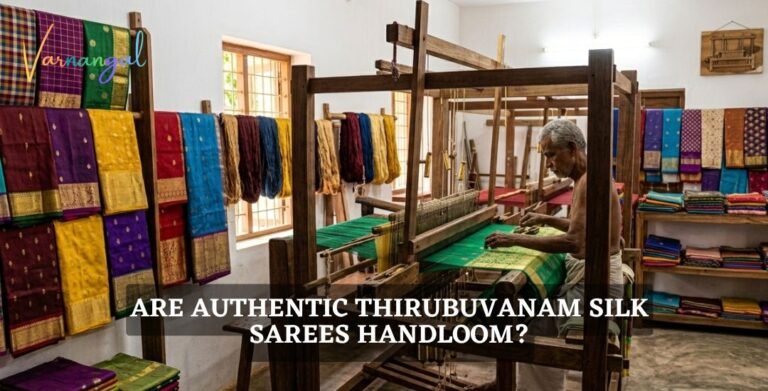
Step away from machine perfection. Because these sarees are woven manually on traditional pit looms, a close inspection will reveal minor, natural irregularities. You might notice a tiny variation in the thickness of a silk thread, a microscopic skip in a zari row, or an unevenness along the non-selvedge edges. These slight imperfections are not defects; they are the natural fingerprints of human craftsmanship and definitive proof of genuine handloom production.
Thirubuvanam vs. Kanchipuram
Thirubuvanam silk sarees stand proudly shoulder-to-shoulder with Kanchipuram sarees, matching them beat-for-beat in sheer quality, majestic weight, and heirloom value. Woven with the same ultra-dense, premium 3-ply mulberry silk and rich gold-dipped silver zari, a Thirubuvanam drape commands the exact same grand, heavy posture and brilliant luster as its Kanchipuram counterpart.
While Kanchipuram is celebrated for its double-sided symmetry and multi-shuttle joints, Thirubuvanam showcases an equally masterful but distinct structural engineering—specializing in a striking single-side border layout and its signature, loom-pleated Visiri Madippu.
Choosing a Thirubuvanam saree means investing in an elite tier of South Indian textile art that rivals the finest Kanchipuram silks in both durability and regal elegance.
Conclusion
Investing in a Thirubuvanam pattu saree means preserving a piece of South Indian history. To ensure you are getting a genuine heirloom, always check for the heavy weight of the 3-ply silk, look for the signature single-side border design, and insist on seeing the official cooperative GI tag. By understanding the fine line between the traditional single-continuous self-weave and the modern single-sliced Korvai adaptations, you can confidently navigate your online or offline shopping experience and bring home an authentic masterpiece that will last for generations.
Abirami R – I grew up watching the women in my family drape themselves in vibrant colors, which made me realize that a saree carries both grace and history. With my husband Rajarajan’s encouragement, I turned this fascination into a mission to help you find truly authentic Tamil Nadu weaves. I’ve spent years learning the technical side, like zari weight and thread strength, to protect you from misinformation and help you find pieces worth passing down. My goal is to teach you the soul of the heavy Thirubuvanam silk saree so you can identify a real masterpiece for yourself.
Enjoyed this? Share the love with your network!Share this content



Pingback: The Ultimate Guide to Thirubuvanam Korvai Border Silk Sarees
Pingback: Why one-side border Thirubuvanam pattu sarees are trending?