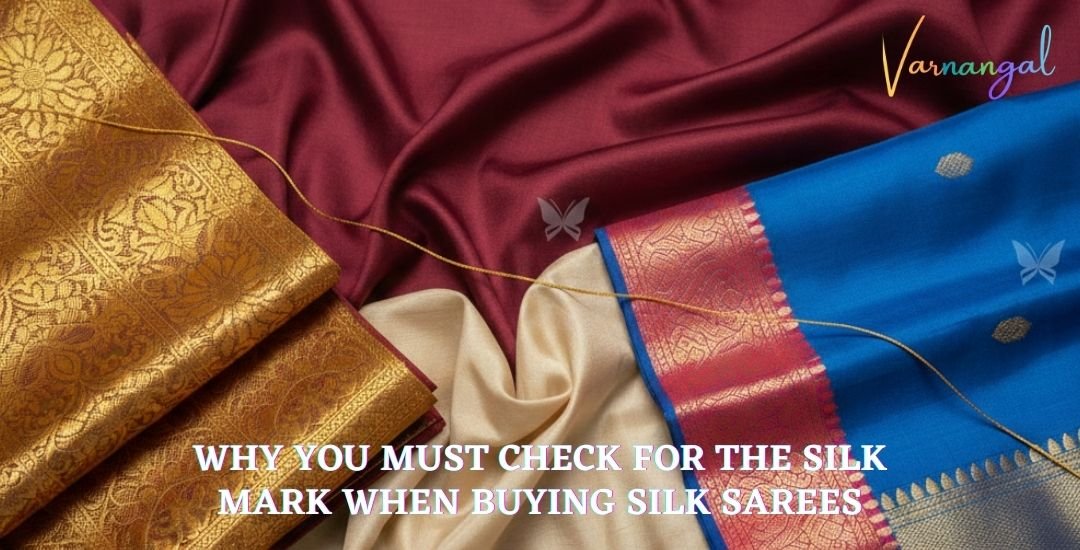

What is Silk Mark in Silk Sarees? Why You MUST Check for it?

You are currently viewing What is Silk Mark in Silk Sarees? Why You MUST Check for it?
What is silk mark and Why you must check for it

Silk is more than just a fabric in India; it is a legacy woven into the very fabric of our culture. From the grand Kanjeevarams of the South to the intricate Banarasis of the North, a silk saree is often a prized possession, an heirloom passed down through generations. However, with the market flooded with “art silk,” “synthetic blends,” and high-quality polyester imitations, how can you be certain that your expensive purchase is truly 100% natural silk?

This is where the Silk Mark becomes your most trusted ally.

What is the Silk Mark?

The Silk Mark is a certification label launched in 2004 by the Silk Mark Organisation of India (SMOI), a body sponsored by the Central Silk Board under the Ministry of Textiles, Government of India. Much like the “Hallmark” on gold or the “Agmark” on agricultural products, the Silk Mark is a quality assurance symbol.

When you see this label, it guarantees that the product—be it a saree, dress material, or scarf—is made of 100% pure natural silk.

Anatomy of an Authentic Silk Mark Label

A genuine Silk Mark is not just a simple sticker. It is designed with high-security features to prevent tampering and duplication.

  • The Iconic Logo: A stylized butterfly that symbolizes the beauty and life cycle of the silkworm.

  • Fusion-Bonded Hologram: A tamper-proof holographic strip that is difficult to replicate.

  • Unique Serial Number: Every single tag carries a unique alphanumeric code assigned to a specific authorized user (weaver or retailer).

  • QR Code: Modern tags include a scannable QR code that allows you to instantly verify the seller’s credentials on the official Silk Mark website.

Why You MUST Check for the Silk Mark When Buying Silk Sarees

Why you should check for the Silk Mark label while buying silk sarees from any shop, both online and offline—whether powerloom or handloom sarees.

1. Protection Against Counterfeits

The primary reason for the Silk Mark’s existence is the rise of “Artificial Silk” or “Art Silk.” These are essentially rayon or polyester fabrics treated to look and feel like silk. Without a certification, a layperson can easily be duped into paying thousands of rupees for a fabric that costs a fraction of the price of real silk

2. Guaranteed Purity of Fiber

Real silk is a protein fiber (produced by silkworms), while synthetic fibers are petroleum-based plastics. The Silk Mark ensures that the base fabric of your saree is 100% natural. It is important to note that the mark certifies the silk fiber purity, not the purity of the Zari (metallic thread) or the method of weaving (handloom vs. powerloom).

3. Support for Traditional Artisans

India is the second-largest producer of silk in the world. By insisting on Silk Mark certified products, you are directly supporting millions of sericulture farmers, reelers, and weavers. Counterfeit silk devalues their hard work and threatens the survival of ancient weaving traditions.

4. Traceability and Accountability

Because every Silk Mark label is numbered, there is a trail of accountability. If a certified seller is found selling fake silk under the mark, their membership is cancelled, and they face legal action. This provides a layer of consumer protection that uncertified products simply cannot offer.

Conclusion

Investing in a pure silk saree is an emotional and financial commitment. In a world where imitations are becoming indistinguishable from the real thing, the Silk Mark serves as a beacon of trust. It safeguards your money, protects our cultural heritage, and ensures that the “Queen of Textiles” remains pure. Next time you step into a boutique or browse an online store, don’t just look at the design—look for the butterfly.

This Post Has 5 Comments

Leave a Reply