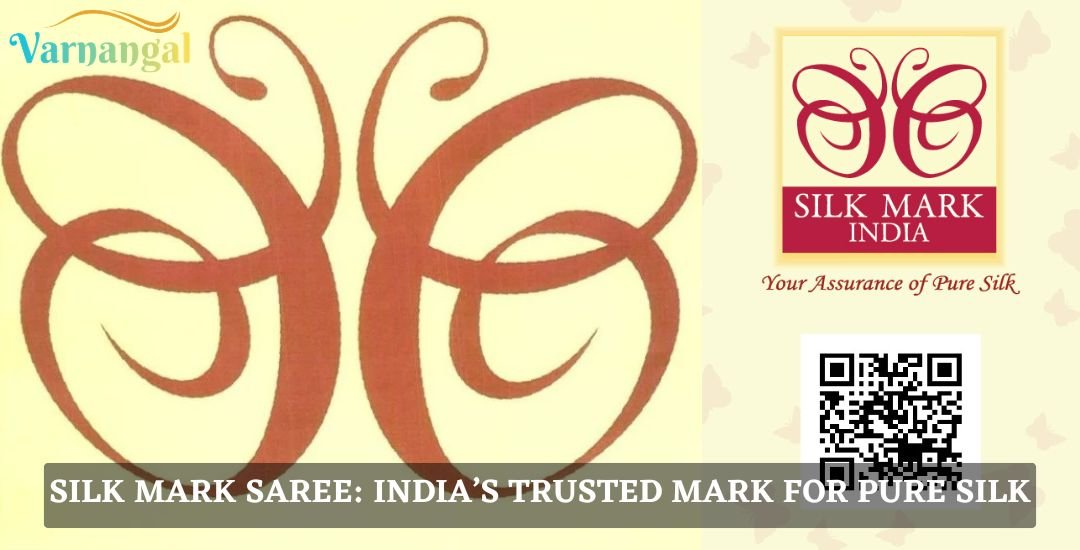
In today’s marketplace, synthetic fabrics and chemical treatments have made artificial fibers look remarkably similar to natural silk. Fine polyester blends, viscose, and art silk are routinely finished with artificial softeners and synthetic gloss to imitate the touch and sheen of genuine silk. For buyers investing in heritage textiles, distinguishing between a synthetic imitation and a genuine natural fabric requires clear industry standards.
This guide outlines how the Silk Mark label works, how to inspect its built-in security features, how to cross-check credentials online, and how to verify pure silk sarees before making a purchase.
What is Silk Mark and Why Does It Matter?
Navigating the traditional textile market often means sifting through misleading commercial names like “art silk,” “silk blend,” or “synthetic kanjeevaram.” While these fabrics serve a budget market, they are frequently mislabeled and sold at premium price points meant for natural textiles. To protect consumers and safeguard traditional textile heritage, the Central Silk Board, Ministry of Textiles, Government of India launched the Silk Mark certification scheme in 2004. The initiative is actively managed by the Silk Mark Organisation of India (SMOI).
The Silk Mark label serves as a legal quality assurance that the fabric is constructed entirely from 100% natural silk yarn across both the warp and the weft threads.
-
Prevents Overcharging: It shields consumers from paying premium silk prices for synthetic, blended, or chemically treated fabrics that lack the longevity and breathability of real silk.
-
Supports Artisan Weavers: It ensures that true economic value flows directly back to licensed handloom weavers, reelers, and legitimate production units who maintain age-old sericulture practices.
-
Guarantees Traceability: Every label contains specific registration codes that link the saree directly back to its authorized manufacturer, weaver cooperative, or registered silk merchant.
5 Physical Markers of an Authentic Silk Mark Label
Before finalizing any purchase, inspect the physical security markers integrated directly into the officially issued tag. Licensed sellers are legally required to affix these specialized tags to every certified pure silk product:
-
The Iconic Logo: The official label features a distinct stylized white butterfly motif set neatly against a green circular backdrop, representing the transformation of the silkworm and natural fiber production.
-
Holographic Strip: Look for a high-security, tamper-evident holographic foil strip embedded into the label surface. When tilted under direct light, it reflects the official logo along with the clear text reading “Promoted by Govt. of India”.
-
Unique Serial Number: Every genuine tag is printed with a distinct alphanumeric registration code. This number is unique to that specific production batch and authorized seller account.
-
Scannable QR Code: Modern Silk Mark tags include a high-density, scannable QR code. Scanning this code with a smartphone camera redirects directly to the official database to display verified registration details.
-
Tamper-Proof Adhesive: Modern Silk Mark tags are printed on security-grade, self-destructing adhesive paper. If an unauthorized entity attempts to peel the tag off to attach it to a synthetic saree, the paper tears into fragile pieces, making reuse impossible.
Quick Verification Step: You can manually cross-check any label’s alphanumeric serial code directly on the official portal (
silkmarkindia.com) under the Label Authentication search tool to confirm seller validity.
Saree Varieties Eligible for Silk Mark Certification
Any standard weave crafted exclusively from 100% natural silk filaments—whether derived from Mulberry, Tasar, Muga, or Eri silkworms—qualifies for official Silk Mark labeling:
| Saree Type | Origin | Distinctive Traits | Estimated Price Range |
|---|---|---|---|
|
Thirubuvanam |
Tamil Nadu |
3-ply mulberry silk, seamless single-warp construction, heavy gold/silver zari, and traditional Visirimadippu (fan folding). |
₹6,000 – ₹200,000+ |
|
Kanchipuram |
Tamil Nadu |
Heavy mulberry silk yarn, distinct interlocking border joints (Korvai), temple designs, and heavy metallic zari work. |
₹6,000 – ₹4,000,000+ |
|
Dharmavaram |
Andhra Pradesh |
Broad contrast borders, muted two-tone luster (brocade weaves), and heavy golden zari pallus. |
₹5,000 – ₹150,000+ |
|
Gadwal |
Telangana |
Lightweight pure silk body attached to heavy silk-zari borders using traditional interlocking techniques (Kuttu). |
₹6,000 – ₹100,000+ |
|
Mysore Silk |
Karnataka |
Smooth, lightweight fabric woven from high-twist mulberry silk, characterized by a soft sheen and elegant solid borders. |
₹6,500 – ₹25,000+ |
|
Arani Silk |
Tamil Nadu |
Lightweight pure mulberry silk, unique two-sided patterns, and rich interlocking zari borders. |
₹5,000 – ₹80,000+ |
|
Banarasi |
Uttar Pradesh |
Rich brocade weaving (Kinkhab), intricate floral vines (Bel), paisleys, and dense gold or silver brocading. |
₹5,500 – ₹300,000 |
|
Paithani |
Maharashtra |
Tapestry-style handweaving technique using bright oblique square borders and delicate peacock or lotus motifs on pure silk. |
₹10,000 – ₹120,000+ |
Silk Mark vs. Handloom Mark
Consumers frequently confuse these two government-backed certifications, but they verify completely different aspects of a textile’s manufacturing process:
-
Silk Mark: Certifies fiber purity only. It confirms that the yarn used to construct the garment consists entirely of 100% natural silk. It does not evaluate whether the yarn was woven on a traditional hand-operated loom or an automated powerloom.
-
Handloom Mark: Certifies construction methodology. Issued by the Office of the Development Commissioner for Handlooms, it guarantees that the fabric was hand-woven by human artisans using traditional looms, regardless of whether the raw thread is cotton, wool, linen, or silk.
A genuine, hand-woven pure silk saree produced by traditional artisans will often display both the Silk Mark tag and the Handloom Mark tag simultaneously, offering complete verification of both fiber quality and hand-craftsmanship.
Fact vs. Fiction: Common Misconceptions
Myth: The Silk Mark label guarantees the purity of the silver or gold used in the metallic zari borders.
Fact: The Silk Mark Organisation of India certifies natural silk yarn purity exclusively. The content of metallic threads (whether pure silver, gold-plated, or tested metallic zari) requires separate seller testing certificates or hallmarking.
Myth: Powerloom sarees are completely excluded from getting Silk Mark labels.
Fact: Machine-woven textiles made from 100% natural silk yarn are fully eligible for certification, as the program measures raw fiber purity rather than the machinery used.
Myth: Any saree displaying a Silk Mark tag is automatically handloom woven.
Fact: The weaving technique is verified under the Handloom Mark scheme, not the Silk Mark scheme. A machine-made pure silk saree can carry a valid Silk Mark tag.
Care Guidelines & Preserving Tag Authenticity
1. Fabric Maintenance Practices
-
Professional Dry Cleaning: Always opt for professional dry cleaning for the first few washes. This preserves the natural silk proteins, maintains warp tensile strength, and prevents the metallic zari from dulling prematurely.
-
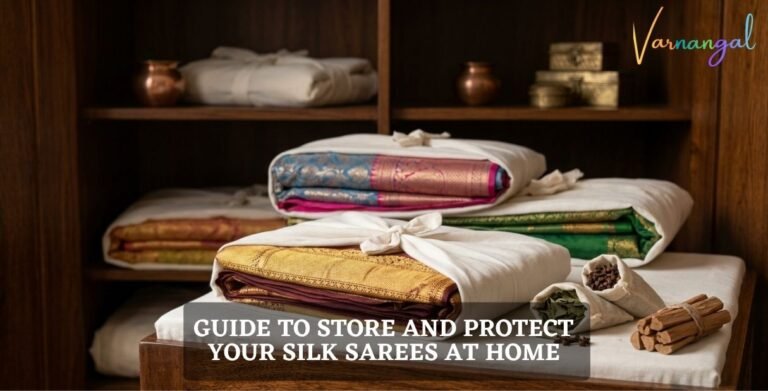
Breathable Storage: Store pure silk garments wrapped in unbleached white cotton or muslin fabric. Never store silk inside airtight plastic containers or vinyl bags, as trapped atmospheric moisture causes fiber degradation and mildew.
-
Periodic Unfolding: Take sarees out of storage every 3 to 4 months to unfold and air them in a shaded room. Refold them along different crease lines to prevent permanent fabric tearing along heavy zari borders over time.
2. Preserving Certification Documents
-
Retain the physical bill, original tags, and unique alphanumeric serial numbers in your purchase records for future identification.
-
Avoid cutting off permanently stitched authentication labels on high-value heritage weaves if you plan to preserve the saree’s appraisal, heirloom, or resale value.
Conclusion: Preserving Heritage with Every Weave
A pure silk saree is far more than a luxury garment; it represents months of painstaking craftsmanship, cultural identity, and centuries-old weaving traditions passed down through generations. By insisting on a verified Silk Mark label before completing your purchase, you protect your financial investment against sophisticated synthetic substitutes while ensuring that your spending directly supports certified weavers and legitimate artisans across India. Understanding how to read these security tags, verify serial numbers online, and care for natural silk threads ensures that your cherished silk collection retains its brilliance, structural integrity, and heirloom value for decades to come.

Abirami R – I grew up watching the women in my family drape themselves in vibrant colors, which made me realize that a saree carries both grace and history. With my husband Rajarajan’s encouragement, I turned this fascination into a mission to help you find truly authentic Tamil Nadu weaves. I’ve spent years learning the technical side, like zari weight and thread strength, to protect you from misinformation and help you find pieces worth passing down. My goal is to teach you the soul of the heavy Thirubuvanam silk saree so you can identify a real masterpiece for yourself.