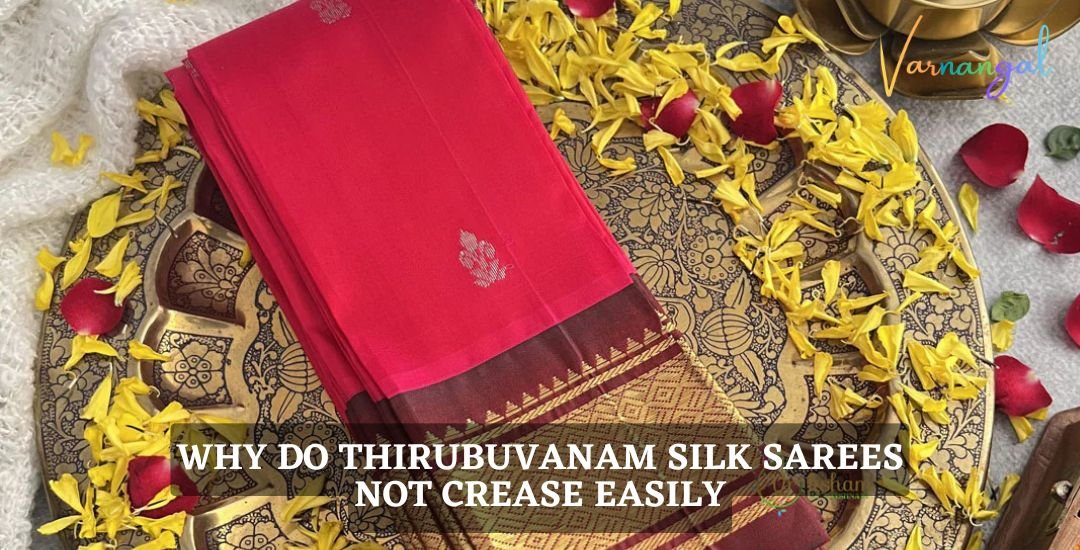
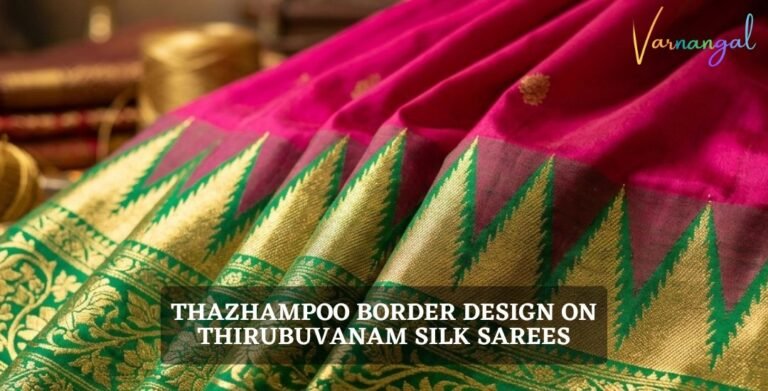
The reason Thirubuvanam silk sarees do not crease easily lies entirely in the specific textile engineering of their 3-ply filature silk construction. While regular commercial silks rely on a lighter 2-ply yarn, traditional handloom weavers in Thirubuvanam twist three individual high-grade silk filaments into a single, robust thread for both the warp and the weft. This creates an incredibly high-density, thick fabric structure with superior tensile strength and natural material resilience.
When a fabric is woven tightly with heavy-gauge, multi-ply yarns, its natural elasticity is heavily enhanced. Instead of holding sharp, compressed fold lines when sat upon or draped, the triple-twisted fibers possess a structural memory that allows the fabric to spring back into its original shape.
Furthermore, authentic Thirubuvanam sarees are known as heavyweight garments, typically weighing between 700 and 1,250 grams. This weight is a result of the dense silk count combined with a generous volume of authentic, pure silver wire coated in 22k gold zari. The physical heft of this heavy zari acts as a continuous, natural straightener. It creates a self-weighting, structured drape that uses gravity to pull down the fabric smoothly, eliminating micro-wrinkles automatically during movement.
What is Creasing in a Silk Saree?
Creasing is simply the messy wrinkle lines that form when a saree is sat on, folded, or pressed tightly. The pressure crushes the silk threads, forcing them to bend and lock into a crumpled shape instead of laying flat.
In fake synthetic silk sarees, the fibers lack the structural strength to bounce back. This leaves permanent, sharp fold marks that ruin the saree’s smooth look and elegant drape.
What is the Visiri Madipu Folding Technique in Thirubuvanam Sarees?
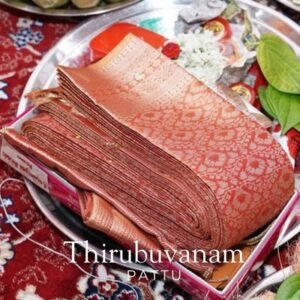
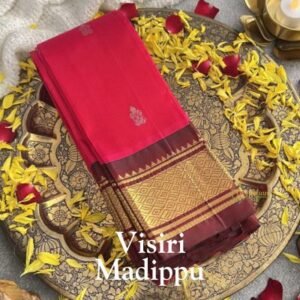
Unlike standard South Indian silks that are folded into tight squares, the Thirubuvanam silk saree is famous for Visiri Madipu, which translates literally to “Fan-Fold” (Visiri = Fan, Madippu = Fold).Instead of horizontal folds, two weavers use wooden rods to tightly pleat the saree vertically from top to bottom, rolling it into a long, thin, rectangular “scale” shape.This traditional fan-folding method follows the natural vertical grain of the high-density silk filaments.
How Does Visiri Madipu Folding Prevent Silk Creasing and Zari Cracks?
The long Visiri Madipu fold is a practical storage solution directly engineered to combat fabric wrinkling and structural damage:
Eliminating Horizontal Crease Lines:Standard square folds force horizontal folds “against the grain,” creating deep, permanent crease lines across the body.On high-gloss 3-ply silk, these fold lines distort the mirror-like luster.Visiri Madipu keeps the fabric perfectly flat, preserving its uniform shine.
Preventing Zari Cracking:Because these sarees feature stiff, heavy metallic threads, folding them into squares causes sharp corners that snap or “crack” the gold and silver wire over time.The vertical fan-fold ensures the ornate borders stay perfectly straight with zero sharp bends, keeping the precious zari unbroken for decades
Conclusion
Ultimately, the flawless, wrinkle-free nature of a Thirubuvanam silk saree is a direct outcome of its heavy 3-ply craftsmanship, continuous single-warp integrity, and the ingenious Visiri Madipu folding technique.This unique structural density and care ensure that the saree preserves a sharp, pristine, and entirely crease-free look throughout long hours of wear at grand events.
Abirami R – I grew up watching the women in my family drape themselves in vibrant colors, which made me realize that a saree carries both grace and history. With my husband Rajarajan’s encouragement, I turned this fascination into a mission to help you find truly authentic Tamil Nadu weaves. I’ve spent years learning the technical side, like zari weight and thread strength, to protect you from misinformation and help you find pieces worth passing down. My goal is to teach you the soul of the heavy Thirubuvanam silk saree so you can identify a real masterpiece for yourself.
Enjoyed this? Share the love with your network!Share this content