For nine nights every autumn, Tamil homes turn one corner of the house into a little world of dolls. Gods and goddesses sit on the top step, saints and wedding processions fill the middle, and village scenes and tiny kitchen sets spread across the bottom. Neighbours drop in each evening, a song is sung, sundal is shared, and every woman leaves with thamboolam. This is Navaratri Golu, also called Bommai Golu or Kolu.
This guide explains what golu means, when to set it up in 2027, how many padi (steps) to use, which dolls go on which step, and what happens on each of the nine days, up to Saraswati Puja and Vijayadashami. Every family has its own way, so take this as the common thread. Varnangal is a Chennai seller of handloom silk sarees woven in Thirubuvanam.
Quick Answer: What Is Navaratri Golu?
Navaratri Golu is the Tamil tradition of arranging dolls on an odd number of steps (usually 3, 5, 7 or 9) during the nine nights of Navaratri, to honour the Goddess in her forms as Durga, Lakshmi and Saraswati. Deity dolls go on the top steps, saints and holy figures in the middle, and scenes of daily life and toys at the bottom. A kalasam is set up as the Goddess, women and children visit each other’s golu in the evenings, sundal is offered and shared, and the display is taken down after Vijayadashami, when a pair of wooden marapachi dolls is laid down to “sleep” until next year.
Navaratri Golu 2027: Key Dates
Navaratri 2027 begins on Thursday, 30 September 2027, according to Drik Panchang. Most Tamil families set up the golu and the kalasam on Mahalaya Amavasya, the new moon day of Purattasi just before Navaratri, so the dolls are ready for the first evening.
| Day | Date (2027) | What happens |
|---|---|---|
|
Mahalaya Amavasya |
The new moon before Navaratri |
Golu steps and kalasam are set up |
|
Navaratri begins |
Thursday, 30 September |
First evening of golu, pooja and sundal |
|
Days 1 to 3 |
30 Sep to 2 Oct |
Worship of Durga |
|
Days 4 to 6 |
3 to 5 Oct |
Worship of Lakshmi |
|
Days 7 to 9 |
6 to 8 Oct |
Worship of Saraswati |
|
Saraswati Puja and Ayudha Puja |
Friday, 8 October |
Books, instruments and tools are worshipped |
|
Vijayadashami |
Saturday, 9 October |
Vidyarambham; marapachi dolls put to sleep |
Dates of individual days can shift by a day with the tithi in your city, so check your local panchangam for exact timings.
What Golu Means and Where It Comes From
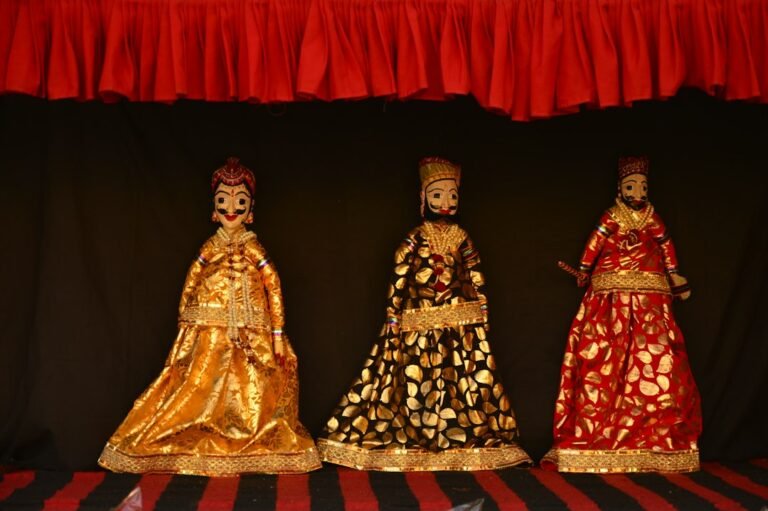
Golu (or kolu) is often explained as a royal court or assembly, and the steps are described as the court of the Goddess. One popular story says that when Goddess Durga went to battle the demon Mahishasura, the other gods gave her their powers and stood still beside her. The dolls on the steps stand for them, as silent witnesses while she is worshipped.
Golu is believed to go back to the Vijayanagara kingdom in the 14th century, and it was especially popular with the royal families of Thanjavur and Pudukkottai in Tamil Nadu, as the National Library Board of Singapore’s article on Navaratri Golu notes. In a time when most people could not read, golu was also a way to tell stories from the Ramayana, the Mahabharata and the Puranas to children, one doll at a time.
How Many Steps (Padi) Should a Golu Have?
Golu steps are always odd in number, because odd numbers are considered auspicious. Most homes use 3, 5, 7 or 9 steps, and some large displays go up to 11. Nine steps is the most common choice in homes with space, as it matches the nine nights. The steps are covered with a clean white cloth, often a cotton veshti, before the dolls go on.
Families who are just starting often begin with three steps and add more as their doll collection grows. Ready-made metal golu stands (golu padi) are easy to find in markets before Navaratri, and many families build steps from tables, boxes and planks instead.
Which Dolls Go on Which Step
The arrangement follows a simple idea: the higher the step, the higher the being. A common nine-step order looks like this.
| Step | What usually goes here |
|---|---|
|
1 (top) |
The kalasam, Ganesha, and the Goddess as Durga, Lakshmi and Saraswati |
|
2 |
Other deities, such as Shiva and Parvati, Vishnu, Murugan |
|
3 |
Avatars and epic scenes, such as Dasavatharam, Rama’s coronation, Krishna’s stories |
|
4 |
Saints, sages and devotees, such as the Alwars and Nayanmars |
|
5 |
Great kings, leaders and well-known figures |
|
6 |
Festivals and ceremonies, such as wedding sets (kalyana set) and temple processions |
|
7 |
Everyday life: village scenes, markets, music and dance |
|
8 |
Animals, birds and plants |
|
9 (bottom) |
Toys, small kitchen sets (sopu saman) and Thanjavur bobble-head dolls |
With fewer steps, simply keep the same order and combine levels: gods at the top, people in the middle, and the world around us at the bottom.
The Marapachi Dolls and the Kalasam
Marapachi Bommai
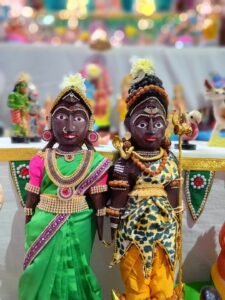
Every traditional golu has a pair of wooden dolls called marapachi bommai, usually a man and a woman, often seen as Lord Venkateshwara and Goddess Mahalakshmi. They stand for prosperity and a happy family. Many mothers give their daughter her own pair of marapachi dolls when she marries, so that she can start a golu in her new home, much like the other gifts in seer varisai. The dolls are dressed in tiny clothes and jewellery each year.
The Golu Kalasam
A brass or silver pot filled with water (or rice in some homes) is set up as the Goddess. Mango leaves are placed in its mouth, a coconut sits on top, and it is decorated with flowers. It is worshipped every day of Navaratri with lamps, flowers and naivedyam.
How to Set Up Golu at Home, Step by Step
- Clean the space a few days before and choose a wall where guests can see the steps easily.
- Set up the steps on Mahalaya Amavasya and cover them with a white cloth.
- Place the kalasam and Ganesha on the top step first, then the Goddess.
- Arrange the other dolls step by step, from the top down, with the marapachi pair in a place of honour.
- Add a park or theme on the floor in front if you like, such as a temple, a village or a garden made with sand and seedlings.
- Draw a kolam in front of the steps and light the lamps.
- Do the evening pooja each day, offer the day’s sundal, and invite guests.
If you love kolam, our post on Margazhi month and kolam has more on the tradition.
Sundal, Songs and Thamboolam: The Evenings of Golu
Golu is as much about people as it is about dolls. Each evening, women and girls visit the golu in friends’ and relatives’ homes, often in silk sarees and pattu pavadai. The hosts welcome them, a short pooja or aarti is done, and guests are asked to sing a song for the Goddess.
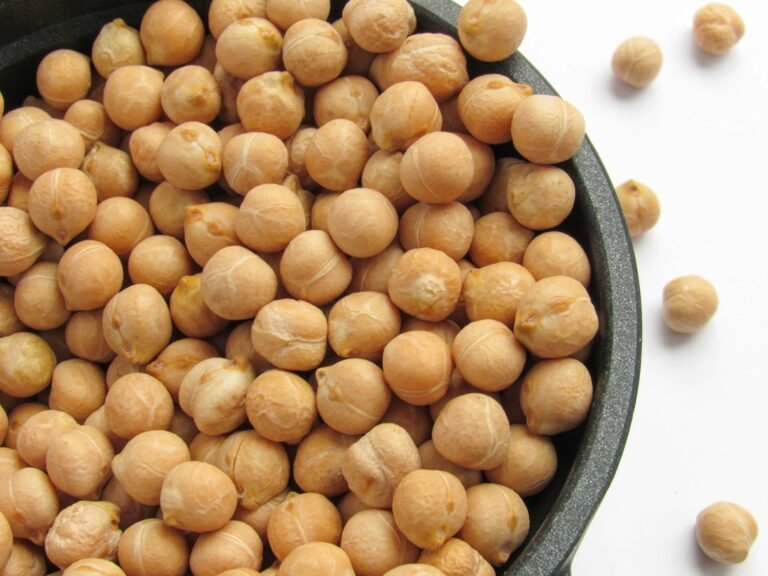
Every day a sundal is offered and shared: a simple dish of boiled legumes tempered with mustard, curry leaves and grated coconut. Families make a different one on different days, using chickpeas, green gram, black-eyed peas, peanuts or other lentils. Sweets such as payasam and sweet pongal are also offered on some days.
As each guest leaves, she is given thamboolam: betel leaves and areca nut, turmeric and kumkum, flowers, fruit, a small sweet and often a small gift. It is the same thamboolam given at Varalakshmi Vratham, and it carries the same idea of sharing the Goddess’s blessings.
Saraswati Puja, Ayudha Puja and Vijayadashami
On the ninth day, Saraswati Puja, books, notebooks and musical instruments are placed before the Goddess of learning and are not used for the day. The same day is Ayudha Puja, when tools, machines and vehicles are cleaned and worshipped, from a tailor’s scissors to the family car.
The tenth day, Vijayadashami, celebrates the Goddess’s victory. It is considered a good day to begin learning, so young children are often taught to write their first letters in rice (Vidyarambham), and many people start music or dance lessons on this day. In the evening, the marapachi dolls are laid down, a sign that the golu is ending, and the dolls are later wrapped carefully and stored until next year.
Golu vs the Navaratri Colours: Two Traditions
Golu is the old home tradition of Navaratri in Tamil Nadu. In recent years, many women also follow a colour for each of the nine days. The two go together well: many visitors plan their saree or pattu pavadai for golu visits around the day’s colour. See our guide to silk saree colours for Navaratri for the full list of colours.
Conclusion
Navaratri Golu brings together everything Tamil families love about festivals: stories passed down through dolls, evenings full of songs and visitors, simple food shared with everyone, and gifts of thamboolam. Whether you build three steps or nine, what matters is the care you put into the arrangement and the people you invite to see it.
To see how golu fits into the wider story of Tamil dress and festivals, read our guide to the traditional dress of Tamil Nadu. If you are choosing a silk saree for golu visits, browse our handloom pure silk sarees, or call 9965121353 and we will help you choose.
Frequently Asked Questions (FAQ)
What is golu in Navaratri?
Golu is the South Indian tradition of arranging dolls on an odd number of steps during the nine nights of Navaratri to honour the Goddess. Families invite guests in the evenings, offer sundal and give thamboolam.
How many steps should a golu have?
Golu steps are always odd in number. Most homes use 3, 5, 7 or 9 steps, and nine is the most common when there is space.
When should we keep golu in 2027?
Most families set up golu on Mahalaya Amavasya, the new moon just before Navaratri. Navaratri 2027 begins on Thursday, 30 September, and Vijayadashami falls on Saturday, 9 October 2027.
What are marapachi dolls?
Marapachi dolls are a pair of wooden dolls, usually a man and a woman, kept in every traditional golu. They stand for prosperity and family, and are often given by a mother to her daughter at marriage.
What is offered as prasadam during golu?
A sundal made from chickpeas, green gram, peanuts or other legumes is offered each day, along with sweets on some days. Guests receive thamboolam when they leave.
When is golu removed?
Golu is removed after Vijayadashami. On that evening the marapachi dolls are laid down to sleep, and the dolls are wrapped and stored for the next year.

Abirami R – I grew up watching the women in my family drape themselves in vibrant colors, which made me realize that a saree carries both grace and history. With my husband Rajarajan’s encouragement, I turned this fascination into a mission to help you find truly authentic Tamil Nadu weaves. I’ve spent years learning the technical side, like zari weight and thread strength, to protect you from misinformation and help you find pieces worth passing down. My goal is to teach you the soul of the heavy Thirubuvanam silk saree so you can identify a real masterpiece for yourself.