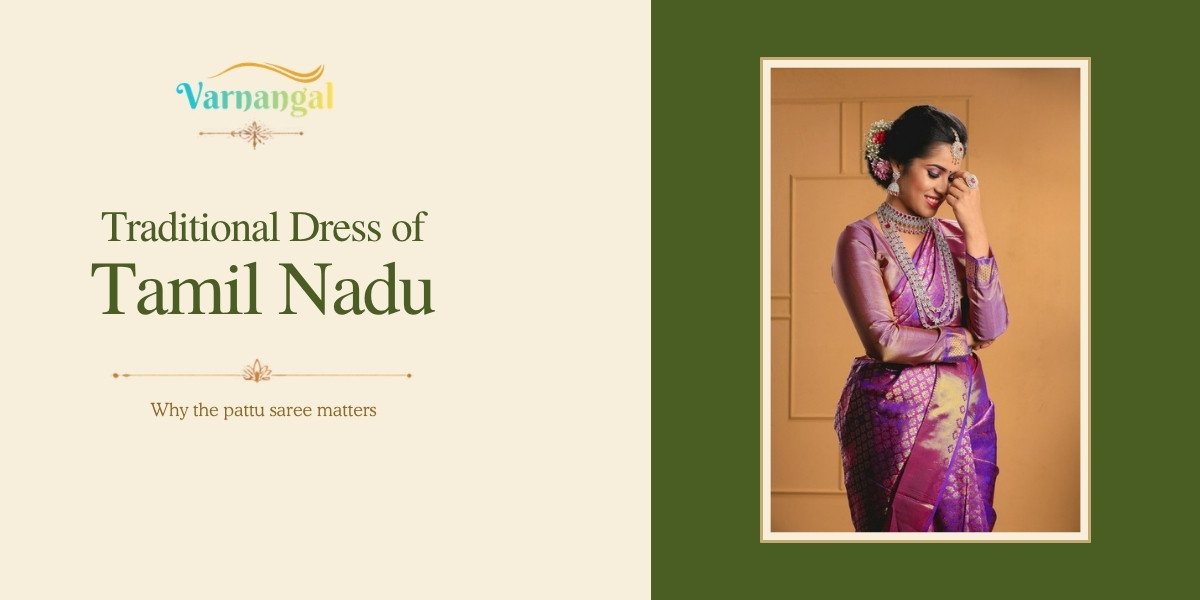
Walk into any Tamil wedding, temple festival or Pongal morning, and you will see the same picture: women in silk sarees with jasmine in their hair, men in crisp white veshtis, and young girls in bright pattu pavadai. The traditional dress of Tamil Nadu has stayed remarkably steady for generations, and at its heart is the pattu (silk) saree.
This guide covers the traditional dress of Tamil Nadu for women, men and children, the regional drapes and weaves, which outfit is worn for which occasion, and why the pattu saree still holds such a special place. It also links to our detailed guides on each Tamil festival and ceremony. Varnangal is a Chennai seller of handloom silk sarees woven in Thirubuvanam.
Quick Answer: What Is the Traditional Dress of Tamil Nadu?
The traditional dress of Tamil Nadu is the saree for women, the veshti (a white dhoti, often with a coloured or zari border) with a shirt and angavastram or thundu (shoulder cloth) for men, and the pattu pavadai (silk skirt and blouse) for girls, followed by the pavadai dhavani (half saree) for teenagers. For ceremonies, the saree is almost always a silk one, the pattu saree, and in Tamil Brahmin families married women wear the nine-yard madisar for rituals.
Traditional Dress of Tamil Nadu for Women
The Saree (Pudavai)
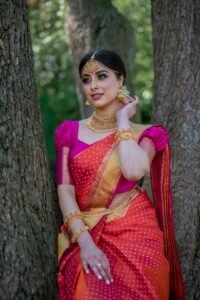
The six-yard saree, called pudavai or selai in Tamil, is the everyday and festive dress of Tamil women. Cotton sarees are worn at home and for work, and silk sarees for weddings, festivals and temple visits. Most women today drape it in the common pleated style, with the pallu over the left shoulder.
The Madisar, the Nine-Yard Saree
The madisar is a nine-yard saree draped without a petticoat, with the lower half tucked between the legs in the style of a dhoti. It is worn by married women in Iyer and Iyengar families for weddings, poojas and other rituals. The two communities differ in one detail: Iyers wear the pallu over the right shoulder and Iyengars over the left (more on the drapes of Tamil Nadu). Many Tamil Brahmin brides drape their wedding saree as a madisar; read more in our guide to Tamil wedding rituals.
Regional Drapes
Before the pleated style became common, rural women in parts of Tamil Nadu wore older drapes. One of them, the back-pleated pin kosuvam, was worn short, above the knee, by women in areas around Madurai, Coimbatore and Chettinad, often with thick cotton sarees that needed no petticoat. Today these drapes are seen mostly among older women and at cultural events.
Traditional Dress of Tamil Nadu for Men
The veshti is a long piece of unstitched cloth, usually white or cream cotton, wrapped around the waist. A thin coloured or gold zari border marks it as festive. It is worn with a shirt, and for ceremonies with an angavastram or thundu over the shoulder. Grooms usually wear a silk veshti and angavastram for the wedding.
The lungi, a coloured, stitched tube of cloth, is everyday wear at home and in villages, but the white veshti is the dress for temples, festivals and family functions.
Traditional Dress of Tamil Nadu for Girls
Little girls wear the pattu pavadai (or pavadai sattai): a long, flared silk skirt with a contrasting border and a matching blouse. As girls grow into their teens, they move to the pavadai dhavani, or half saree, which adds a half-length saree draped over the skirt and blouse. It has long been seen as the step between a child’s pavadai and a woman’s saree, and many girls first wear it, or their first full silk saree, at their Manjal Neerattu Vizha.
Traditional Dress at a Glance
| Who | Everyday | Festivals and ceremonies |
|---|---|---|
|
Women |
Cotton saree |
Silk (pattu) saree; madisar in Tamil Brahmin families |
|
Men |
Lungi or veshti with shirt |
White or silk veshti with angavastram |
|
Young girls |
Pavadai sattai in cotton |
Pattu pavadai in silk |
|
Teenage girls |
Pavadai dhavani or churidar |
Silk pavadai dhavani or first silk saree |
The Weaves Behind Tamil Dress
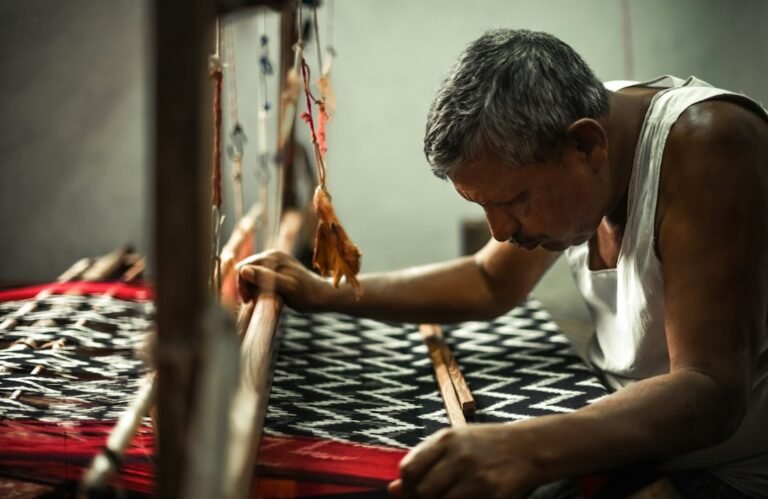
Tamil Nadu is one of India’s great weaving states, and much of its traditional dress is still woven on handlooms. A few well-known names:
- Kanchipuram silk: the most famous Tamil silk saree. It was recognised as a Geographical Indication (GI) by the Government of India from 2005 to 2006, and its body and border are often woven separately and then interlocked so firmly that the border does not come away (Kancheepuram district on its GI-tagged silks).
- Thirubuvanam silk: woven near Kumbakonam, known for rich colours and traditional borders. Read what Thirubuvanam is famous for.
- Arani silk: a lighter silk from Tiruvannamalai district. See our comparison of Thirubuvanam and Arani silk sarees.
- Chettinad cotton and Madurai sungudi: much-loved cotton sarees for daily wear.
For the full list, read our guide to the types of pattu sarees in Tamil Nadu.
Why the Pattu Saree Still Matters
It Is the Saree of Every Milestone
In Tamil families, a silk saree marks almost every turning point in a woman’s life: the first silk saree at a coming-of-age function, the engagement saree, the koorai pudavai at the wedding, the seemantham saree in pregnancy, and the sarees given to her at every festival. Silk sarees are also central to seer varisai, the gifts the bride’s family gives.
It Is Seen as Auspicious
Silk has long been considered pure and auspicious for poojas and temple visits, which is why it is the first choice for rituals at home and in temples. Red, maroon, yellow and green, with gold zari, are among the colours most often chosen for ceremonies.
It Is Passed Down
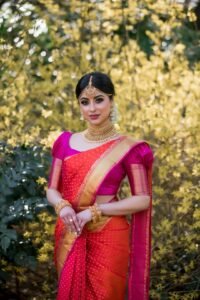
A good handloom silk saree, cared for well, can last for decades. Many Tamil women wear their mother’s or grandmother’s wedding saree at their own functions, and keep their own to pass on. Our guide on how to store and protect silk sarees explains how to keep one in good shape.
It Keeps Handloom Weaving Alive
Every handloom silk saree supports a weaving family. Choosing handloom over powerloom keeps the skills of places like Kanchipuram, Thirubuvanam and Arani alive. Our guide on how to identify handloom silk sarees shows how to tell the difference.
What to Wear for Each Tamil Festival and Ceremony
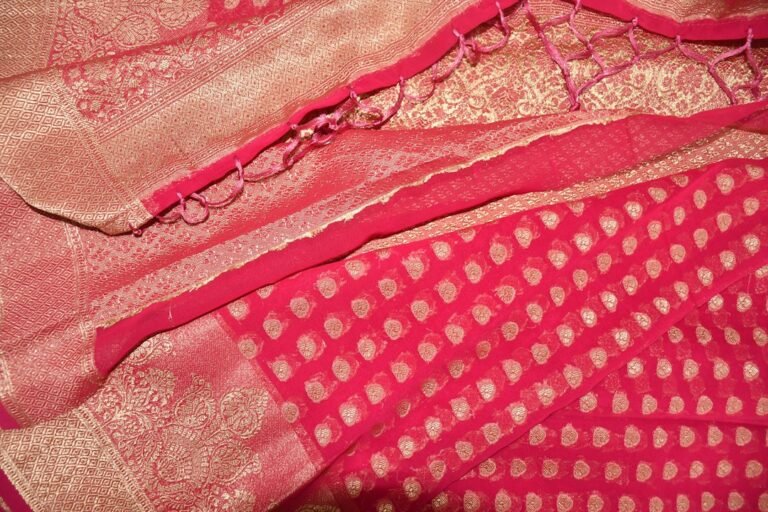
This table links to our guide on each occasion, with what families traditionally wear.
| Occasion | What is traditionally worn | Our guide |
|---|---|---|
|
Pongal |
New clothes; silk or cotton sarees, white veshti |
Pongal festival traditions |
|
Puthandu (Tamil New Year) |
New clothes after an oil bath |
Puthandu traditions |
|
Deepavali |
New silk sarees and veshtis after the oil bath |
Deepavali traditions in Tamil Nadu |
|
Karthigai Deepam |
Silk or cotton sarees for the evening lamps |
Karthigai Deepam traditions |
|
Margazhi mornings |
Simple sarees for kolam and temple visits |
Margazhi month and kolam |
|
Varalakshmi Vratham |
Silk saree in an auspicious colour |
Varalakshmi Vratham pooja |
|
Weddings |
Koorai pudavai (silk), madisar in Tamil Brahmin families |
Tamil wedding rituals |
|
Manjal Neerattu Vizha |
Half saree or first silk saree |
Manjal Neerattu Vizha |
Read the guides: Pongal, Puthandu, Deepavali, Karthigai Deepam, Margazhi, Varalakshmi Vratham, Tamil weddings, Manjal Neerattu Vizha and Navaratri Golu. For choosing a wedding saree, see how to select silk sarees for a wedding.
Conclusion
The traditional dress of Tamil Nadu is simple to describe: the saree, the veshti and the pattu pavadai. What makes it special is how closely it is tied to Tamil life, from a girl’s first half saree to a bride’s koorai pudavai, and from the white veshti at the temple to the silk saree at every festival. The pattu saree, woven by hand and passed down through families, remains the thread that ties it all together.
If you are looking for a handloom silk saree, browse our handloom pure silk sarees, woven in Thirubuvanam and Silk Mark certified, or call 9965121353 and we will help you choose.
Frequently Asked Questions (FAQ)
What is the traditional dress of Tamil Nadu?
For women it is the saree, usually a silk (pattu) saree for ceremonies. For men it is the veshti with a shirt and angavastram. Girls wear the pattu pavadai, and teenage girls the pavadai dhavani (half saree).
What is the traditional dress of Tamil Nadu for men?
Men wear the veshti, a white or cream dhoti often with a coloured or zari border, with a shirt and an angavastram or thundu over the shoulder. The lungi is worn casually at home.
What is a madisar saree?
A madisar is a nine-yard saree worn by married women in Iyer and Iyengar families for rituals. Iyers wear the pallu over the right shoulder and Iyengars over the left.
What is pavadai dhavani?
Pavadai dhavani, or half saree, is a long skirt and blouse with a half-length saree draped over them. Teenage girls in Tamil Nadu wear it as the step between the pavadai and the full saree.
Which silk saree is famous in Tamil Nadu?
Kanchipuram silk is the best known and has a GI tag. Thirubuvanam and Arani silks are also well-known Tamil handloom silks.
Why is the silk saree important in Tamil culture?
The silk saree is worn at almost every milestone in a Tamil woman’s life, is considered auspicious for poojas and temple visits, and is often passed down through generations as an heirloom.
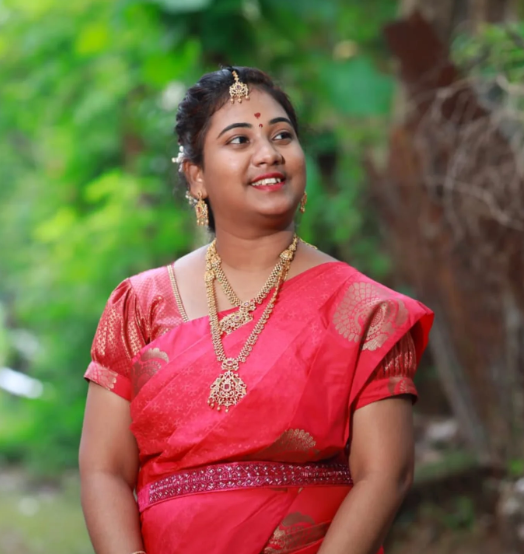
Abirami R – I grew up watching the women in my family drape themselves in vibrant colors, which made me realize that a saree carries both grace and history. With my husband Rajarajan’s encouragement, I turned this fascination into a mission to help you find truly authentic Tamil Nadu weaves. I’ve spent years learning the technical side, like zari weight and thread strength, to protect you from misinformation and help you find pieces worth passing down. My goal is to teach you the soul of the heavy Thirubuvanam silk saree so you can identify a real masterpiece for yourself.