

When you buy a saree, you aren’t just picking out a piece of clothing; you are choosing between a machine-made product and a piece of living history. In a market flooded with cheap factory imitations, knowing how to spot a genuine hand-woven masterpiece is essential for any conscious shopper. This guide will help you understand the true value of handloom craftsmanship and give you practical, easy-to-use tips to ensure you are getting the authentic quality you pay for.
What is Handloom Saree?
A handloom saree is a piece of clothing made entirely by hand on a wooden frame called a loom. There is no electricity involved; a weaver sits for hours, using their hands to move the shuttle and their feet to work the pedals, interlacing every single thread one by one. It is a slow, traditional process where the weaver’s skill is the only thing creating the fabric, making every saree a unique piece of art rather than a factory product.
Why handloom sarees are better than Powerloom?
Handloom sarees are better because they are more comfortable, breathable, and last much longer than machine-made ones. Powerlooms use high-speed motors that stretch and stress the threads, but hand-weaving is gentle, keeping the natural strength of the cotton or silk intact. Plus, buying handloom directly helps local artisans earn a living and keeps ancient Indian traditions alive, whereas powerlooms are just mass-produced in big factories with no personal touch.
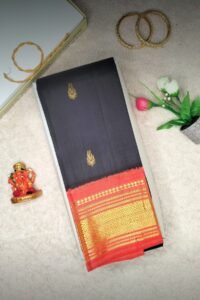
Ways to identify the Handloom Saree?
1. Handwoven sarees weight heavier
Real handloom sarees feel substantial when you pick them up because they use genuine, high-quality natural yarns like pure mulberry silk. Machine-made sarees often feel flimsy, paper-thin, or unnaturally light because they use cheap synthetic blends to save money. If the saree has a nice, heavy “drape” and feels solid in your hands—a common trait in Thirubuvanam silk—it’s a strong sign it was made on a real loom.
2. Handwoven sarees have slight irregularities in weaving
Since a human is weaving the fabric, you will find tiny “mistakes” like small knots, a slightly thicker thread here and there, or tiny gaps in the pattern. These aren’t defects; they are the signature of handwork. A machine makes everything perfectly identical and robotic, so if you see these little human touches, you know a person actually made it.
3. Handloom edges are slightly uneven
Check the long edges (the borders) of the saree. On a handloom, the weaver finishes the edge by hand, so it might be a little soft or slightly wavy. Powerloom edges are usually perfectly straight, stiff, and look like they were cut by a laser. The “rough” but soft feel of a handloom edge is much more comfortable against your skin.
4. Handloom sarees have pinholes
This is the easiest trick: look at the borders for a row of tiny, small holes. These happen because the weaver uses small pins to hook the fabric to the wooden loom to keep it tight while they work. Machine-made sarees don’t have these marks because they are pulled by big rollers, so those tiny pinholes are like a stamp of authenticity.
5. Handloom Sarees are priced high
You are paying for someone’s time and hard work—it can take a week or even a month to finish just one saree. If you find a “handloom” silk saree priced at 1,000 or 2,000, it is incredibly cheap and likely a fake made in a factory, as the cost of pure silk yarn alone is higher than that. Real craftsmanship costs more because you are paying for quality materials and the weaver’s expert labor, not a fast-moving motor.
6. Authenticity Silk Mark
Always look for the official “Handloom Mark” or “Silk Mark” tags provided by the government. These labels are only given to genuine products that pass quality tests for pure fabric and real weaving methods. It’s like a “certified” sticker that protects you from getting cheated by shops selling polyester as pure silk.
7. Handloom sarees have a better Texture feel
If you rub the fabric between your fingers, handloom feels organic and slightly “grippy,” whereas powerloom often feels slippery, static-filled, or like plastic. Because the weave isn’t suffocatingly tight, Thirubuvanam handloom fabric lets air pass through, which is why it stays cool in summer and warm in winter.
8. Not Mass produced
A real weaver can’t make 100 copies of the same saree overnight. If you walk into a store and see 50 identical sarees in the exact same color and pattern, they are definitely machine-made. True handloom is exclusive; even if two sarees look similar, the hand-weaving process ensures that no two are ever exactly the same.
How Handloom Sarees Are Made?
Making a handloom saree is a slow, traditional process where every step is done by hand, requiring great patience, skill, and days of hard work:
Preparing the Yarn: The process begins with raw natural silk or cotton fibers. These fibers are carefully unwound, cleaned, and spun into smooth, strong threads that are wrapped onto spools to prepare them for processing.
Dyeing and Sun-Drying: The spun threads are dipped into big pots of rich, colorful dyes. Once the yarn absorbs the exact shade needed for the design, it is stretched out outdoors to dry naturally under the sun, which locks in the bright colors.
Stretching and Strengthening the Threads: The long threads (called the warp) are stretched out across long poles to set the exact length of the saree. Artisans brush natural rice starch over the yarn to make the individual strands tough so they do not snap while being pulled tight during weaving.
Setting up the Wooden Loom: This is one of the hardest steps. Thousands of individual threads must be threaded by hand through tiny needles on the wooden loom frame. Every single thread is aligned precisely to create the saree’s layout, pattern, and border width before weaving can begin.
Weaving by Hand: The weaver sits at the wooden frame and uses their feet on pedals to separate the top and bottom threads. At the same time, they use their hands to slide a wooden shuttle back and forth to interlace the cross-threads one by one. Intricate zari borders and body designs are added manually using extra small shuttles step by step.
Final Inspection and Cutting: Once the full six or nine yards of fabric are completely woven, the saree is carefully cut off the wooden frame. The weaver inspects the entire piece for structural strength, smooths out the edges, and folds it up, ready for the market.
How Long Does It Take to Make a Handloom Silk Saree?
Making a genuine handloom saree usually takes anywhere from 3 to 7 days for standard designs, while intricate silk sarees with heavy zari work can take 2 weeks to over a month to complete. The total timeline depends on the complexity of the design, the type of yarn used, and how many hours the weaver spends at the loom each day.
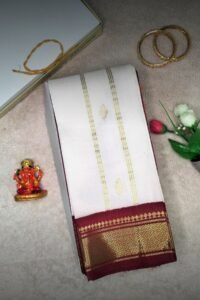
Are Cotton Sarees Hand Woven Too?
Yes and no—not all cotton sarees are handloom, but many authentic cotton sarees are indeed hand-woven and cost more due to the labor involved. While mass-produced powerloom cottons are common and cheap, traditional hand-woven cotton sarees use the exact same manual wooden loom techniques as silk sarees, requiring careful starching and skilled handiwork that raises their overall value.
Conclusion
Spotting a real handloom silk saree is all about looking for the human touch—the tiny pinholes, the weight of the silk, and the small irregularities that machines can’t copy. When you buy a genuine handloom, you aren’t just buying a piece of cloth; you are wearing a piece of history and supporting a real person’s craft. Next time you shop, use these tips to make sure you’re getting the real deal.

Abirami R – I grew up watching the women in my family drape themselves in vibrant colors, which made me realize that a saree carries both grace and history. With my husband Rajarajan’s encouragement, I turned this fascination into a mission to help you find truly authentic Tamil Nadu weaves. I’ve spent years learning the technical side, like zari weight and thread strength, to protect you from misinformation and help you find pieces worth passing down. My goal is to teach you the soul of the heavy Thirubuvanam silk saree so you can identify a real masterpiece for yourself.




Pingback: What is Handloom Saree: A Deep Dive
Pingback: Top 7 South Indian Handloom Silk Sarees for Every Wedding