When it comes to South Indian silk sarees, Kanchipuram often steals the spotlight. However, the rich weaving traditions of Arani and Thirubuvanam offer distinct characteristics that cater to different tastes, occasions, and budgets. Both represent the pinnacle of Tamil Nadu’s textile heritage, but they tell very different stories through their weave, feel, and aesthetic.
Understanding the nuances between these two exquisite silk types can help you make an informed choice, whether you’re a bride-to-be, a seasoned collector, or simply someone appreciating the artistry of handloom.
Thirubuvanam Silk: Heavy and Shiny
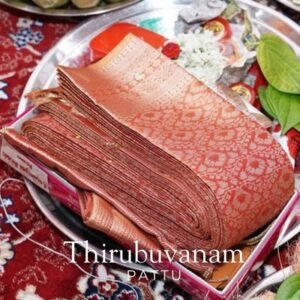
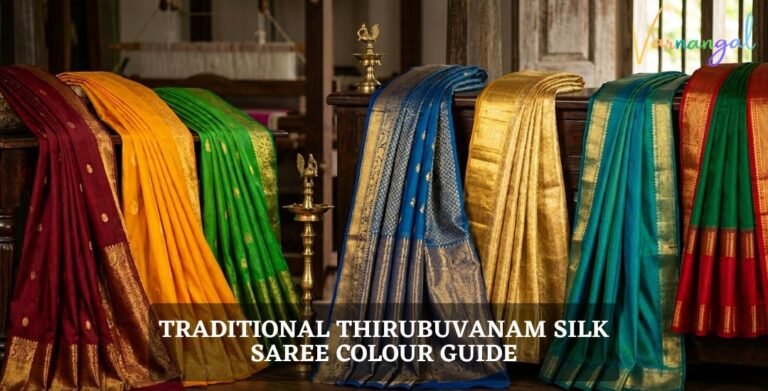
Hailing from the ancient temple town of Thirubuvanam near Kumbakonam, these sarees are synonymous with unparalleled luster, density, and intricate craftsmanship. Thirubuvanam silk sarees are truly a labor of love, known for their unique “folding” texture and the almost mirror-like sheen of their pure mulberry silk.
What sets Thirubuvanam apart is its traditional weaving technique, where the body, border, and pallu are woven as a single unit without any cuts or joints. This contributes to their exceptional durability and their characteristic weight. These sarees are often heirloom pieces, rich in pure gold and silver zari, designed for grand occasions and bridal wear.
Arani Silk: Light and Soft
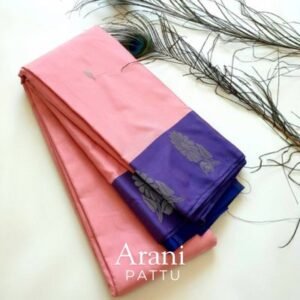
Arani, a town nestled in the Tiruvannamalai district of Tamil Nadu, has carved a niche for itself with its remarkably lightweight and soft silk sarees. Often dubbed the “Poor Man’s Kanchipuram,” Arani silk offers a more accessible entry into the world of traditional South Indian weaves without compromising on beauty.
The hallmark of an Arani silk saree is its wearability. These sarees are designed for comfort, making them ideal for long hours of wear during festivals, travel, or even as elegant daily wear. A unique feature is the “double-side” border or pallu, which allows for different color combinations or patterns on either side, offering versatility in draping and styling.
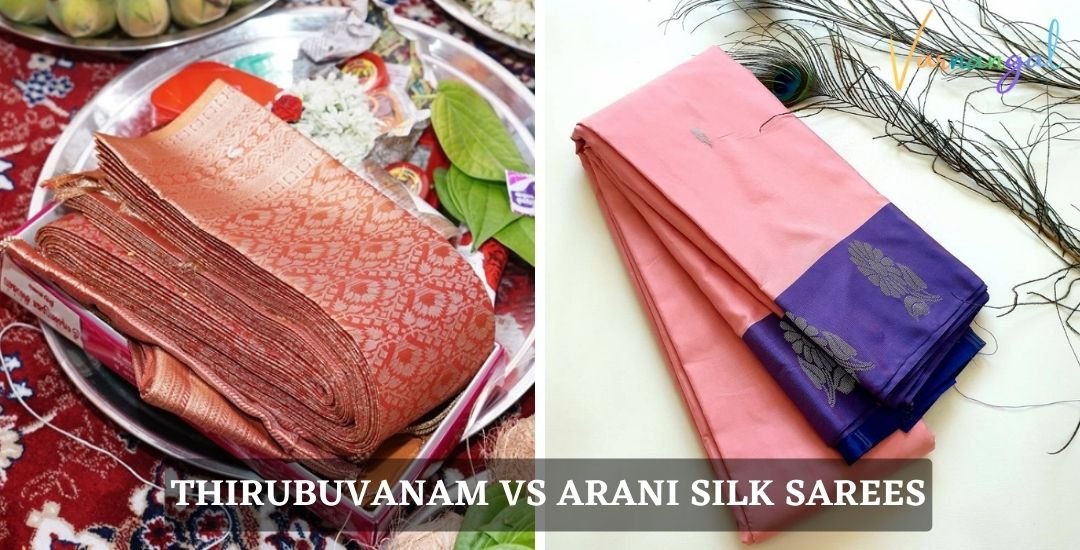
Thirubuvanam vs. Arani: A Side-by-Side Comparison
Let’s delve deeper into the specific features that differentiate these two magnificent silk traditions:
| Feature/Aspect | Thirubuvanam Silk Saree | Arani Silk Saree |
|---|---|---|
|
Weight & Feel |
Heavy and dense, characterized by a unique “folding” texture and a rich, luxurious feel. |
Lightweight and soft, known for comfort and easy draping. Ideal for extended wear. |
|
Weaving Technique |
Woven as a single unit (body, border, and pallu together) without cuts or joints, ensuring exceptional durability. Uses high-grade filature silk for both warp and weft. |
Often features “Double-Side” borders/pallus, where two different colors or patterns can be seen on either side. Generally woven with single or double warp. |
|
Silk Quality |
Employs high-grade, unblemished pure mulberry silk for both warp and weft, resulting in an extraordinary luster and sheen that mimics a mirror. |
Uses fine mulberry silk, contributing to its softness and light weight |
|
Zari Usage |
Abundantly rich in pure gold and silver zari, contributing significantly to its weight (can exceed 1.25 kg) and opulent appearance. |
Typically uses less zari or “half-fine” zari to maintain its lightweight nature and affordability. |
|
Traditional Motifs |
Inspired by temple architecture and nature, featuring intricate motifs like Kalasam (pot), Neli (toe ring), Rudraksham (sacred bead), Hamsam (swan), and floral creeper designs. |
Famous for Kottadi checks (small square patterns resembling poppy or tamarind seeds), stripes, and simple floral designs. |
|
Folding Style |
Known for the unique Visirimadippu (fan-folding style), traditionally used to protect the intricate zari work and maintain the saree’s structure. |
Folded flat, similar to most traditional sarees. |
|
Occasion |
Reserved for grand occasions, bridal wear, weddings, and high-profile ceremonies where opulence and traditional grandeur are desired. |
Perfect for festivals, semi-formal events, travel, and even elegant daily wear due to its comfort and practicality. |
|
Price Range |
Positioned at a higher price point due to the intensive handloom work, the use of pure zari, and the premium quality silk. |
Generally more affordable than Kanchipuram or Thirubuvanam silks, making it an excellent value for its quality. |
|
Geographical Indication (GI) |
Thirubuvanam Silk is a recognized GI product. |
Arani Silk is a recognized GI product. |
Conclusion
Both Arani and Thirubuvanam silk sarees embody the incredible skill and heritage of South Indian weavers. The choice between them ultimately depends on your personal preference and the occasion.
If you seek comfort, versatility, and elegance for regular wear or vibrant festive occasions without the heft, an Arani silk saree is an impeccable choice. Its soft drape and often reversible designs offer modern practicality rooted in tradition.
However, if your desire is for unparalleled grandeur, heirloom quality, and a saree that radiates a rich, mirror-like luster perfect for the most significant life events, then a Thirubuvanam silk saree is a masterpiece you simply must experience.
No matter which you choose, you’re investing in a piece of art that tells a story of centuries-old craftsmanship.

Abirami R – I grew up watching the women in my family drape themselves in vibrant colors, which made me realize that a saree carries both grace and history. With my husband Rajarajan’s encouragement, I turned this fascination into a mission to help you find truly authentic Tamil Nadu weaves. I’ve spent years learning the technical side, like zari weight and thread strength, to protect you from misinformation and help you find pieces worth passing down. My goal is to teach you the soul of the heavy Thirubuvanam silk saree so you can identify a real masterpiece for yourself.

Pingback: Top 5 Silk Saree Manufacturing Cities in Tamil Nadu