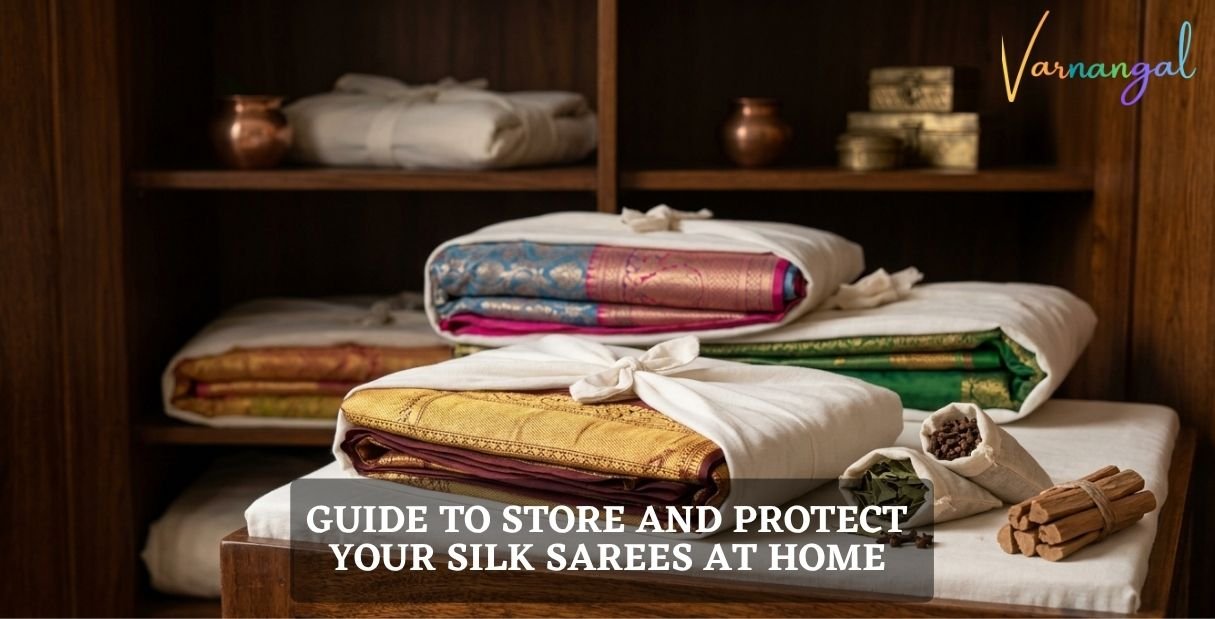
A silk saree is a precious item that needs special care to stay beautiful for many years. Because silk is a natural fiber, it can easily get damaged by heat, light, and moisture if not stored correctly. Following these simple steps will help you keep your collection looking brand new for a long time.
Guide to Store and Protect your Silk Sarees at Home
1. Choosing the Best Storage Spot
You should always keep your sarees in a place that is cool, dry, and dark to prevent the fabric from getting weak. Direct sunlight is very harmful because it acts like a bleach and makes the bright colors fade quickly. Make sure the cupboard has some air flow so that moisture does not get trapped inside, which causes bad smells and mold.
2. Using the Right Covers
Always wrap your silk sarees in pure cotton or muslin cloth because these materials let the fabric breathe naturally. You must avoid using plastic or polyester covers because they trap heat and moisture, which turns white silk yellow and makes the thread brittle. Wrapping each saree individually prevents the rough zari of one saree from scratching the smooth silk of another.
3. Correct Folding and Rotation
Silk fibers can snap if they are left folded in the same way for too long, so you should refold your sarees every three months. When you refold them, make sure the new creases are in different spots to take the pressure off the old lines. Never hang heavy silk sarees on hangers because the weight will pull the fabric down and ruin the shape forever.
4. Safe Ways to Stop Pests
Instead of using chemical mothballs which can stain the silk, use natural items like dried neem leaves or cloves wrapped in small cloth bags. These natural hacks keep silver-eating insects away without leaving a harsh chemical smell on your clothes. Always place these items in the corners of the shelf so they do not touch the silk directly.
5. Protecting the Zari (Gold/Silver Thread)
To keep the metallic zari from turning black or getting dull, always fold the saree so the zari is facing the inside. Placing a thin sheet of acid-free tissue paper between the folds provides an extra layer of protection against air and moisture. If you need to iron the saree, never put the hot iron directly on the gold thread; always use a thin cotton cloth as a shield.
6. Cleaning Before Storing
Before you put a saree back in the cupboard, hang it in a shady spot under a fan for two hours to remove any body heat or sweat. Storing a saree with sweat or perfume on it will attract insects and cause permanent stains that are hard to remove later. If the saree is very dirty, it is best to get it professionally dry cleaned before long-term storage.
7. Monsoon and Humidity Care
During the rainy season, use small silica gel packets inside your cupboard to soak up extra moisture from the air. Do not keep your saree cupboard against a wall that touches a bathroom or the outdoors, as dampness can travel through the wall and cause fungus. Using a solid saree box lined with acid-free paper is the best way to keep your collection safe from humidity.
Conclusion
Taking care of your silk sarees is the best way to respect the hard work that went into making them. By using simple cotton wraps and refolding them regularly, you ensure that your heritage sarees can be passed down to the next generation in perfect condition. Proper storage is a small effort that yields a lifetime of beauty for your wardrobe.
Abirami R – I grew up watching the women in my family drape themselves in vibrant colors, which made me realize that a saree carries both grace and history. With my husband Rajarajan’s encouragement, I turned this fascination into a mission to help you find truly authentic Tamil Nadu weaves. I’ve spent years learning the technical side, like zari weight and thread strength, to protect you from misinformation and help you find pieces worth passing down. My goal is to teach you the soul of the heavy Thirubuvanam silk saree so you can identify a real masterpiece for yourself.
Enjoyed this? Share the love with your network!Share this content