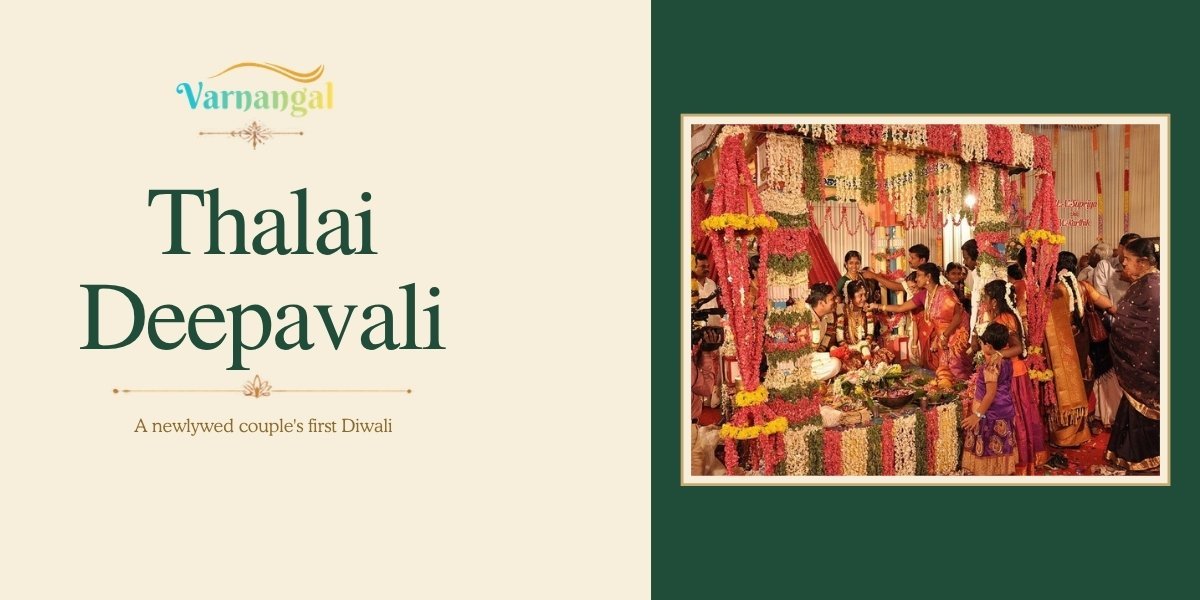
Your daughter married this year, and now the calendar shows Deepavali. In Tamil homes that means one thing: Thalai Deepavali (the first, or head, Deepavali), the newlywed couple’s first Deepavali together. It is usually hosted by the bride’s family, and it comes with its own list of things to plan: the invitation to the mappillai (son-in-law), the early oil bath, the new clothes, the sweets and the seer.
This guide walks through each step, explains why it is done, and helps you choose the silk saree for the bride. Varnangal is a Chennai seller of Silk Mark certified handloom pure silk sarees woven by Thirubuvanam weavers, and the Thalai Deepavali saree is one of the purchases families ask us about most in October.
Quick Answer: What Is Thalai Deepavali?
Quick answer: Thalai Deepavali is the first Deepavali a couple celebrates after their wedding. The bride’s parents invite the couple (and often the groom’s family) home, give them new clothes and gifts, and start the day with an oil bath before dawn, prayers and a family feast. The bride usually wears a new silk saree from her family. Handloom pure silk sarees woven in Thirubuvanam are available from Varnangal, Chennai.
Thalai Deepavali 2026: Date and When to Plan
Deepavali in Tamil Nadu falls on Sunday, 8 November 2026. Tamil Nadu celebrates on Naraka Chaturdashi morning, so the main rituals happen before sunrise that day, not in the evening as in North India.
Families usually start planning three to four weeks ahead, because the invitation, the clothes and the sweets all take time. Here is a simple timeline many families follow:
| When | What to do |
|---|---|
|
3 to 4 weeks before |
Bride’s parents formally invite the couple and the groom’s parents |
|
2 to 3 weeks before |
Buy the bride’s silk saree, the groom’s veshti and shirt, and blouse stitching |
|
1 week before |
Make or order bakshanam (sweets and savouries) and the Deepavali legiyam |
|
Day before |
Couple arrives; kolam at the door; oil, shikakai and new clothes kept ready |
|
Deepavali morning (8 Nov 2026) |
Oil bath before dawn, new clothes, pooja, blessings, crackers, breakfast |
|
Afternoon and evening |
Feast, visits to relatives, lamps at dusk |
Thalai Deepavali Traditions, Step by Step
Customs differ between communities and districts, so treat this as the common pattern and ask the elders in your family for your own variations. For the wider picture of how Tamil Nadu celebrates the day, read our guide to Deepavali traditions in Tamil Nadu.
1. The invitation to the mappillai
The bride’s father (often with the mother) visits the groom’s home to invite the couple and the groom’s parents. In many families this visit carries a plate of fruit, betel leaves, sweets and sometimes the groom’s new clothes. It is a mark of respect, so a phone call alone is not considered enough by older relatives.
2. Arrival the evening before
The couple usually arrives a day early. The bride’s mother welcomes them with aarathi (a plate of turmeric-and-lime water with a lamp, waved to ward off the evil eye) at the door. A fresh kolam is drawn at the entrance.
3. The oil bath before dawn (Ganga snanam)
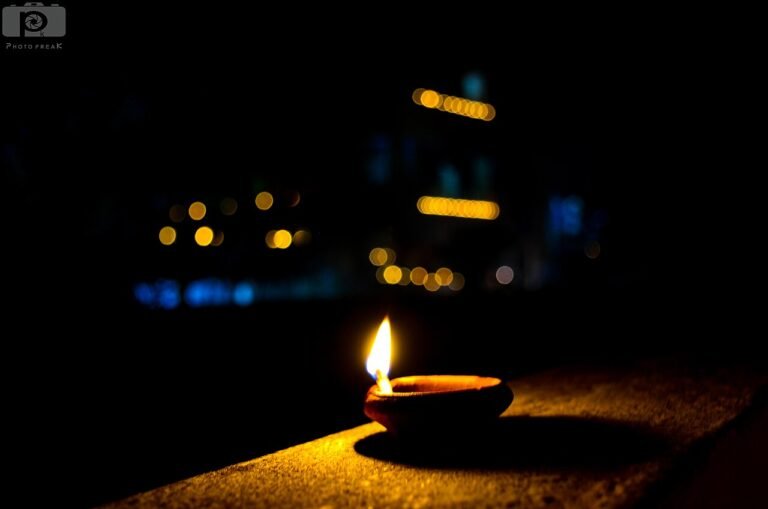
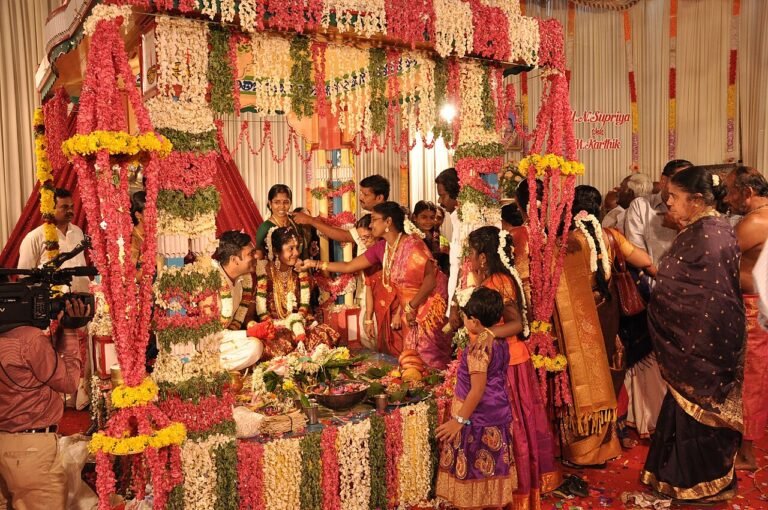
On Deepavali morning, well before sunrise, an elder of the house applies warm gingelly (sesame) oil on the couple’s heads. In many homes the couple sits together on a wooden plank (palagai) for this, and the elder applies a dot of oil and a little turmeric, then blesses them. The bath that follows is called Ganga snanam, because a bath on this morning is believed to equal a dip in the Ganges. The day itself is Naraka Chaturdashi, when Krishna is believed to have defeated the demon Narakasura.
4. New clothes from the bride's family
After the bath, the couple wears the new clothes given by the bride’s parents: a silk saree for the bride, and a veshti (dhoti) with angavastram or a silk shirt for the groom. The clothes are first placed before the gods in the pooja room, with turmeric applied to a corner, and then handed to the couple.
5. Pooja, legiyam and blessings
The family lights the lamp, offers the new clothes, sweets and crackers to the gods, and the couple prostrates before the elders for their blessings. Everyone takes a small spoon of Deepavali legiyam (a herbal digestive paste) before breakfast, so the stomach is ready for a day of rich food.
6. Crackers, feast and visits
The couple bursts the first crackers together, often a ceremonial first box bought for them. Lunch is a full feast with payasam, and in the afternoon the couple visits close relatives, who also bless them and sometimes give small gifts. Lamps are lit again at dusk.
Thalai Deepavali Seer: What the Bride's Family Gives
The Thalai Deepavali seer is smaller than the wedding seer, but it follows the same idea: the bride’s family sends her into her new life with honour. There is no fixed list, and families give what they can afford. Common items are:
- For the bride: a new silk saree with blouse, bangles, flowers, and in some families a piece of gold jewellery
- For the groom: a silk veshti and shirt, and in some families a ring or chain
- For the groom’s parents: a saree for the mother-in-law and a veshti for the father-in-law
- Sweets and savouries: trays of Deepavali bakshanam such as murukku, adhirasam, laddu and mysore pak
- Crackers: a box for the couple to light together
- Vessels or silver items: in some communities, a silver lamp or plate
If you want to see how this compares with the wedding seer, our seer varisai thattu items list explains the full wedding version and the meaning of each plate.
Thalai Deepavali vs Thalai Aadi vs Thalai Pongal
Tamil families mark three firsts in a couple’s first year. They are easy to confuse, so here is how they differ:
| Occasion | Month | Where | What happens |
|---|---|---|---|
|
Thalai Aadi |
Aadi (Jul to Aug) |
Bride’s home |
The bride stays with her parents for the month; the groom is invited on Aadi Perukku |
|
Thalai Deepavali |
Aippasi (Oct to Nov) |
Bride’s home |
Oil bath, new clothes, seer, crackers and feast for the couple |
|
Thalai Pongal |
Thai (January) |
Usually bride’s home |
Pongal cooked by the couple, new clothes and Pongal seer |
Of the three, Thalai Deepavali is usually the grandest, because it is a full day of rituals with both families present.
Choosing the Thalai Deepavali Saree for the Bride
The Thalai Deepavali saree is often the first silk saree the bride receives from her family after the wedding, and she will wear it in front of both families. Three things matter most: an auspicious colour, a border that photographs well, and a weight she can wear from 4 am to late evening.
Pick a bright, auspicious colour
Red, yellow, green and pink are the traditional choices for a new bride. Many families avoid black and plain white for this occasion, though white with a strong red border is a classic temple and pooja combination. Our guide to Diwali colours and their meaning explains what each colour stands for.
Three Varnangal sarees that suit Thalai Deepavali
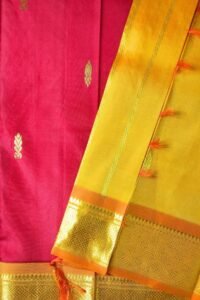
- Red and yellow silk saree: a rich red body with gold zari Nellu (rice-grain) buttas, a mango yellow pallu with heavy zari and a bright orange border. The most traditional festive pick.
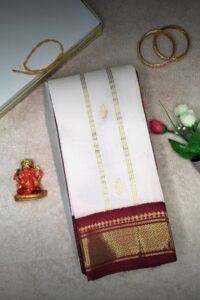
- White and red silk saree: milk white body with gold zari pinstripes, a dark red Korvai border (body and border woven separately and interlocked by hand) and Gopuram temple edging. Ideal for the dawn pooja.
- Peacock blue silk saree: dual-tone blue-green with zari peacock buttas and a light wine double-side border. A grand choice for the evening family visits.
Each saree is a single handloom piece, so once it is sold it is gone. You can see every available design on our handloom pure silk sarees page.
What the groom and his parents wear
The groom usually wears a silk or cotton-silk veshti with a matching shirt. Many families now coordinate the groom’s veshti border with the bride’s saree border colour. For a full family plan, from the pooja to the evening, see our Diwali outfit ideas for family.
Shopping for Thalai Deepavali Before 8 November
Varnangal’s Diwali saree sale runs until midnight on Sunday, 8 November 2026, with sale prices on our handloom pure silk sarees and free shipping across India. Every saree is Silk Mark certified and woven in Thirubuvanam, near Kumbakonam in Tamil Nadu. Order early enough to leave time for blouse stitching and fall-and-pico work.
If you are still deciding between colours and borders, our guide to silk sarees for Diwali compares the popular combinations.
Caring for the Saree on a Long Festival Day
The bride will be near oil lamps, oil-bath oil and crackers all day, and her saree is a keepsake. A few simple habits help:
- Wear the silk saree after the oil bath, once the hair is fully dried and tied.
- Change into a cotton saree before bursting crackers, or keep the pallu pinned and away from sparks.
- Keep a cotton towel handy to blot any oil or sweet stains at once, and never rub.
- Air the saree in shade the next day before folding it away in a cotton cloth.
Our full guide on silk saree care during Diwali covers lamp oil, cracker sparks and stains.
Conclusion
Thalai Deepavali is the bride’s family’s chance to welcome the couple with the warmth of a festival: the oil bath before dawn, the new clothes, the blessings of elders and the first crackers lit together. Plan the invitation and the clothes a few weeks ahead, and pick a saree in a bright, auspicious colour that the bride can wear comfortably all day.
Not sure which colour or border suits the bride? Call 9965121353 or email varnangalsilksarees@gmail.com and we will help you choose.
Frequently Asked Questions (FAQ)
What is Thalai Deepavali?
Thalai Deepavali is the first Deepavali a newlywed couple celebrates after their wedding. In Tamil Nadu it is usually hosted by the bride’s parents, who invite the couple, give them new clothes and gifts, and celebrate with an oil bath, pooja and feast.
Where is Thalai Deepavali celebrated, at the bride's or the groom's house?
In most Tamil families it is celebrated at the bride’s parental home. The bride’s parents invite the groom and often his parents. Some families follow a different custom, so check with the elders on both sides.
What gifts are given for Thalai Deepavali?
Common gifts are a silk saree for the bride, a silk veshti and shirt for the groom, sweets and savouries, crackers, and in some families gold jewellery or a silver item. There is no fixed list; families give what they can.
Which saree colour is best for Thalai Deepavali?
Bright auspicious colours such as red, yellow, green and pink are traditional for a new bride. White with a strong red border also suits the dawn pooja. Many families avoid black for the occasion.
When is Thalai Deepavali in 2026?
Deepavali in Tamil Nadu falls on Sunday, 8 November 2026. The main rituals, including the oil bath, take place before sunrise that morning.
Abirami R – I grew up watching the women in my family drape themselves in vibrant colors, which made me realize that a saree carries both grace and history. With my husband Rajarajan’s encouragement, I turned this fascination into a mission to help you find truly authentic Tamil Nadu weaves. I’ve spent years learning the technical side, like zari weight and thread strength, to protect you from misinformation and help you find pieces worth passing down. My goal is to teach you the soul of the heavy Thirubuvanam silk saree so you can identify a real masterpiece for yourself.