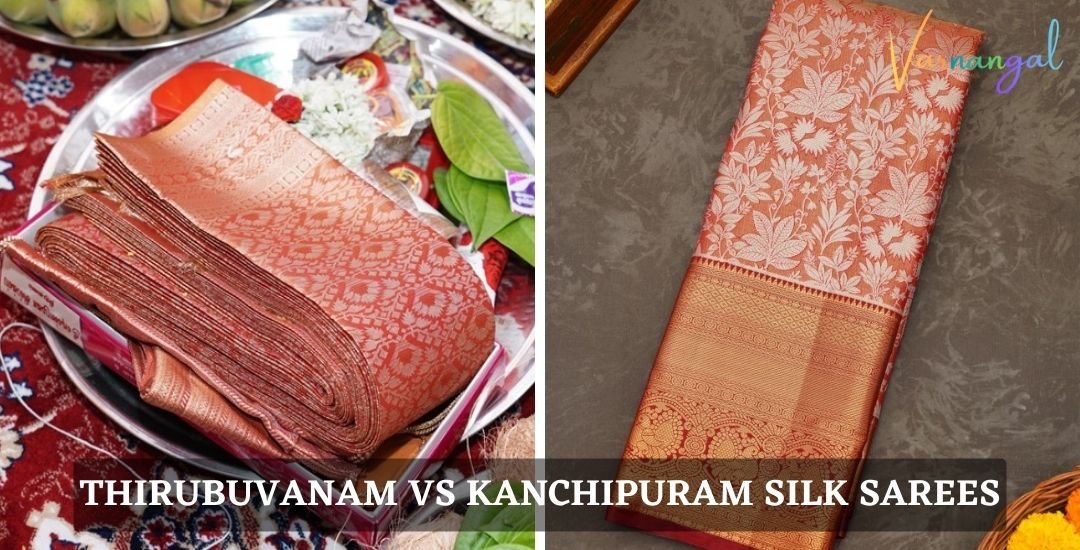
When it comes to South Indian silk sarees, Kanchipuram is often the first name that comes to mind, celebrated globally as the “Queen of Silk.” However, tucked away near the temple town of Kumbakonam is another legendary weave—the Thirubuvanam silk saree.
While both are titans of Tamil Nadu’s textile heritage, they offer distinct experiences in terms of luster, construction, and weight. Understanding these nuances is essential for any connoisseur looking to invest in a masterpiece.
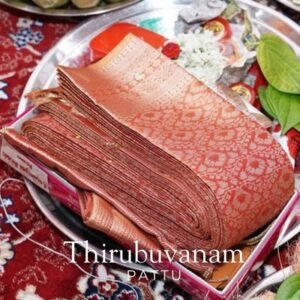
Thirubuvanam Silk: Heavy and Shiny
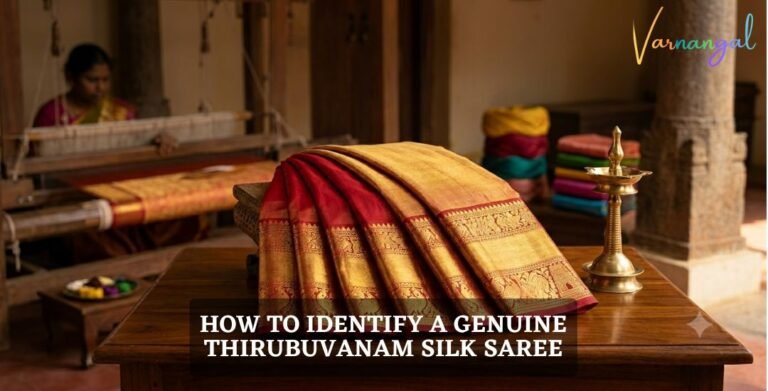
Hailing from the ancient town of Thirubuvanam in the Thanjavur district—once a thriving center of the Chola Empire—these sarees represent a different pinnacle of textile engineering. While Kanchipuram is known for its structural strength, Thirubuvanam is celebrated for its supernatural luster. Traditionally commissioned for royalty and elite temple offerings, these sarees utilize high-grade filature silk in both the warp and the weft, resulting in a surface so smooth it reflects light like a polished mirror.
The “soul” of a Thirubuvanam saree lies in its seamlessness. Unlike the Kanchipuram, which prides itself on the visible ridge of a joint, a Thirubuvanam saree is woven as a single, continuous unit. This “no-cut” philosophy ensures that the drape is exceptionally fluid and soft against the skin.
Furthermore, the unique Visirimadippu (fan-folding) tradition is exclusive to this region; the sarees are folded in a way that preserves the heavy gold zari and allows the fabric to fall into perfect pleats the moment it is unwrapped. It is the ultimate choice for those who seek the opulence of the Chola era combined with a modern, liquid-like drape.
Kanchipuram: The Timeless Legacy of the City of Thousand Temples
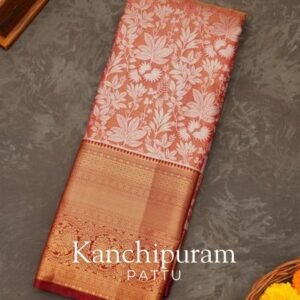
Kanchipuram silk sarees are not merely garments; they are woven chronicles of South Indian history. Tracing their origins back over 400 years, these sarees are said to be the descendants of the legendary Sage Markanda, the master weaver of the Gods. The aesthetic of a Kanchipuram saree is deeply architectural, drawing direct inspiration from the majestic stone carvings and towering gopurams of the Pallava and Chola dynasties.
Every motif—from the Mallinaggu (jasmine bud) to the Ganda Berunda (mythical two-headed bird)—is a tribute to the temple art of Tamil Nadu. What truly cements its status as the “gold standard” for bridal wear is the Korvai technique. This labor-intensive method involves weaving the vibrant border and the intricate body separately on different looms, then interlocking them with a “petni” joint so strong that the saree will tear before the joint gives way. This structural integrity creates the iconic, high-contrast look that has defined South Indian weddings for generations.
Thirubuvanam vs. Kanchipuram: Detailed Comparison
Let’s delve deeper into the specific features that differentiate these two magnificent silk traditions:
| Feature/Aspect | Thirubuvanam Silk Saree | Kanchipuram Silk Saree |
|---|---|---|
|
Weaving Technique |
Woven as a single unit. The body, border, and pallu are continuous with no joints. |
Traditionally uses the Korvai technique, where the body and border are woven separately and interlocked. |
|
Weight |
Typically heavier and denser due to the use of high-grade filature silk in both warp and weft. |
Available in various weights, but famous for its sturdy, structured drape using 3-ply silk. |
|
Luster |
Known for a brilliant, mirror-like shine that glows intensely under artificial light. |
Features a rich, deep glow that is subtle and classic, often referred to as “temple luster.” |
|
Zari Quality |
Uses heavy, pure gold and silver zari in high volume, often making the saree weigh over 1 kg. |
Uses pure zari (silk thread dipped in silver and gold), but quantity varies by design complexity. |
|
Folding Style |
Known for the unique Visirimadippu (fan-folding style), traditionally used to protect the intricate zari work and maintain the saree’s structure. |
Usually folded flat to protect the structural integrity of the heavy Korvai joints. |
|
Occasion |
Primarily for weddings, grand festivals, and temple ceremonies. |
The ultimate choice for brides, high-profile gala events, and heirloom collections. |
|
Price Range |
A premium investment; expensive due to high-grade silk and heavy gold/silver zari content. |
Generally the most expensive due to the labor-intensive Korvai hand-weaving process. |
|
Motifs |
Features motifs like Kalasam (pot), Rudraksham, and nature-inspired floral creepers. |
Famous for Mallinaggu (jasmine buds), temple borders, and mythological beasts (Yali). |
Conclusion
Both Thirubuvanam and Kanchipuram sarees are Geographical Indication (GI) tagged products, representing the pinnacle of handloom artistry. If you desire a saree with an unbeatable mirror-shine and seamless drape, Thirubuvanam is your ultimate choice. However, if you are looking for the iconic contrast and architectural drape of a classic bridal heirloom, the Kanchipuram remains the undisputed queen.

Abirami R – I grew up watching the women in my family drape themselves in vibrant colors, which made me realize that a saree carries both grace and history. With my husband Rajarajan’s encouragement, I turned this fascination into a mission to help you find truly authentic Tamil Nadu weaves. I’ve spent years learning the technical side, like zari weight and thread strength, to protect you from misinformation and help you find pieces worth passing down. My goal is to teach you the soul of the heavy Thirubuvanam silk saree so you can identify a real masterpiece for yourself.

Pingback: What Makes Handloom Wedding Silk Sarees Costly
Pingback: Top 5 Silk Saree Manufacturing Cities in Tamil Nadu
Pingback: How to Drape A Silk Saree for Wedding - 5 Minute Steps
Pingback: What is Korvai Border Silk Saree?
Pingback: What is the Porai Technique in Thirubuvanam Pattu Weaving?
Pingback: Why one-side border Thirubuvanam pattu sarees are trending?
Pingback: Top 7 South Indian Handloom Silk Sarees Every Wedding
Pingback: 5 Best Silk Saree Boutiques in Chennai for Curated Handloom Drapes
Pingback: What is Handloom Saree: A Deep Dive
Pingback: The Ultimate Guide to Thirubuvanam Korvai Border Silk Sarees