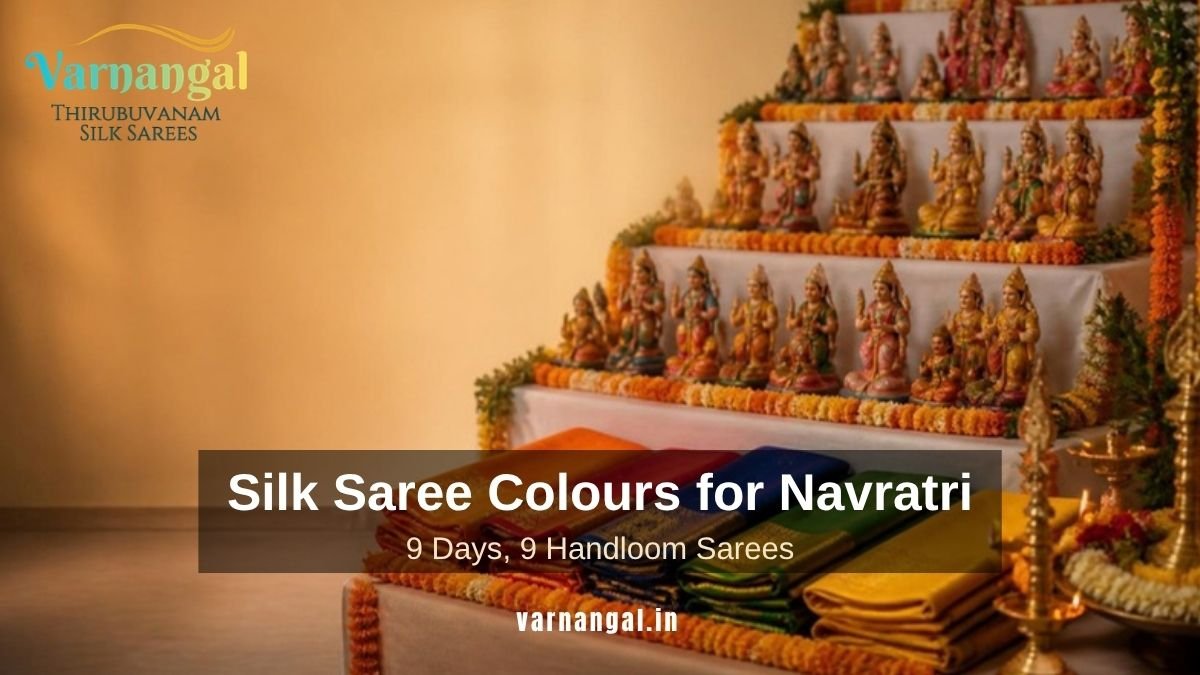
Nine nights, nine colours, and usually one question in every Tamil home: what do I wear to the Golu visits this year? Choosing your silk saree colours for Navratri is easier when you plan all nine days at once, and when you know that one well-chosen saree can cover two or even three colours of the week.
This guide lists the Navratri 2026 dates and day-wise colours, then pairs each day with a real handloom silk saree, with its border, pallu and price. It also covers what most Navratri guides skip: Golu, Saraswati Puja and Ayudha Puja in Tamil Nadu, how to plan nine days with fewer sarees, and how to keep silk fresh through a week of wear.
Varnangal is a Chennai seller of Silk Mark certified handloom pure silk sarees woven by Thirubuvanam weavers.
Quick answer: Navratri 2026 runs from Sunday 11 October to Monday 19 October, with Vijayadashami on Tuesday 20 October. The common day-wise colours are orange, white, red, royal blue, yellow, green, grey, purple and peacock green. Handloom pure silk sarees woven in Thirubuvanam, in most of these colours, are available from Varnangal, Chennai.
Navratri 2026 Dates and the 9 Colours
These are the nine colours most widely followed for Sharad Navratri 2026. Colour lists can differ between regions, communities and families, so if your family follows its own list, go with that.
- Day 1, Sunday 11 October: Orange (Goddess Shailaputri)
- Day 2, Monday 12 October: White (Goddess Brahmacharini)
- Day 3, Tuesday 13 October: Red (Goddess Chandraghanta)
- Day 4, Wednesday 14 October: Royal blue (Goddess Kushmanda)
- Day 5, Thursday 15 October: Yellow (Goddess Skandamata)
- Day 6, Friday 16 October: Green (Goddess Katyayani)
- Day 7, Saturday 17 October: Grey (Goddess Kalaratri)
- Day 8, Sunday 18 October: Purple (Goddess Mahagauri)
- Day 9, Monday 19 October: Peacock green (Goddess Siddhidatri)
- Vijayadashami: Tuesday 20 October
Silk Saree Colours for Navratri: 9 Days, 9 Handloom Sarees
Here is one handloom silk saree for each day. Every saree below is a single piece from our handloom pure silk sarees collection, Silk Mark certified and woven in Thirubuvanam. Prices are shown as regular price and current sale price (as of 4 October 2026).
Day 1 (11 Oct), Orange: Red and Mango Yellow Silk Saree
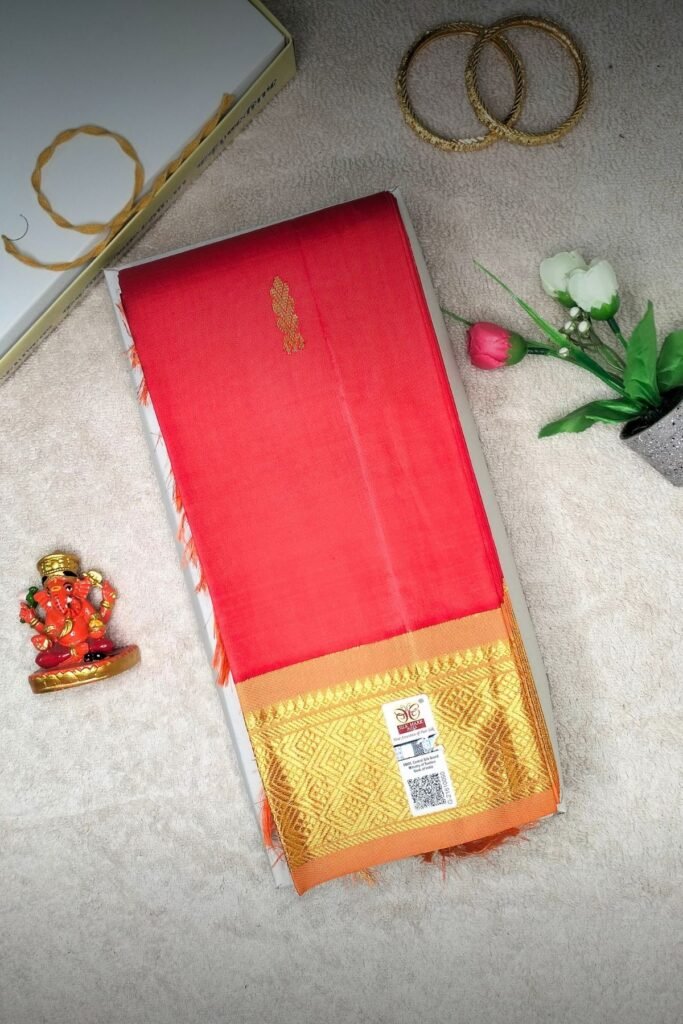
Orange is the colour of the first day, and a bright orange border gives you that colour without a full orange saree. Our red and yellow silk saree has a rich red body with gold zari Nellu (rice-grain) buttas, a mango yellow pallu with heavy zari and Seer Zari lines, and a bright orange border with Vanki diamond mesh and Thazhambu temple edging.
It also works again on day 3 (red) and day 5 (yellow), which makes it the most useful single saree for the week. Price: Rs 11,900, now Rs 9,520.
Day 2 (12 Oct), White: Milk White Silk Saree with Red Korvai Border
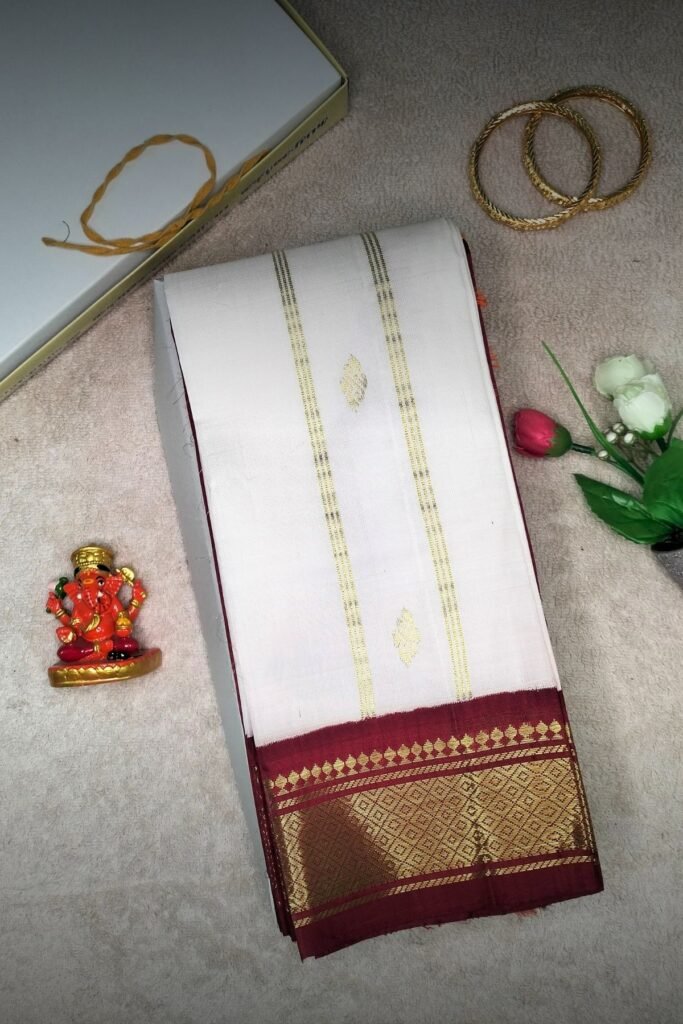
White stands for purity and calm, and a white silk saree is the natural choice for a morning puja. The white and red silk saree has a milk white body with fine gold zari pinstripes (kodu) and floral buttas, a dark red Korvai border with a gold zari lattice band and Gopuram edging, and a dark red pallu.
The red border keeps it festive enough for evening Golu visits too. Price: Rs 14,500, now Rs 11,600.
Day 3 (13 Oct), Red: Wine Red Silk Saree with Olive Gold Border
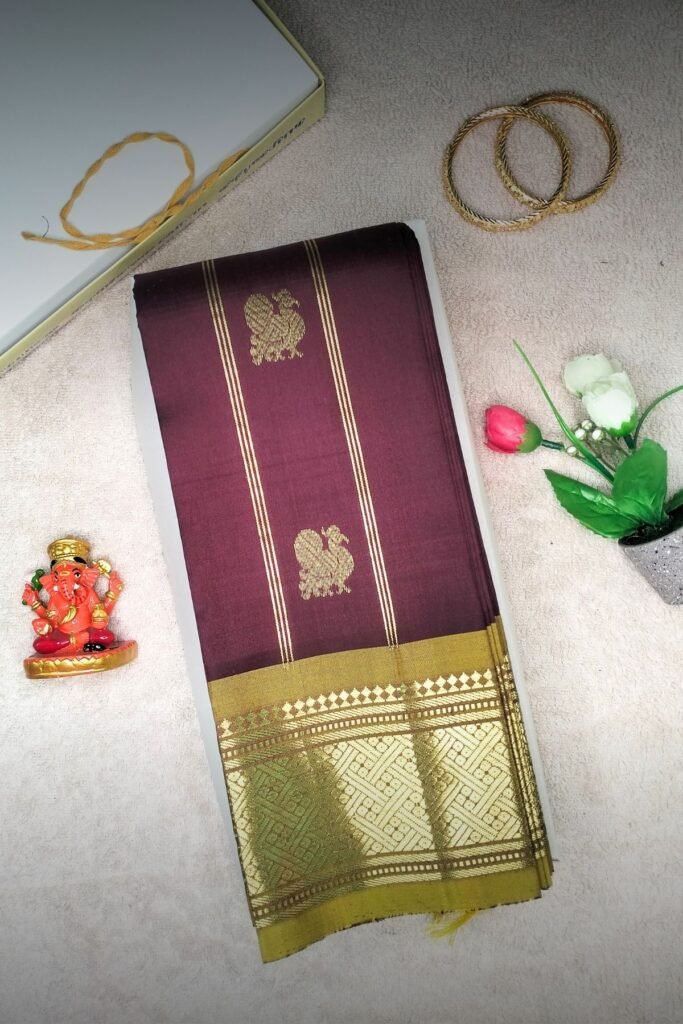
Red is the colour of strength and celebration. If you already wore the red and mango yellow saree on day 1, a deeper wine red keeps day 3 looking different. Our wine red silk saree has gold zari Annapakshi and small star buttas, an olive green and gold border with Jaal and Muthu Kattam (diamond lattice) weaving, and a wine red pallu with Seer Zari lines.
Price: Rs 10,500, now Rs 8,400.
Day 4 (14 Oct), Royal Blue: Royal Blue Silk Saree with Pink Border
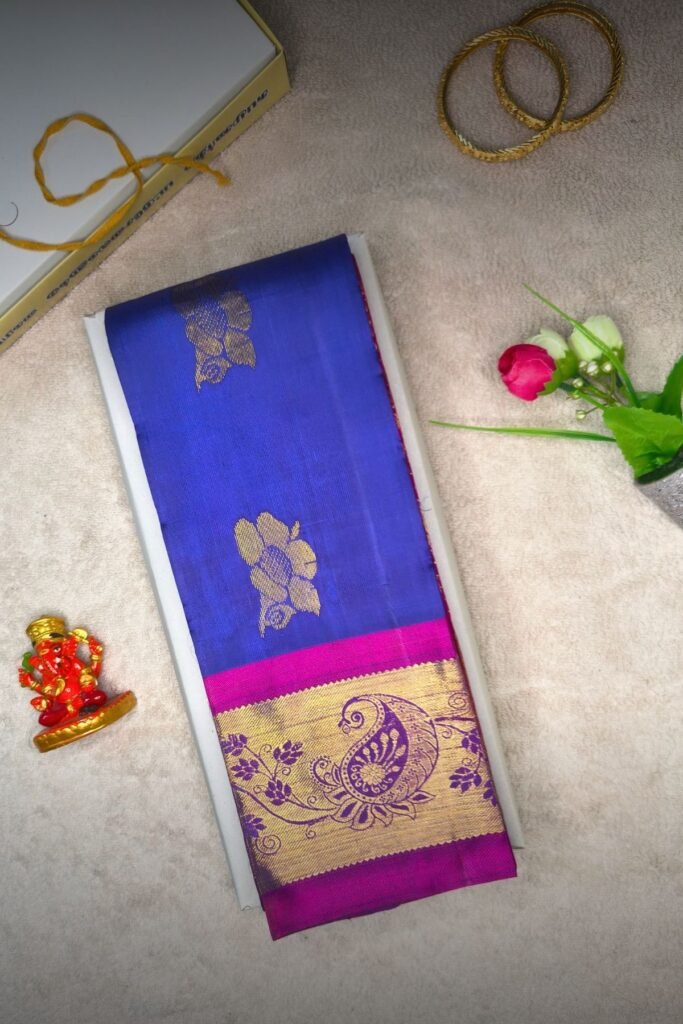
Royal blue is a confident colour that looks rich under evening lights. The royal blue silk saree carries gold and silver zari Poothiri floral buttas, a magenta pink Korvai border with Kodi Manga (paisley with floral vines) motifs, and a pallu with Thamarai (lotus), Mada Vilakku (temple lamp) and Gopuram motifs.
If you prefer a softer blue, our lavender and blue silk saree has a royal blue border and pallu. Price: Rs 16,500, now Rs 11,550.
Day 5 (15 Oct), Yellow: Off White Silk Saree with Yellow Border
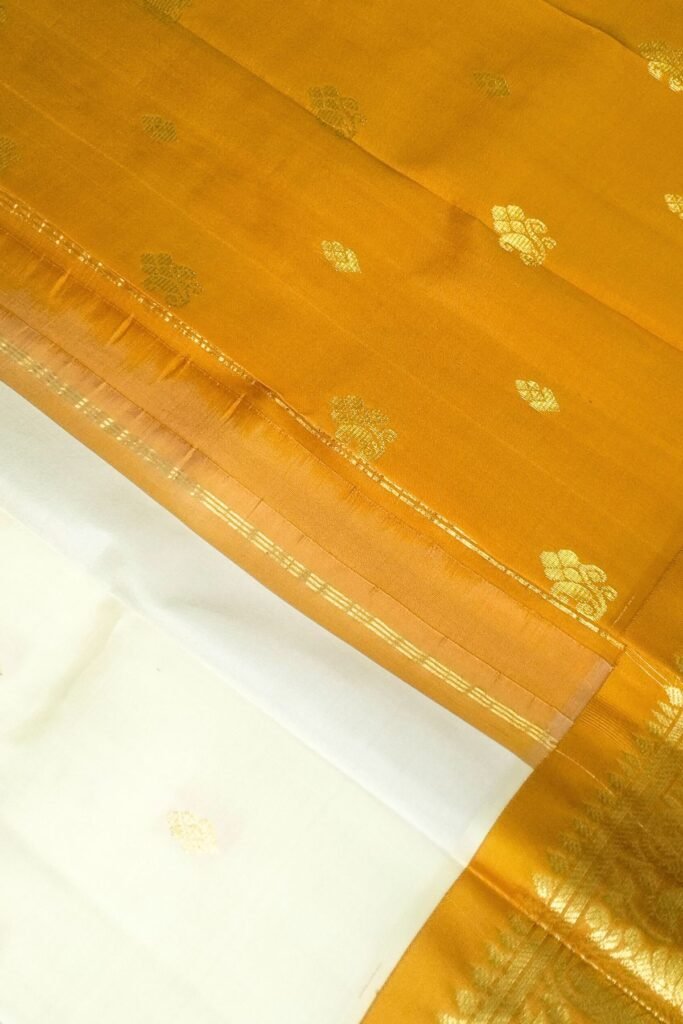
Yellow brings brightness and joy. A cream body with a mustard yellow border is easier to wear than a full yellow saree and looks elegant at a daytime puja. Our off white silk saree has gold zari floral and mango buttas, a mustard yellow Korvai border with Mayil (peacock) motifs and Gopuram edging, and a mustard yellow pallu.
It can also stand in for white on day 2. Price: Rs 14,900, now Rs 11,920.
Day 6 (16 Oct), Green: Parrot Green Silk Saree with Peacock Blue Border

Green is the colour of growth and new beginnings. Our parrot green silk saree has gold zari Chakram (coin) buttas and fine zari lines on the body, a peacock blue Korvai border with Manga Kodi motifs, and a peacock blue pallu covered in Tamarai Jaal (lotus grid) brocade.
For a softer green, see our sea green and rani pink silk saree. Price: Rs 19,500, now Rs 13,650.
Day 7 (17 Oct), Grey: Coffee Brown Silk Saree with Purple Border
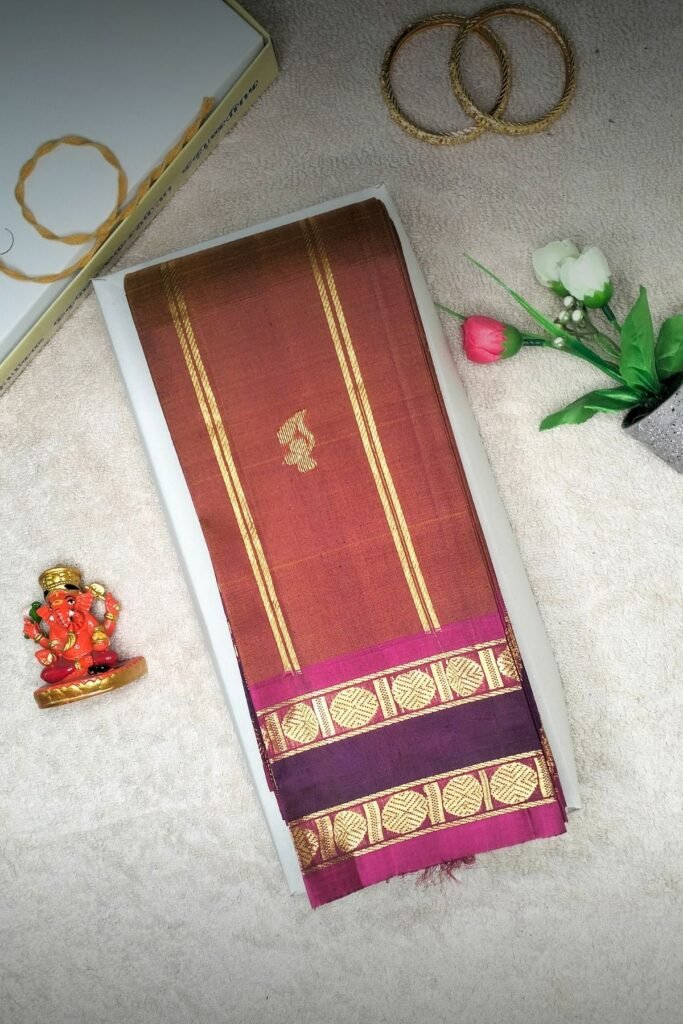
Grey is the hardest Navratri colour to find in a traditional silk saree, and we will be honest: we do not have a grey saree in our collection right now. If your family is flexible on day 7, a muted, metallic neutral is the closest choice.
Our coffee brown silk saree has a metallic coffee brown body with gold zari Annapakshi and floral buttas, a deep purple pallu, and a double-side Retta Petta border in magenta and purple. The purple pallu means it also works on day 8. Price: Rs 15,900, now Rs 11,130.
Day 8 (18 Oct), Purple: Lavender Silk Saree with Forest Green Border
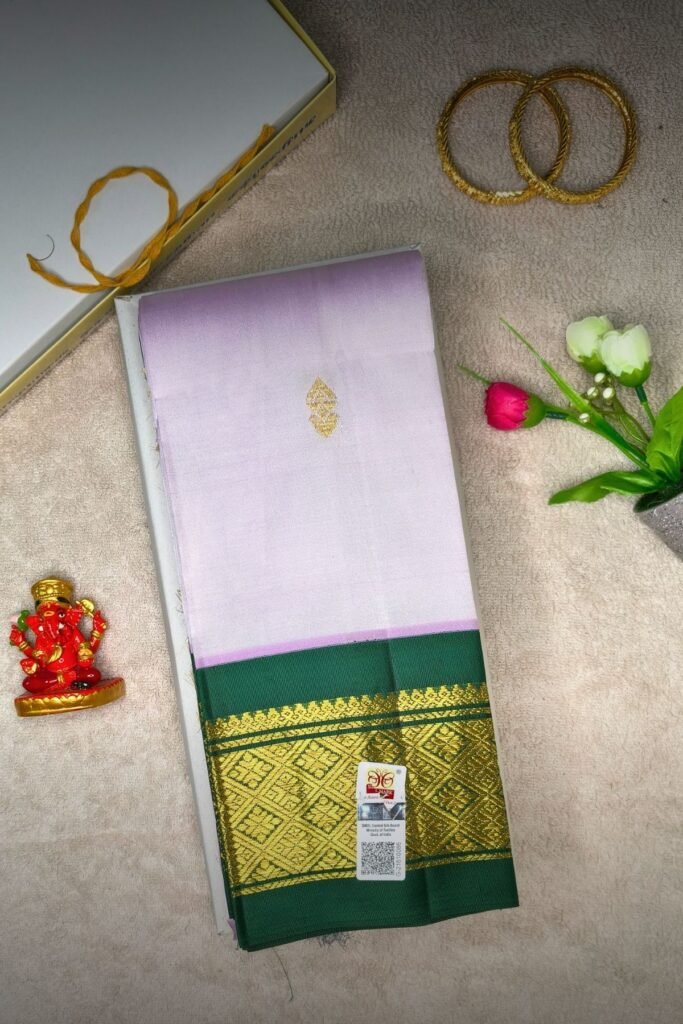
Purple stands for grace and dignity. Lavender is the soft, wearable side of purple, and it looks fresh at a daytime Golu visit. Our lavender silk saree has gold zari Iruthalai Pakshi (twin peacocks in a temple arch) and Vanki buttas, a forest green Korvai border with Muthu Kattam zari and Mottu (bead) edging, and a forest green pallu.
Price: Rs 11,900, now Rs 9,520.
Day 9 (19 Oct), Peacock Green: Peacock Blue Green Silk Saree with Wine Pallu
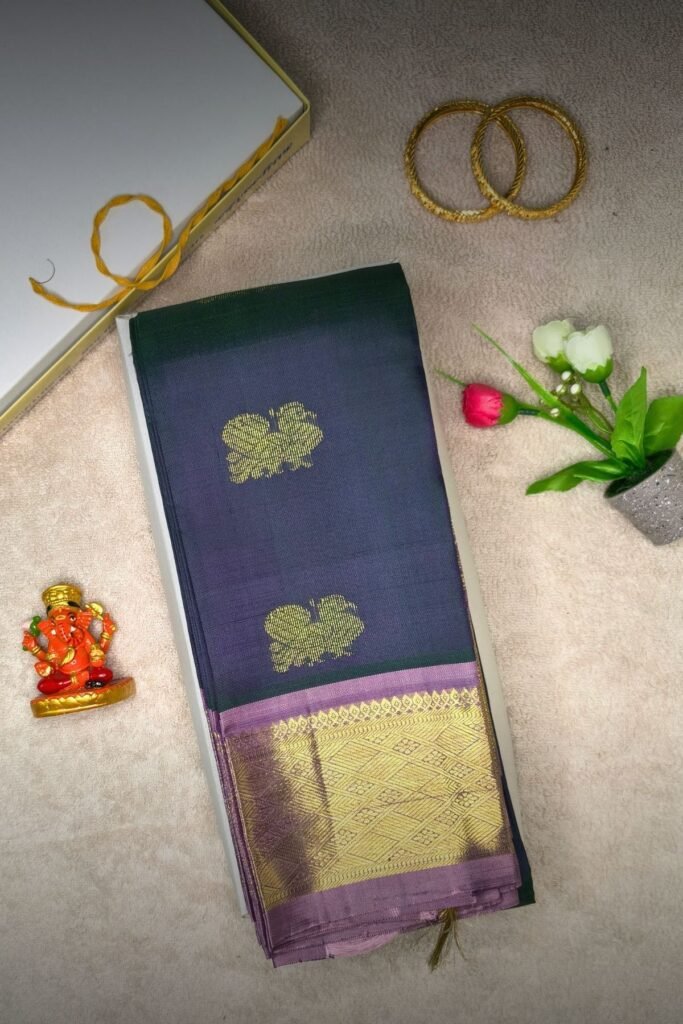
The last day calls for your grandest saree. Our peacock blue silk saree is a dual-tone peacock blue-green with shimmering gold zari Mayil (peacock) and floral buttas, a light wine double-side border with dense diamond lattice weaving and Vanki edging, and a wine pallu with golden peacocks in floral trellis work.
For a lighter look, our aqua green silk saree has a soft pink peacock pallu. Price: Rs 21,500, now Rs 15,050.
Navaratri in Tamil Nadu: Golu, Saraswati Puja and What to Wear
In Tamil Nadu, Navaratri is as much about Golu as about colours. Homes set up the Golu (steps of dolls), and women visit each other in the evenings to see the display, sing, and exchange thamboolam (betel leaves, fruit and small gifts). That shapes what you wear.
Evening Golu visits
- You will sit on the floor, walk between homes and pose for photos, so choose a saree that drapes easily. A one-side border saree is simpler to manage than a heavy double-side border.
- Bright borders and zari pallus look best under the warm lights of a Golu room. Deep colours like wine red, royal blue and parrot green photograph well at night.
Saraswati Puja and Ayudha Puja
- The last days of Navaratri bring Saraswati Puja, when books and instruments are placed before the goddess, and Ayudha Puja, when tools and vehicles are worshipped.
- Many families wear white, cream or yellow for Saraswati Puja. A white saree with a red border, or an off-white saree with a yellow border, suits the day.
Vijayadashami
- Vijayadashami (20 October 2026) is the day many children begin learning (Vidyarambham). It is a day for your best festive silk, so the peacock green or royal blue saree works well.
How to Cover Nine Days with Fewer Sarees
Buying nine new sarees is not realistic for most families. Use the border and pallu colours to cover more than one day:
- Red and mango yellow with orange border: day 1 (orange), day 3 (red) and day 5 (yellow).
- Off white with yellow border: day 2 (white) and day 5 (yellow).
- Coffee brown with purple pallu: day 7 (a neutral if grey is flexible) and day 8 (purple).
- Parrot green with peacock blue border: day 6 (green) and day 9 (peacock green).
- Royal blue with pink border: day 4 (royal blue), and later for Deepavali.
Five sarees can cover all nine days, and every one of them will be worn again at Deepavali and family weddings.
Choosing a Silk Saree That Lasts Nine Days
Not every silk saree is built for nine evenings of sitting, walking and visiting. Two comparisons help you choose:
Woven border vs printed border
- Woven (handloom) border: the colour and zari are part of the weave, so they stay sharp after many wears. All our sarees have woven borders, and many use the Korvai technique, where the body and border are woven separately and interlocked by hand.
- Printed border: cheaper, but the print sits on top of the fabric and can look flat in photos.
One-side border vs double-side border
- One-side border: lighter-looking and easy to drape for Golu visits. Fourteen of our sixteen sarees are one-side border.
- Double-side border: grander, better for Vijayadashami or a family function. Our coffee brown and peacock blue-green sarees have double-side borders.
Before you buy any festival saree, check the Silk Mark label. Our guide on how to identify a genuine Thirubuvanam silk saree explains the other checks.
Caring for Your Silk Saree Through Navratri
Nine days of wear is a lot for any silk saree. A few simple habits keep it fresh:
- Air it after each wear. Hang the saree in the shade for a few hours before folding it. Do not leave it in direct sun.
- Keep perfume off the silk. Spray perfume on your skin and let it dry before you drape.
- Refold along different lines. Folding on the same lines every day puts stress on the zari.
- Store in cotton, not plastic. A soft cotton cloth lets the silk breathe.
Our guide on how to store and protect silk sarees at home covers longer-term storage.
Navratri Silk Saree Prices and Offers
Our sixteen handloom pure silk sarees range from Rs 10,500 to Rs 21,500 (regular prices, as of 4 October 2026). Navratri falls inside our Diwali saree sale, which runs until 8 November 2026, so every saree in this guide is currently 20% to 30% off.
Every saree is a single piece, so if a colour you need sells before your day, we will suggest the closest alternative. Shipping is free across India. Order early so the saree reaches you before the day you plan to wear it. If the same saree will be worn again for Deepavali, our guide to silk sarees for Diwali has styling ideas.
Plan Your Nine Days Now
Plan your silk saree colours for Navratri now, pick two or three sarees that cover several colours, and keep the grandest one for the last day.
Not sure which saree covers which day? Call 9965121353 or email varnangalsilksarees@gmail.com, and we will help you plan your Navratri sarees.
Frequently Asked Questions (FAQ)
What are the Navratri colours for 2026?
The common list for Sharad Navratri 2026 (11 to 19 October) is orange, white, red, royal blue, yellow, green, grey, purple and peacock green, one colour per day. Some regions and families follow a different list, so check what your family follows.
Which silk saree is best for Navratri?
A handloom silk saree with a woven border and a bright zari pallu is best, because it looks rich under Golu lights and lasts through many wears. A one-side border saree is easier to manage for evening visits. Choose colours that can cover more than one day.
What should I wear for Golu visits in Tamil Nadu?
A pure silk saree in a deep or bright colour with a woven border is the traditional choice. Pick one that drapes easily, because you will sit on the floor and walk between homes. Wine red, royal blue, parrot green and white with a red border are popular choices.
What colour to wear for Saraswati Puja?
Many families wear white, cream or yellow for Saraswati Puja. A white silk saree with a red border, or an off-white saree with a yellow border, is a good choice.
Can I wear one saree for more than one Navratri day?
Yes. Choose a saree whose body, border and pallu carry different colours. For example, a red saree with a mango yellow pallu and orange border covers the orange, red and yellow days.
Abirami R – I grew up watching the women in my family drape themselves in vibrant colors, which made me realize that a saree carries both grace and history. With my husband Rajarajan’s encouragement, I turned this fascination into a mission to help you find truly authentic Tamil Nadu weaves. I’ve spent years learning the technical side, like zari weight and thread strength, to protect you from misinformation and help you find pieces worth passing down. My goal is to teach you the soul of the heavy Thirubuvanam silk saree so you can identify a real masterpiece for yourself.