What is a Korvai Border Saree?
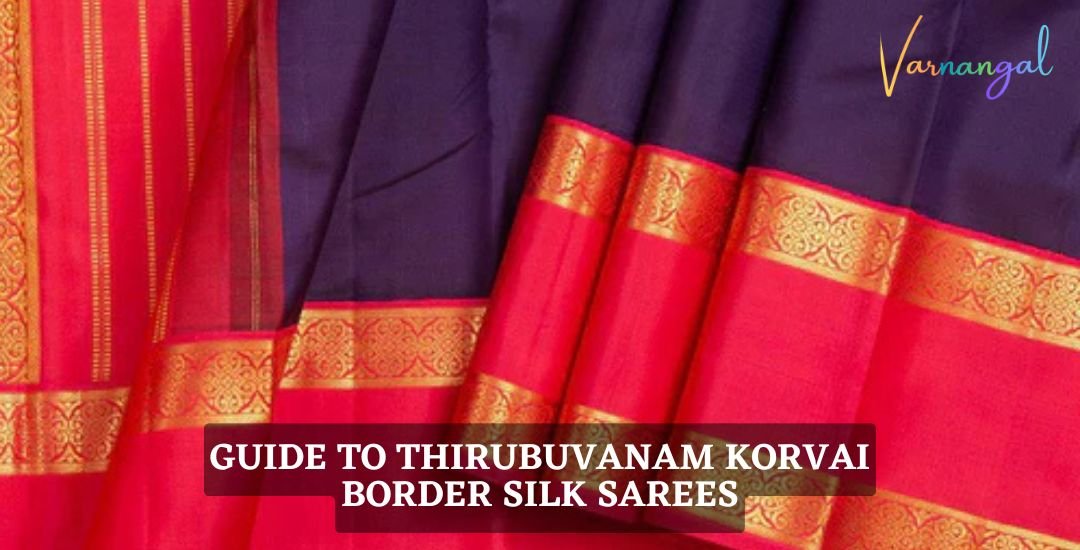
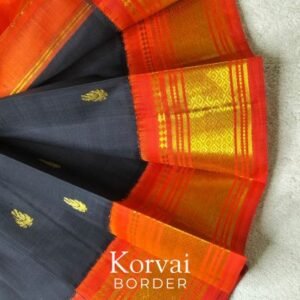
An authentic Korvai border saree is a traditional South Indian handloom silk saree characterized by a distinct structural separation between its body (udal) and border (karai). Unlike standard sarees where the body and border are woven using a single continuous warp, a Korvai saree utilizes a specialized weaving technique where the body and borders are treated as individual entities with contrasting colors and densities. These independent components are structurally interlocked on a pit loom by master artisans using a secure, jagged joint known as a reku (temple) or pettu pattern. This labor-intensive dual-weave process creates a heavier, highly durable textile with sharp, vibrant color contrasts that cannot be replicated by automated machinery.
Thirubuvanam Korvai Weaving
The creation of a Thirubuvanam Korvai saree requires exceptional synchronization and spatial skill. While traditional Korvai often utilizes a dual-weaver technique, Thirubuvanam weavers have perfected a highly specialized single-weaver pit loom innovation. The weaver manages multiple shuttles simultaneously to construct the separate warp and weft components on a single loom setup.
To connect the body and the border, the weaver painstakingly interlocks the threads at the boundary lines during every single pass of the shuttle. This structural joining of the heavy silk body with the contrasting border requires absolute precision in tension control. Because Thirubuvanam weaving employs premium, fine-denier pure mulberry silk threads, the resulting Korvai joint is exceptionally flat, smooth, and seamless to the touch despite the structural transition.
Signature Features of a Thirubuvanam Korvai Saree
The Reku (Temple) Interlock Joint: The most defining visual marker is the sharp, flawless zig-zag or temple pattern formed at the junction where the body meets the border. This structural bond proves the saree was woven by hand.
Heavy, Genuine Gold Zari Borders: Thirubuvanam Korvai borders are renowned for their opulence. Artisans use high-quality silver wire tested and coated with pure gold to weave intricate traditional patterns into the borders.
Rich Pallu Alignment: Thirubuvanam sarees feature a unique folding style known as visiri madippu (fan pleating). This traditional presentation perfectly highlights the flawless aesthetic transition from the Korvai border into the heavily decorated, artistic pallu.
Thirubuvanam vs. Kanchipuram Korvai: Key Differences
While both of these legendary weaving clusters excel at the intricate handloom Korvai technique, they structuralize their silk quite differently. The following comparison highlights the distinct texture, weight, and design philosophies that set Thirubuvanam and Kanchipuram masterworks apart:
| Feature/Aspect | Thirubuvanam Korvai | Kanchipuram Korvai |
|---|---|---|
|
Weight & Texture |
Exceptionally rich, substantial feel with a majestic, heavy drape that holds its regal posture flawlessly. |
Stiffer, structured texture with a dense, traditional weight. |
|
Design Motifs |
Deeply artistic, celebrating heritage with fine, nature-inspired manga (mango), mayil (vertical peacock), and temple coin motifs. |
Focuses heavily on large, bold geometric patterns, checks, and sharp linear structures. |
|
Weaving Twist |
Crafted using heavy-duty, ultra-dense 3-ply filature silk for both warp and weft, giving the fabric an elite, mirror-like luster. |
Uses twisted 3-ply or 4-ply heavy silk yarn for thick, matte-leaning density. |
How to Identify a Genuine Handloom Thirubuvanam Korvai Saree
With powerloom imitations flooding the market, verifying authenticity is crucial:
Inspect the Underside: Turn the saree over and look at the reverse side of the border joint. A genuine handloom Korvai will show a slight, distinct ridge or looping where the two thread systems interlock. Powerloom mass-productions cannot replicate this structural interlock and instead show a flat, printed, or cheaply stitched joint.
Verify the Certifications: Always look for the official Silk Mark and Handloom Mark tags. True Thirubuvanam sarees are woven using pure silk and genuine metallic zari, which can also be verified via a burn test on a loose fringe thread.
Maintenance and Preservation Tips
Mind the Joints: Always fold the saree carefully along the body line rather than putting sharp creases directly on the Korvai interlock joint to prevent structural splitting over time.
Prevent Tarnishing: Store the saree wrapped in a pure cotton muslin cloth inside a cool, dry place. Avoid plastic covers or cardboard boxes, as they trap moisture and cause the pure gold zari in the border to oxidize and turn black.
Professional Cleaning: Only dry clean your Korvai sarees to preserve the natural sheen of the silk and the structural integrity of the handloom weave.
Conclusion
An authentic Thirubuvanam Korvai border silk saree is far more than just an elegant garment; it is a wearable piece of South Indian heritage. The intricate skill required to marry contrasting borders to a pure silk body ensures that each piece remains completely unique. By understanding the rigorous craftsmanship behind the Korvai technique and choosing genuine handloom weaves, you invest in a timeless masterpiece that preserves traditional artisan livelihoods for generations to come.

Abirami R – I grew up watching the women in my family drape themselves in vibrant colors, which made me realize that a saree carries both grace and history. With my husband Rajarajan’s encouragement, I turned this fascination into a mission to help you find truly authentic Tamil Nadu weaves. I’ve spent years learning the technical side, like zari weight and thread strength, to protect you from misinformation and help you find pieces worth passing down. My goal is to teach you the soul of the heavy Thirubuvanam silk saree so you can identify a real masterpiece for yourself.