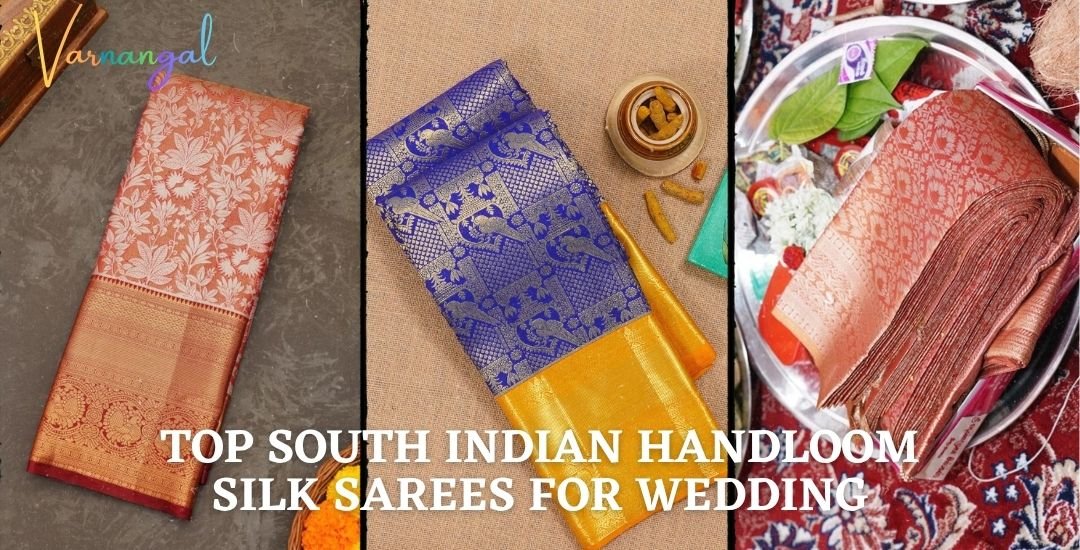
Every South Indian wedding is incomplete without the majestic rustle of pure handwoven silk. For a bride, choosing an authentic handloom saree for her trousseau isn’t just about looking elegant on her big day—it is about investing in a wearable heirloom that carries generations of cultural heritage, regional artistry, and incredible craftsmanship.
In an era dominated by fast fashion, building a bridal wardrobe with genuine handloom clusters ensures that you own unique pieces that stand the test of time, hold emotional value, and look stunning under wedding lights.
What Makes a Saree an Authentic South Indian Handloom?
To understand what separates a genuine handloom masterpiece from mass-produced factory alternatives, we must look at the three strict structural pillars of a true handwoven saree:
Pure Mulberry Silk (Filature Yarn): Traditional weavers exclusively source premium, high-grade natural mulberry silk threads. This silk possesses natural elasticity and a healthy, subtle luster that mimics natural light. It does not have the harsh, artificial, plastic-like shine commonly seen in synthetic or polyester blends.
Genuine Metallic Zari: True traditional bridal wear features zari made by wrapping a fine silver wire around a central silk core thread, which is then electroplated with pure 22-karat gold. This gives the saree its signature weight and an elegant, muted metallic glow that never looks cheap.
The Human Touch & Loom Characteristics: Unlike flat, stiff machine-made powerloom fabrics, handloom sarees feature tiny, completely natural weave variations. If you inspect the selvedge (the running edges of the saree), you will find clear, tiny pinholes. These are left by the wooden loom frame where the fabric was stretched and held in place tightly during the manual weaving process.
Top 7 South Indian Handloom Silk Sarees for Your Wedding Wardrobe
1. Kanchipuram (Kanjivaram) Silk Saree – Tamil Nadu
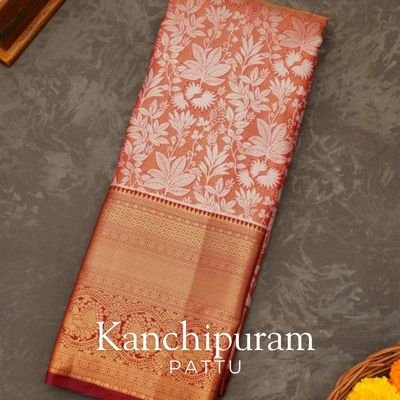
The undisputed crown jewel of South Indian weddings, originating from the temple town of Kanchipuram. It is globally recognized for its unmatched durability, rigid structure, and majestic appearance.
The Heritage & Cultural Significance: For centuries, no South Indian wedding has been deemed complete without the bride wearing a Kanchipuram silk saree. Historically favored by royal families, these sarees are deeply rooted in Dravidian culture, often featuring patterns inspired by the stone carvings of ancient Pallava temples.
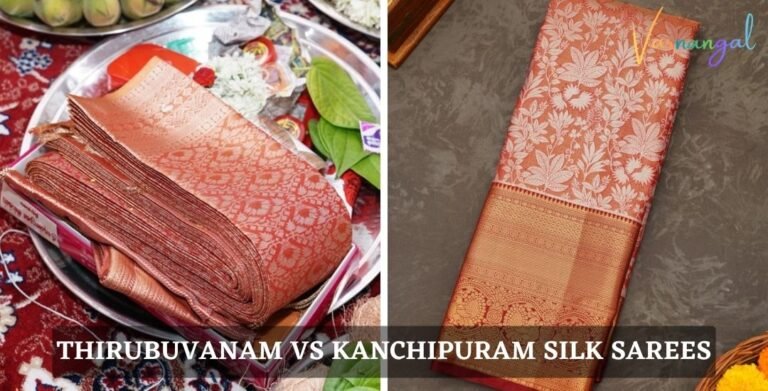
Weaving & Technical Craftsmanship: These sarees are incredibly dense because weavers use a heavy, three-ply silk thread structure (three silk threads twisted into a single yarn). The defining technique of a genuine Kanchipuram is Korvai (also known as Petni). In this manual process, the borders and the body are woven as completely separate pieces on the loom using different shuttles, and then skillfully interlocked by hand using a strong zigzag joint. The Palum Pazhamum (checks) and Muttus (pearl borders) are classic motifs.
Best Suited For: The main wedding ceremony (Muhurtham), where the bride needs a heavy, structured drape that holds its pleats perfectly for hours.
2. Thirubuvanam Silk Saree – Tamil Nadu
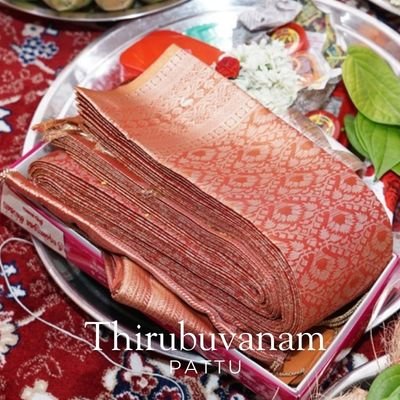
Woven near the Kumbakonam weaving cluster in the Thanjavur district, Thirubuvanam handloom silk sarees offer extraordinary luster, a lighter feel than Kanchipuram, and a continuous, unbroken drape.
The Heritage & Cultural Significance: Originally patronized by the Chola kings, the Thirubuvanam weaving community has preserved a distinct style that focuses heavily on pure filature silk quality. These sarees are highly revered for their religious purity and are frequently gifted during auspicious family occasions and large-scale festival gatherings.
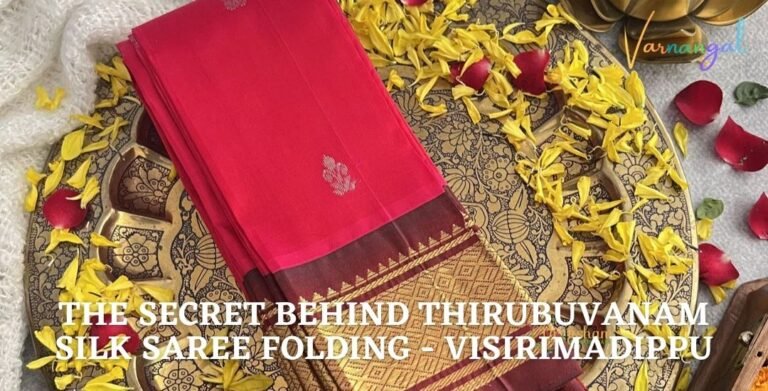
Weaving & Technical Craftsmanship: Made with high-quality, lightweight 3-ply filature silk threads. Unlike Kanchipuram, Thirubuvanam weavers use a seamless single-warp technique. This means the body and the borders are woven together as one single continuous piece of fabric on the loom, making the saree highly tear-proof and less bulky at the joints. They traditionally feature a prominent, heavy zari border on only one side and are packed using a specialized fan-pleat layout called Visiri Madippu, which prevents creases from damaging the delicate gold threadwork.
Best Suited For: High-end wedding receptions, evening family dinners, or morning religious rituals where ease of movement is essential.
3. Arani Silk Saree – Tamil Nadu
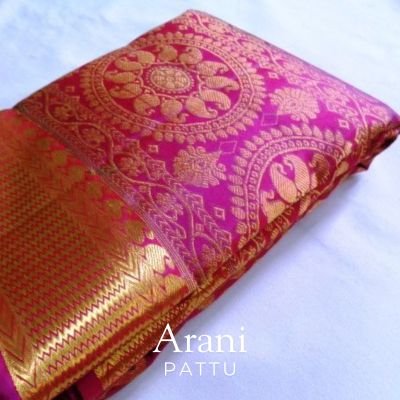
Hailing from the historic town of Arani in the Tiruvannamalai district, these sarees provide the perfect balance of lightweight comfort, vibrant color play, and festive grandeur.
The Heritage & Cultural Significance: Arani has been a vital textile hub since the Vijayanagara empire. While Kanchipuram focused on heavy, rigid drapes, Arani developed a reputation for creating sarees that offered the exact same royal aesthetic but with a much lighter weight, making them accessible and highly practical for long summer weddings.
Weaving & Technical Craftsmanship: Arani sarees are globally famous for their unique dual-side contrast borders. Through a complex multi-shuttle weaving process, weavers can create two completely different border designs and entirely different color schemes on the top and bottom edges of a single piece of fabric. They also utilize advanced interlocking color techniques to produce striking Maankani (mango green) and dual-tone body shades.
Best Suited For: Engagement functions, Sangeet nights, or high-energy pre-wedding festivities where the bride wants to dance and move freely without carrying heavy weight.
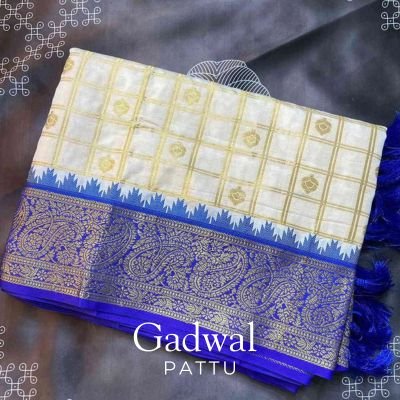
4. Gadwal Silk Saree – Telangana
An architectural marvel in textile form originating from Jogulamba Gadwal district, these sarees are loved for their brilliant hybrid material construction.
The Heritage & Cultural Significance: Gadwal sarees hold a prestigious Geographical Indication (GI) tag. Historically protected by the local Nizam royalty and local chieftains, the design was specifically created to give women a regal, formal look while offering absolute cooling comfort in the intense, hot Deccan plateau climate.
Weaving & Technical Craftsmanship: The structural layout of a Gadwal saree is genius. The body of the saree is woven using fine, lightweight, breathable cotton or un-degummed raw silk threads. However, the heavy borders and the elaborate Pallu (the decorative end of the saree) are woven separately using pure silk and heavy gold zari. The weavers then use a traditional hand-locking interlock method called Kupadam to seamlessly join the cotton body with the silk borders, leaving a flawless, strong seam line.
Best Suited For: Morning pre-wedding rituals like Nalangu, Haldi, or welcoming arriving wedding guests during daytime ceremonies.
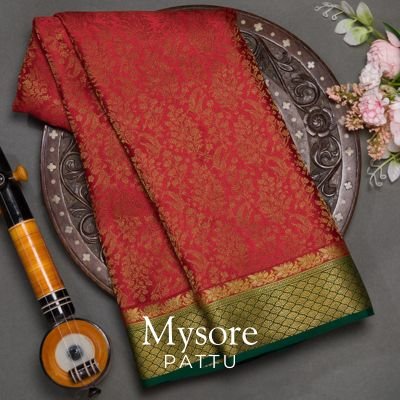
5. Mysore Silk Saree – Karnataka
Crafted exclusively under governmental supervision in Karnataka, Mysore silk represents the absolute pinnacle of minimalist royal luxury and clean elegance.
The Heritage & Cultural Significance: The history of Mysore silk traces directly back to the extra-long staple silk factory established by Maharaja Nalvadi Krishnaraja Wadiyar in 1912. Today, authentic pieces are produced under the KSIC (Karnataka Silk Industries Corporation) umbrella, carrying a rich heritage of royal state patronage.
Weaving & Technical Craftsmanship: These sarees are woven using 100% pure, single-cocoon natural silk yarn combined with authentic silver thread that is heavily plated with 24-karat pure gold. They do not feature busy patterns or heavy brocades across the body. Instead, they are globally loved for their plain, solid-colored bodies framed by crisp, clean, single-line zari borders. The fabric undergoes a special boiling process that gives it a buttery-smooth, liquid-like fluid drape that clings gracefully to the body shape.
Best Suited For: Morning wedding Pujas, Chandan application ceremonies, or formal post-wedding family luncheons.
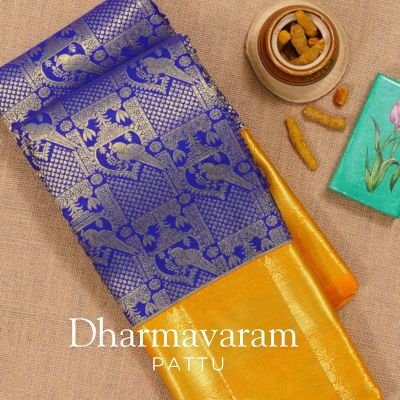
6. Dharmavaram Silk Saree – Andhra Pradesh
Hailing from the Sri Sathya Sai district, Dharmavaram sarees are highly celebrated across South India for their rich artistic flair, wide borders, and dramatic color transitions.
The Heritage & Cultural Significance: Dharmavaram is widely called the “Silk City of Andhra Pradesh.” The weavers here originally specialized in weaving clothing for temple idols, which explains why the bridal designs are heavily loaded with religious motifs, artistic theatrical patterns, and traditional folklore representations.
Weaving & Technical Craftsmanship: These sarees utilize a complex double-shaded silk weaving process. By twisting two entirely different colored silk threads into the warp and weft, the weavers create a striking optical effect where the fabric shifts colors dynamically under different lighting conditions (such as a shot-silk effect showing red and blue simultaneously). They feature exceptionally broad borders and massive, heavy gold brocade Pallus decorated with patterns like Annam (sacred swans) and Rudraksha beads.
Best Suited For: Grand grand evening wedding receptions, stage events, or high-profile formal family gatherings where high visual impact is required.
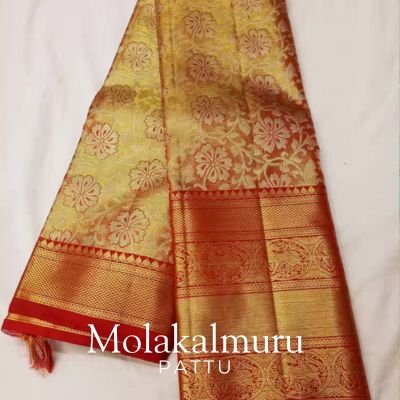
7. Molakalmuru Silk Saree – Karnataka
A highly traditional, visually arresting handloom weave originating from the small town of Molakalmuru in the Chitradurga district.
The Heritage & Cultural Significance: Granted a protected GI tag, Molakalmuru sarees are deep reflections of rural Karnataka’s rich artistic history. They are highly prized by collectors and traditional families who want to preserve old-world vintage aesthetics in their bridal wardrobe.
Weaving & Technical Craftsmanship: Woven manually on traditional pit looms, weavers use a complex three-shuttle technique to achieve a stark, razor-sharp color contrast between the main body and the borders. The sarees are instantly recognizable by their highly intricate geometric patterns, distinct stair-step temple (Mottu) borders, and specialized nature-inspired artistic motifs such as peacocks, bugs, and the famous Gandaberunda (a mythical two-headed bird from royal emblem history).
Best Suited For: Traditional pre-wedding rituals, intimate family functions, or formal morning wedding gatherings.
Essential Bridal Buying & Care Guide for South Indian Silks
Investing in premium handloom wedding sarees requires deep knowledge of authenticity and preservation. Follow these expert guidelines to safeguard your bridal collection:
The Real Zari Test (The Red Thread Test): To instantly spot synthetic alternatives, gently look at the loose edge threads of the zari work. Real gold-plated zari features a pure red silk core thread inside the metallic silver wire wrapping. If you scrape the metal away and find a white nylon, green polyester, or cheap cotton core thread, it is a machine-made imitation.
The Silk Burn Test: If you can pull out a tiny single strand of silk from the inner seams, burn it with a matchstick. Pure natural silk will burn slowly, smell exactly like burning human hair, and leave behind a crumbly, dark ash that turns to powder when touched. Synthetic silk will melt rapidly, smell like burning plastic, and form a hard, solid chemical bead at the tip.
Proper Moisture-Free Storage: Never store your premium wedding silks inside plastic bags or airtight zippered covers. Plastic traps ambient moisture over time, which causes chemical oxidation and turns costly gold zari black. Always wrap each saree individually in a clean, breathable cotton or muslin cloth, store them flat on wooden shelves, and send them out for professional dry cleaning only.
Conclusion
Building a complete wedding wardrobe is an art form. By featuring these seven unique and distinct handloom silk varieties—from the architectural beauty of the Gadwal to the heavy luxury of the Kanchipuram—your bridal trousseau offers a geographically diverse, culturally accurate, and rich representation of South India’s finest wedding textile heritage. These handwoven treasures ensure you carry timeless elegance and authentic craftsmanship into your new journey.
Frequently Asked Questions (FAQ)
While both utilize pure heavy silk and genuine gold zari from Tamil Nadu, they differ completely in structure. A Kanchipuram saree uses the Korvai technique to join separately woven borders to the body with a visible zigzag hand-joint. A Thirubuvanam saree is woven seamlessly as one single continuous piece on the loom, has a prominent border on only one side, and uses a specialized fan-fold packaging layout (Visiri Madippu) to prevent folding lines from creasing.
Handloom sarees are individually crafted by master weavers over several days, offering high breathability, superior durability, and custom textures that cannot be replicated by machines. Powerloom fabrics are mass-produced using high-friction machines that often stretch the yarn thin, resulting in a stiff, non-breathable drape that traps body heat and lacks artistic value.
Traditional South Indian bridal attire favors deep, symbolic colors. The most auspicious combinations include Arai-maragatham (deep emerald green joined with rich crimson borders), Muthu-vellai (pearl white paired with thick red zari borders representing purity), and classic bright scarlet red or mustard gold mixed with solid maroon elements.
While the main Muhurtham traditionally calls for a thick, heavy Kanchipuram saree, modern brides frequently opt for Mysore Silk during morning rituals or secondary ceremonies. Its lightweight properties, smooth fluid texture, and pure gold purity make it incredibly comfortable for sitting in front of sacred fires for extended periods.
A genuine handloom can be identified by inspecting the running edges (selvedge) for tiny, uneven pinholes left by the wooden loom frame pins. If you flip the saree over, a handloom features a clean reverse side with tiny manual knots, whereas powerlooms leave a fuzzy, shaggy texture of machine-shaved threads. Finally, feel the fabric—handlooms possess a natural, subtle variation in texture from human hand pressure, while powerloom fabrics feel mathematically flat and perfectly uniform.
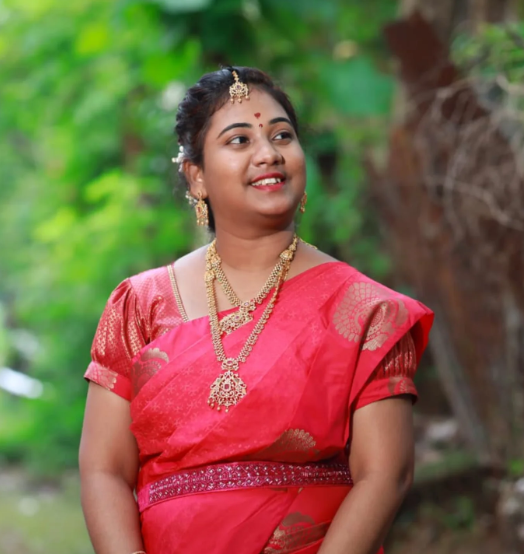
Abirami R – I grew up watching the women in my family drape themselves in vibrant colors, which made me realize that a saree carries both grace and history. With my husband Rajarajan’s encouragement, I turned this fascination into a mission to help you find truly authentic Tamil Nadu weaves. I’ve spent years learning the technical side, like zari weight and thread strength, to protect you from misinformation and help you find pieces worth passing down. My goal is to teach you the soul of the heavy Thirubuvanam silk saree so you can identify a real masterpiece for yourself.