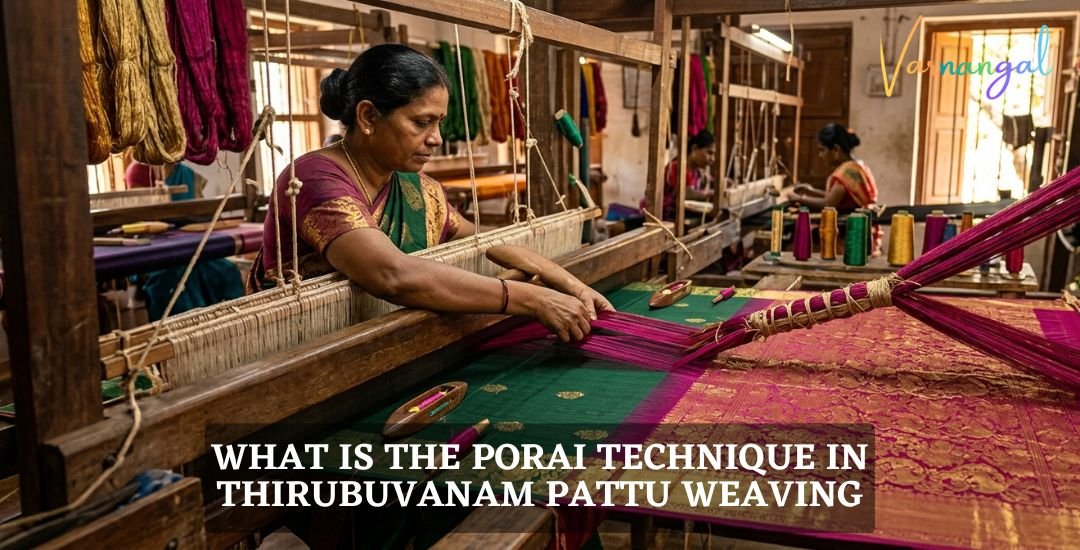
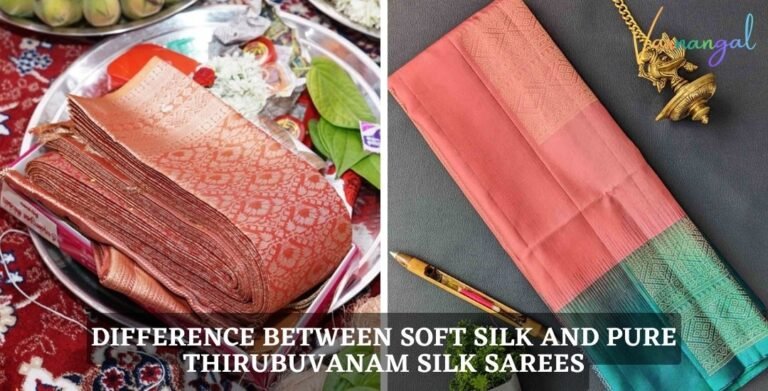
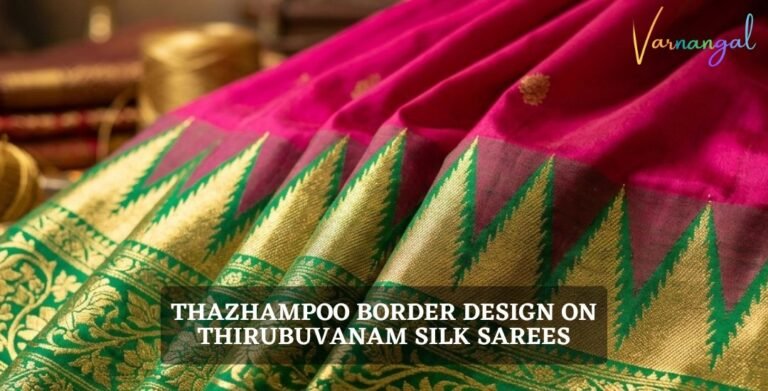
The Porai technique is a traditional handloom weaving method used in Thirubuvanam, Tamil Nadu, where the pallu (the decorative end piece of the saree) portion of the warp is tie-dyed prior to weaving. This specialized resist-dyeing process ensures that the primary body color completely stays out of the pallu zone, maintaining absolute color distinction without separate fabric joints.
How the Porai Technique Works (Made Simple)
To fully understand the Porai technique, it helps to look at how weavers change the colors of a saree without making it weak or messy.
1. The Magic of Tie-Dye Before Weaving
Normally, to get a different colored end-piece (pallu), weavers have to cut the threads and tie two different colored fabrics together. The Porai technique skips this entirely. Instead, the weavers take one single, long set of white silk threads. They tightly wrap and tie up the exact section meant for the pallu so no dye can touch it. Then, they dip the rest of the threads into the main body color. Once that is done, they untie the wrapped section and dye it a different, contrasting color. This creates two distinct colors on the exact same thread.
2. No Stitches, No Weak Points
Because the color change happens directly on the thread before it even goes onto the loom, there is no need to join two separate pieces of cloth later. This means the saree is completely seamless. There are no bumps, rough joints, or weak spots where the body meets the pallu, making the entire saree incredibly strong and smooth to the touch.
3. How Porai Compares to Kanchipuram's Method
It is much easier to appreciate the Porai technique when you compare it to how other famous sarees, like Kanchipuram silks, handle color changes.
Kanchipuram (The Interlocking Method): Weavers use two separate pieces of silk—one for the body and one for the pallu—and twist the threads together on the loom to link them. While beautiful, this creates a distinct seam line that can sometimes weaken or fray after decades of use.
Thirubuvanam Porai (The Single-Thread Method): Because it uses the tie-dye method on a single continuous thread, there is no joint line at all. The saree is one solid, unbroken piece of fabric from start to finish.
4. Making the Gold Zari Pop
Once the two perfectly separated color zones are woven, the weavers bring in the heavy gold and silver threads (zari) to decorate the pallu. Because the Porai dyeing process leaves a completely clean, sharp color background without any bleeding or messy overlapping shades, the intricate gold patterns and traditional motifs stamped onto the pallu look much brighter and sharper.
Conclusion
The Porai technique is a clever, time-tested solution to a common weaving challenge. By tie-dyeing the silk threads before they hit the loom, Thirubuvanam artisans can create a stunning contrast look while keeping the saree completely seamless, exceptionally strong, and beautiful for generations.
Abirami R – I grew up watching the women in my family drape themselves in vibrant colors, which made me realize that a saree carries both grace and history. With my husband Rajarajan’s encouragement, I turned this fascination into a mission to help you find truly authentic Tamil Nadu weaves. I’ve spent years learning the technical side, like zari weight and thread strength, to protect you from misinformation and help you find pieces worth passing down. My goal is to teach you the soul of the heavy Thirubuvanam silk saree so you can identify a real masterpiece for yourself.
Enjoyed this? Share the love with your network!Share this content