
You have planned the saree for weeks, and then Deepavali morning arrives with everything a silk saree dislikes: oil from the Ganga Snanam bath, ghee-rich sweets, agal vilakku (clay lamps) on the floor and sparklers in every hand. Good silk saree care during Diwali is mostly about the next twelve hours, not the next wash.
This guide covers how to wear silk safely around lamps and crackers, what to do with oil and sweet stains the same night, and how to put the saree away after the festival. Varnangal is a Chennai seller of Silk Mark certified handloom pure silk sarees woven by Thirubuvanam weavers.
Quick Answer: How to Keep Your Silk Saree Safe on Diwali
Pin the pallu firmly and keep it away from lamps and crackers, and step back from the cracker line when you are wearing silk. Blot oil or sweet stains with a dry cloth; do not rub them or wash them with water. Air the saree in the shade after the festival, and send real stains to a dry cleaner who handles silk.
Why Silk Needs Extra Care on Deepavali
Deepavali in Tamil Nadu packs fire, oil and food into one long day, and a silk saree is in the middle of all three. Burn-safety advice for the festival is clear: wear cotton near crackers and avoid loose, flammable clothing (The South First on Deepavali burn injuries). A draped saree with a loose pallu is exactly that kind of clothing.
Silk also reacts badly to the usual home fixes. Water spreads oil, rubbing roughs up the weave and dulls the zari, and a hot iron leaves shine marks. The good news: most damage on Deepavali is avoidable with a few habits.
Before You Step Out: Drape for Safety
1. Pin the pallu, every time
Pleat the pallu and pin it at the shoulder, or tuck the end in at the waist before you go near lamps or crackers. A free-flowing pallu is the part most likely to swing over a flame.
2. Keep the pleats off the floor
Drape the saree a little higher than usual so the pleats clear the floor. Rows of agal vilakku on the kolam sit at exactly the height of a trailing hem.
3. Change for the crackers
Many families wear the new silk saree for the pooja and the visits, and change into cotton for the cracker hour. If you stay in silk, watch from a distance and let someone in cotton light them.
4. Keep water close
Keep a bucket of water or sand near the cracker area. It is the one rule every Deepavali safety guide repeats, and it protects people first and sarees second.
Silk Saree Care During Diwali: Stains, Oil and Wax
The Silk Mark Organisation of India gives the core rule for stains on silk: do not wash them with water at home, and take the saree to a professional dry cleaner who handles silk. Until then, here is what to do in the moment:
- Oil from the bath or the bakshanam (festival snacks): blot it at once with a dry cotton cloth or tissue. Do not rub and do not add water, which spreads the oil ring.
- Ghee and sweet syrup: lift off any solid bits with a blunt edge, then blot. Sticky syrup attracts dust, so show it to a dry cleaner within a few days.
- Lamp wax or oil drips: let wax harden, then lift it off gently. Leave any stain mark for the dry cleaner.
- Turmeric and kumkum: shake off the powder. Do not wet it, because both can set into a stain.
- Small cracker burn or spark mark: do not cut or trim it. A specialist can sometimes darn a small hole along the weave.
Right Way vs Wrong Way: a Quick Comparison
- Oil stain: right way, blot with a dry cloth and dry clean. Wrong way, scrub with soap and water.
- Creases after a long day: right way, air it in the shade and iron on the reverse side at low heat. Wrong way, spray water and iron the face of the saree.
- Storage: right way, fold loosely in a cotton cloth after airing. Wrong way, pack it into a plastic cover straight away.
- Near lamps: right way, pallu pinned and pleats lifted. Wrong way, pallu loose over the arm.
After Deepavali: Washing and Storing Your Silk Saree
The Silk Mark Organisation recommends dry cleaning for the first three washes of a silk saree. If you hand wash later, use lukewarm water and a neutral soap, do not wring it, and dry it flat in the shade. When you iron, use low to medium heat on the reverse side and never spray water directly on the silk (Silk Mark silk care guide).
Before you put it away, air the saree in the shade for a few hours so any smell of smoke and oil fades. Then fold it loosely and wrap it in a soft cotton cloth. For the zari, avoid storing it in plastic. Read our guide on what Silk Mark means if you are checking a new saree before the festival.
Choosing a Saree That Suits a Busy Diwali Day
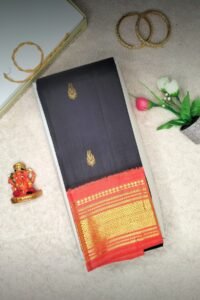
If you will be near lamps and crackers in the evening, a saree with a darker body hides small marks better than a white one. Our black and orange silk saree is named on its product page for evening receptions and grand festive occasions. For the morning pooja, a light saree such as the white and red silk saree is the classic choice; just keep it away from the kitchen. For colour ideas, see our guide to silk sarees for Diwali or browse all handloom pure silk sarees.
Conclusion
A silk saree can last for generations, and one careless Deepavali evening is the most common way it gets marked. Pin the pallu, lift the pleats, step back from the crackers, and blot rather than wash. Questions about caring for a handloom silk saree from Thirubuvanam? Call 9965121353.
Frequently Asked Questions (FAQ)
Can I wear a silk saree while bursting crackers?
It is safer not to. Festival safety advice recommends cotton near crackers and no loose clothing. If you stay in silk, pin the pallu and watch from a distance.
How do I remove an oil stain from a silk saree?
Blot it immediately with a dry cloth. Do not rub it or wash it with water. The Silk Mark Organisation of India advises taking stained silk to a professional dry cleaner who handles silk.
Can I wash my silk saree at home after Diwali?
The Silk Mark Organisation recommends dry cleaning for the first three washes. After that, hand wash in lukewarm water with a neutral soap, do not wring, and dry flat in the shade.
How do I iron a silk saree after the festival?
Use low to medium heat on the reverse side, and never spray water directly on the silk.
How should I store a silk saree after Diwali?
Air it in the shade first, then fold it loosely and wrap it in a soft cotton cloth instead of a plastic cover.

Abirami R – I grew up watching the women in my family drape themselves in vibrant colors, which made me realize that a saree carries both grace and history. With my husband Rajarajan’s encouragement, I turned this fascination into a mission to help you find truly authentic Tamil Nadu weaves. I’ve spent years learning the technical side, like zari weight and thread strength, to protect you from misinformation and help you find pieces worth passing down. My goal is to teach you the soul of the heavy Thirubuvanam silk saree so you can identify a real masterpiece for yourself.