Ask anyone who grew up in Chennai or Madurai what Deepavali feels like, and they will start with the dark: an alarm before 4 am, warm oil on the head, and the first crackers going off down the street before sunrise. That is the clearest of the Deepavali traditions in Tamil Nadu. Here the festival is a morning event, while much of North India celebrates after dark with the Lakshmi Pooja.
In 2026, Deepavali falls on Sunday 8 November. This guide walks through how the day is celebrated in Tamil Nadu, step by step, from the oil bath to the evening lamps, and what to wear for each part of it. Varnangal is a Chennai seller of Silk Mark certified handloom pure silk sarees woven by Thirubuvanam weavers.
Quick Answer: How Is Deepavali Celebrated in Tamil Nadu?
In Tamil Nadu, Deepavali is celebrated early in the morning on Naraka Chaturdashi. Families wake before sunrise for an oil bath called Ganga Snanam, take a spoonful of Deepavali marundhu (a herbal digestive), wear new clothes after a short pooja, burst crackers, share sweets and visit relatives. The day marks Krishna’s victory over the demon Narakasura.
Why Tamil Nadu Celebrates Deepavali in the Morning
The reason is the story behind the day. Across India, Naraka Chaturdashi commemorates Krishna’s destruction of Narakasura, a celebration of good over evil (see Britannica on Naraka Chaturdashi). The demon was defeated before dawn, so Tamil Nadu marks the festival at that hour.
In much of North India, Naraka Chaturdashi is a smaller day, often called Choti Diwali, and the main celebration is the Lakshmi Pooja on the new moon night that follows. In Tamil Nadu, Naraka Chaturdashi itself is Deepavali. Depending on the lunar calendar, the two can fall on the same date or a day apart.
Deepavali in Tamil Nadu vs Diwali in North India
Here is the difference at a glance:
- Main day: Tamil Nadu celebrates on Naraka Chaturdashi. North India’s main day is Amavasya (the new moon), with the Lakshmi Pooja.
- Time of day: Tamil Nadu celebrates before sunrise and through the morning. North India’s main celebration is in the evening and at night.
- Key ritual: in Tamil Nadu, the Ganga Snanam oil bath. In North India, the Lakshmi Pooja and rows of diyas.
- Story told: in Tamil Nadu, Krishna defeating Narakasura. In North India, more often Rama’s return to Ayodhya.
- New clothes: in Tamil Nadu, worn straight after the morning oil bath and pooja. In North India, usually for the evening pooja.
Deepavali Traditions in Tamil Nadu, Step by Step
1. Before Sunrise: the Oil Bath (Ganga Snanam)
The day starts around 4 am. Elders apply warm gingelly (sesame) oil to everyone’s hair, and the family bathes with water heated in a large brass vessel. Many homes wash the vessel with turmeric and fill it the night before. The bath is called Ganga Snanam because of the belief that the river Ganga is present in the water that morning (The News Minute describes the custom in Chennai homes).
This is why the first question relatives ask each other on Deepavali morning is Ganga snanam aachaa? (Have you had your Ganga bath?)
2. Deepavali Marundhu (the Festival Medicine)
Before breakfast, many families take a spoonful of Deepavali marundhu, also called Deepavali legiyam. It is a dark paste of dry ginger, pepper, cumin, coriander, ajwain, jaggery and ghee, made to settle the stomach before a day of sweets and fried snacks (DT Next shares a family recipe).
3. New Clothes (Puthu Thuni) and the Morning Pooja
New clothes are laid before the family deity with sweets and crackers, and a short pooja comes before anyone wears them. In many homes a dab of turmeric goes on the corner of each new garment first. For women, this is the moment for a new pattu (silk) saree. Read our guide to silk sarees for Diwali for colour and border ideas.
4. Crackers in the Early Morning
Once the new clothes are on, the family steps out for crackers. In Tamil Nadu the noise starts before sunrise, which surprises visitors from the north, where crackers mostly come out after dark.
5. Sweets, Bakshanam and the Festival Breakfast
Weeks of preparation go into the bakshanam (festival snacks): murukku, thattai and seedai, plus sweets such as Mysore Pak, laddu and halwa. Some dishes are regional. Okkarai, made with horse gram and jaggery, belongs to the Thanjavur and Kumbakonam belt, and Munthiri Kothu to Kanyakumari (The News Minute has the full list). Breakfast is often idli or dosa, and in many non-vegetarian homes it is idli with mutton curry.
6. Visiting Relatives and Elders
The late morning is for visits. Families carry sweet boxes to relatives and neighbours and take blessings from elders. This is when a silk saree is seen most, so many women choose a brighter saree for the visits than for the early pooja.
7. Lamps in the Evening
As the day ends, homes light agal vilakku (clay lamps) at the entrance and on the kolam. Tamil Nadu has a bigger lamp festival a few weeks later, Karthigai Deepam, but the Deepavali lamps close the day.
Thalai Deepavali: a Newly Married Couple's First Deepavali
Thalai Deepavali (first Deepavali) is the first Deepavali after a wedding. The new couple usually celebrates it at the bride’s parents’ home. The bride’s family gives them new clothes, often a silk saree for the bride, and the day is kept as a small family celebration. For many Tamil families it is as important as the wedding itself.
What to Wear for Each Part of Deepavali
A Deepavali day has three moods, and many women change sarees between them. Using the occasions named on our product pages:
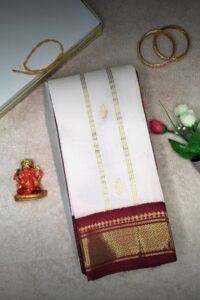
- Morning pooja: our white and red silk saree has a milk white body and a dark red Korvai border, and its product page names temple rituals and festive occasions.
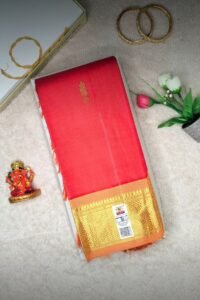
- Visits and festive lunch: the red and yellow silk saree pairs a red body with a mango yellow pallu, and its page names festive occasions.
- Evening: a deeper colour reads well under lamplight. Browse all our handloom pure silk sarees.
Each of our sarees is a single handloom piece woven in Thirubuvanam, so check availability before you plan the blouse.
A Note on Silk Sarees and Crackers
Silk and sparks do not mix. Tuck the pallu in or pin it over the shoulder before you light a cracker or a lamp, and keep the loose end away from agal vilakku on the floor. If oil from the morning bath or the bakshanam touches the saree, blot it with a dry cloth and do not rub it.
Keep Exploring
More festival guides from Varnangal: silk saree colours for Navratri, silk sarees for Vinayagar Chaturthi and types of pattu sarees in Tamil Nadu.
Conclusion
Deepavali in Tamil Nadu belongs to the morning: the oil bath before dawn, a spoonful of marundhu, new clothes after the pooja, crackers, sweets and visits, then lamps at dusk. If you are choosing a silk saree for the morning pooja or the visits, call 9965121353 and we will help you pick one.
Frequently Asked Questions (FAQ)
How is Deepavali celebrated in Tamil Nadu?
It is a morning festival. Families take an oil bath (Ganga Snanam) before sunrise, eat Deepavali marundhu, wear new clothes after a short pooja, burst crackers, share sweets and visit relatives. Lamps are lit in the evening.
Why is the Deepavali oil bath called Ganga Snanam?
Because of the belief that the river Ganga is present in the bath water on Deepavali morning. That is why people greet each other with Ganga snanam aachaa? (Have you had your Ganga bath?)
Is Deepavali in Tamil Nadu on a different day from North India?
Tamil Nadu celebrates on Naraka Chaturdashi, while North India’s main day is the Lakshmi Pooja on the new moon. Depending on the calendar, they can be the same date or a day apart. In 2026, Deepavali in Tamil Nadu is on Sunday 8 November.
What is Thalai Deepavali?
It is a newly married couple’s first Deepavali, usually celebrated at the bride’s parents’ home, where the couple receives new clothes.
What should I wear for Deepavali pooja?
New clothes are the tradition. For women, a silk saree is the classic choice. A light body with a red border, such as our milk white saree with a red Korvai border, suits the morning pooja.
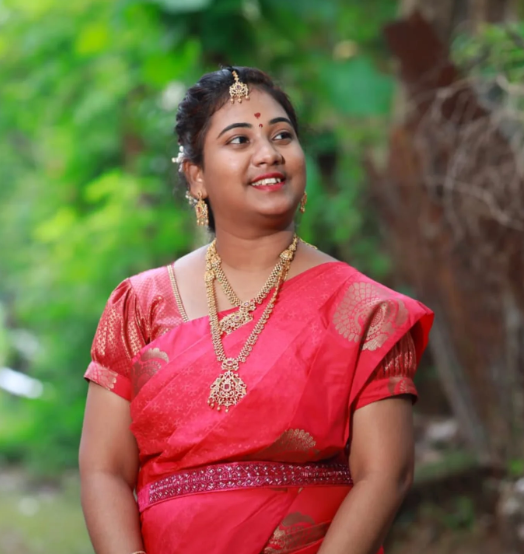
Abirami R – I grew up watching the women in my family drape themselves in vibrant colors, which made me realize that a saree carries both grace and history. With my husband Rajarajan’s encouragement, I turned this fascination into a mission to help you find truly authentic Tamil Nadu weaves. I’ve spent years learning the technical side, like zari weight and thread strength, to protect you from misinformation and help you find pieces worth passing down. My goal is to teach you the soul of the heavy Thirubuvanam silk saree so you can identify a real masterpiece for yourself.


Pingback: Karthigai Deepam Significance and Traditions | Varnangal
Pingback: Thalai Deepavali Traditions, Seer and Saree | Varnangal
Pingback: Deepavali Bakshanam: Sweets, Snacks & Legiyam | Varnangal