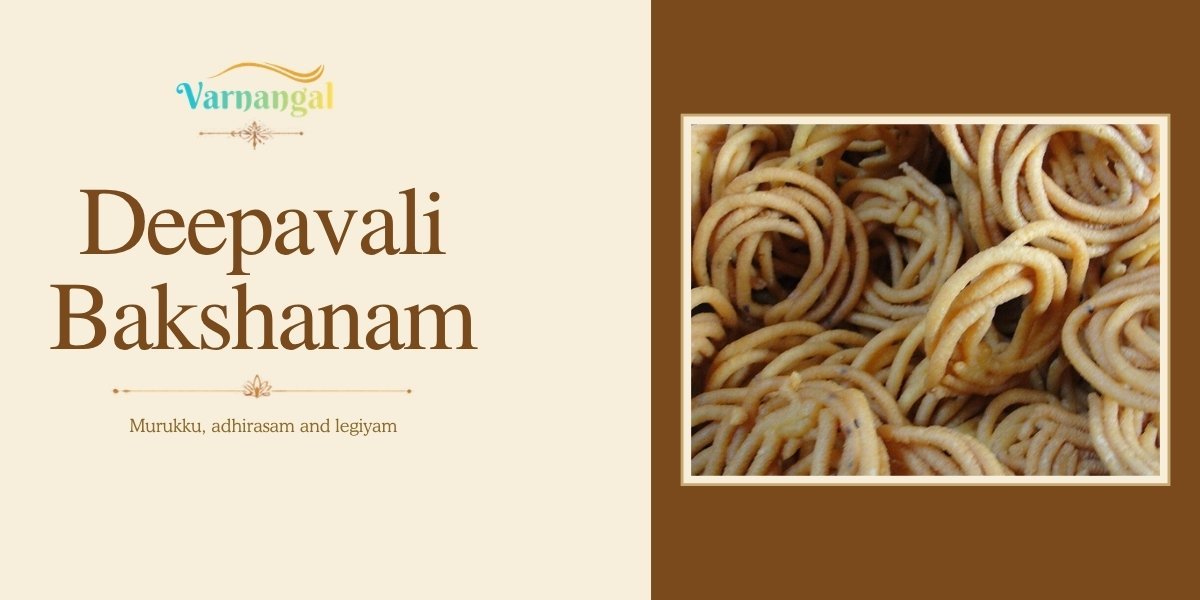
In a Tamil home, Deepavali starts in the kitchen about a week before the day. The murukku press comes down from the loft, jaggery is melted for adhirasam, and the whole house smells of hot oil and ghee. These sweets and savouries are called Deepavali bakshanam, and they are as much a part of the festival as the oil bath and the new clothes.
This guide lists the bakshanam Tamil families make, what each one is made of, why it is part of Deepavali, and how the plates are offered and shared. Varnangal is a Chennai seller of Silk Mark certified handloom pure silk sarees woven by Thirubuvanam weavers, and we are as fond of a Deepavali tin of murukku as anyone.
Quick Answer: What Is Deepavali Bakshanam?
Quick answer: Deepavali bakshanam is the set of homemade sweets and savouries Tamil families prepare for Deepavali, such as murukku, ribbon pakoda, adhirasam, laddu and mysore pak, together with Deepavali legiyam, a herbal digestive paste taken on the festival morning. The bakshanam is first offered to the gods and then shared with relatives, neighbours and friends. Handloom pure silk sarees woven in Thirubuvanam are available from Varnangal, Chennai.
Why Bakshanam Is Made for Deepavali
There are three reasons the tradition has lasted:
- An offering first. On Deepavali morning, a plate of each bakshanam is placed in the pooja room with the new clothes and crackers before anyone eats.
- Sharing. Plates or tins of bakshanam go to relatives, neighbours and friends, and come back filled with theirs. It is the festival’s way of keeping ties warm.
- Keeping food. Most savouries are fried and dry, so they keep for days in an airtight tin and feed guests through the festival week.
The making is also a family event. Grandmothers press the murukku, children shape the laddus, and recipes pass from one generation to the next. The festival menu also changes from district to district, as The News Minute shows in its piece on different Deepavali feasts across Tamil Nadu. For the full picture of the day, see our guide to Deepavali traditions in Tamil Nadu.
Deepavali Savouries (Kaaram)
Murukku
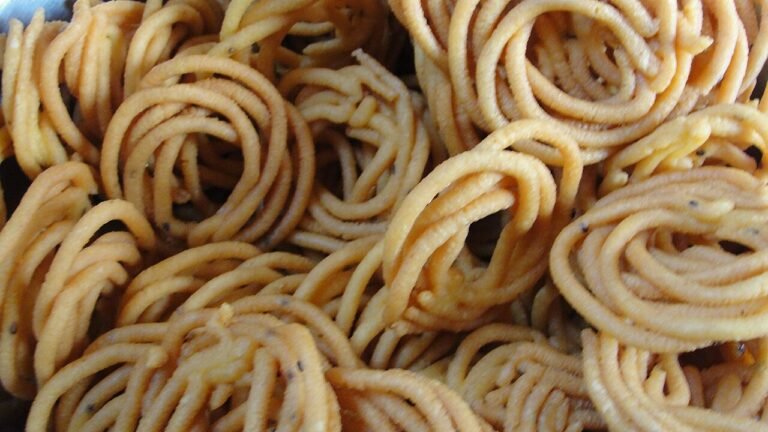
The one savoury no Tamil Deepavali is without. Rice flour and a little roasted urad dal flour are mixed with butter or hot oil, cumin or sesame seeds, and pressed into spirals straight into hot oil. Kai murukku, twisted by hand into rings, is the skilled version that older women in the family are proud of.
Thenkuzhal and ribbon pakoda
Thenkuzhal is a plain, thin murukku pressed through a small round plate, crisp and light. Ribbon pakoda (ola pakoda) uses a flat ribbon plate and a gram flour dough spiced with chilli powder, so it is flatter and spicier.
Mixture and omapodi
Omapodi is fine gram flour sev flavoured with omam (ajwain), which also helps digestion. Mixture combines omapodi, boondi, fried peanuts, curry leaves and roasted gram into one spicy tin.
Deepavali Sweets (Inippu)
Adhirasam
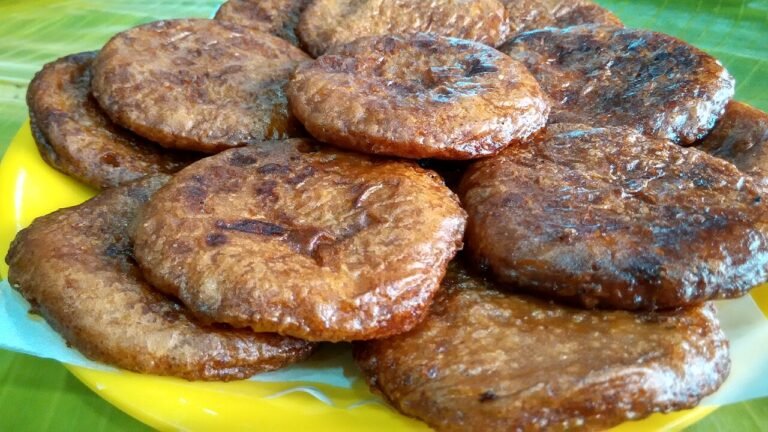
Adhirasam is the most traditional Tamil Deepavali sweet. Soaked and ground rice flour is mixed into melted jaggery syrup, the dough is rested, then flattened into discs and fried in oil or ghee. It needs patience and the right syrup consistency, which is why many families say a good adhirasam is the real test of a cook.
Laddu, maaladu and rava laddu
Boondi laddu (tiny fried gram flour drops bound in sugar syrup with cashews and cardamom) is the festive classic. Maaladu, made from roasted gram (pottukadalai) flour, sugar and ghee, is quicker and does not need frying. Rava laddu uses roasted semolina and coconut.
Mysore pak and badam halwa
Mysore pak, made from gram flour, sugar and plenty of ghee, is a favourite in Tamil homes despite its name. Badam halwa or kasi halwa is often added for guests and for the Thalai Deepavali seer trays.
Somas and gulab jamun
Somas (a fried pastry filled with coconut, sugar or roasted gram) is common in many districts. Gulab jamun has become a modern Deepavali regular, especially in Chennai homes.
Deepavali Legiyam (Deepavali Marundhu)
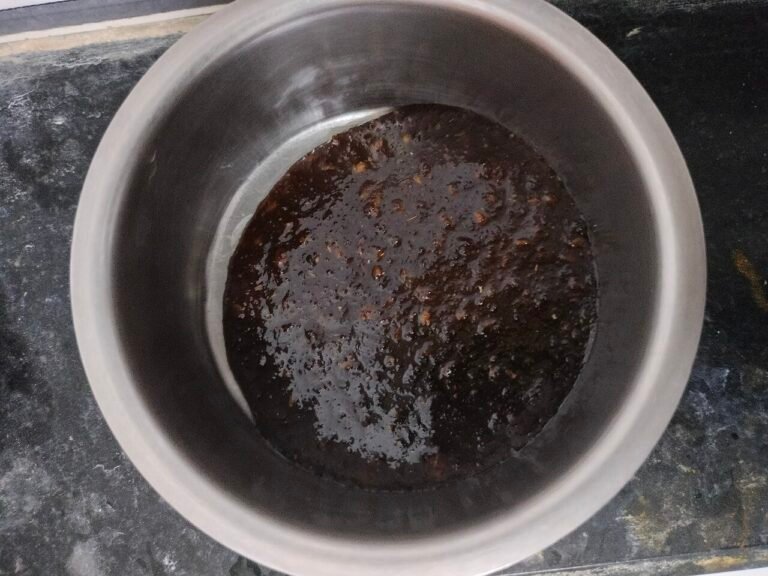
After the oil bath on Deepavali morning, every member of the family takes a small spoonful of Deepavali legiyam, also called Deepavali marundhu (medicine). It is a dark, thick paste made by cooking a ground mix of digestive spices with jaggery and ghee. Typical recipes use dry ginger (sukku), black pepper, long pepper (thippili), omam, cumin and coriander seeds, though every family has its own blend.
The reason is practical: Deepavali means a day of fried savouries and ghee-rich sweets, and the legiyam is taken first to prepare the stomach for them. DT Next has a short explainer on Deepavali legiyam and how it is made. It is one of the clearest examples of how Tamil festival food balances indulgence with care.
Deepavali Bakshanam List at a Glance
| Bakshanam | Type | Main ingredients | Keeps |
|---|---|---|---|
|
Murukku |
Savoury |
Rice flour, urad dal flour, butter, cumin |
Well in an airtight tin |
|
Thenkuzhal |
Savoury |
Rice flour, urad dal flour |
Well in an airtight tin |
|
Ribbon pakoda |
Savoury |
Gram flour, rice flour, chilli |
Well in an airtight tin |
|
Omapodi and mixture |
Savoury |
Gram flour, omam, peanuts, boondi |
Well in an airtight tin |
|
Adhirasam |
Sweet |
Rice flour, jaggery, ghee |
Several days |
|
Boondi laddu |
Sweet |
Gram flour, sugar, cashew, cardamom |
A few days |
|
Maaladu |
Sweet |
Roasted gram flour, sugar, ghee |
Several days |
|
Mysore pak |
Sweet |
Gram flour, sugar, ghee |
Several days |
|
Deepavali legiyam |
Digestive |
Dry ginger, pepper, thippili, omam, jaggery, ghee |
Weeks, in a dry jar |
Keeping times vary with the recipe and the weather, so store everything in clean, dry airtight containers and use a dry spoon.
Homemade vs Shop-Bought Bakshanam
Many Chennai families now mix both. A fair comparison:
| Homemade | Shop-bought | |
|---|---|---|
|
Taste |
Your family’s own recipe |
Consistent, sometimes sweeter |
|
Time |
Several days of work |
Ready in an hour |
|
For the pooja |
Traditionally preferred |
Accepted in most homes today |
|
For gifting |
Personal and valued |
Neat boxes, easy to send |
A common middle path is to make murukku, adhirasam and the legiyam at home, and buy the ghee sweets from a trusted local shop.
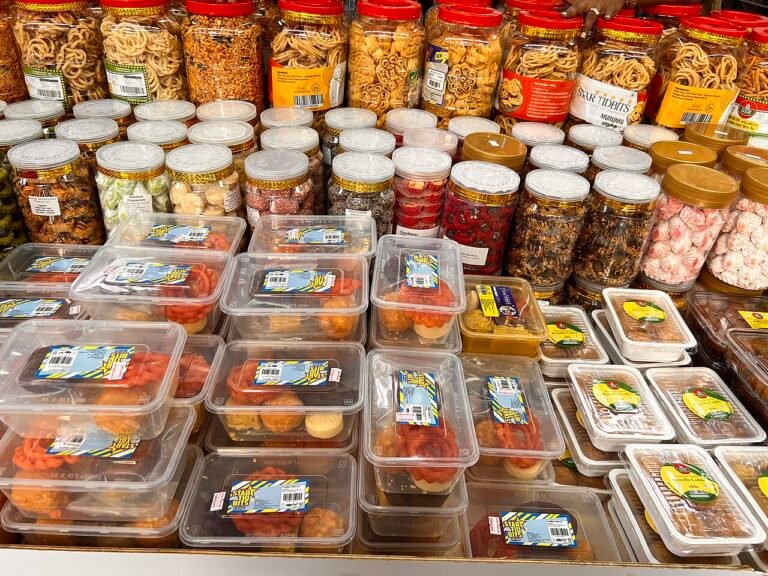
How Bakshanam Is Offered and Shared
- Pooja plate: on Deepavali morning, one piece of every item goes on a plate before the gods, with the new clothes, betel leaves and crackers.
- Elders first: after the pooja, the elders are served first and bless the younger members.
- Plates to neighbours: through the day, children carry plates covered with a cloth to neighbours and relatives. It is good manners to return the plate with your own bakshanam on it.
- Seer trays: for a newly married daughter, trays of bakshanam form part of the Thalai Deepavali seer sent with the couple.
What to Wear in the Kitchen and at the Pooja
The week of frying is cotton-saree time: hot oil and silk do not mix. On Deepavali morning, after the oil bath, the new silk saree comes out for the pooja and the family visits. If you serve bakshanam in your silk saree, keep the pallu pinned, and blot any ghee or syrup drop at once with a dry cotton cloth without rubbing. Our guide on silk saree care during Diwali explains how to treat oil and sweet stains.
Looking for the festival saree itself? A few handloom pure silk sarees from our collection that suit the Deepavali morning:
- Black and orange silk saree: deep black body with gold zari leaf buttas and an orange Vanki border, listed for grand festive occasions and evening functions.
- Wine red silk saree: wine red with Annapakshi zari buttas and an olive gold Muthu Kattam border.
- Off white saree with red border: ivory body with gold zari floral buttas and a dark red Korvai border, a classic for the pooja.
All are single handloom pieces, Silk Mark certified and woven in Thirubuvanam, Tamil Nadu. They are part of our Diwali saree sale, which runs until midnight on 8 November 2026, with free shipping across India. Browse every design on our handloom pure silk sarees page, or read how to pick the right colour and border for Diwali.
Conclusion
Deepavali bakshanam is the festival’s most generous tradition: a week of cooking, a plate for the gods, a spoonful of legiyam after the oil bath, and tins passed from house to house. Whether you make every item at home or only the murukku and adhirasam, the sharing is what makes it Deepavali.
Need help choosing a saree for the Deepavali morning? Call 9965121353 or email varnangalsilksarees@gmail.com.
Frequently Asked Questions (FAQ)
What is bakshanam for Deepavali?
Bakshanam is the Tamil word for the homemade sweets and savouries prepared for festivals. For Deepavali it usually includes murukku, thenkuzhal, ribbon pakoda, mixture, adhirasam, laddu and mysore pak.
What sweets are made for Deepavali in Tamil Nadu?
Adhirasam, boondi laddu, maaladu, rava laddu, mysore pak, badam halwa and somas are the common Deepavali sweets in Tamil Nadu. Adhirasam is the most traditional.
What is Deepavali legiyam made of?
Deepavali legiyam is a digestive paste of spices such as dry ginger, black pepper, long pepper (thippili), omam and cumin, cooked with jaggery and ghee. Recipes vary by family.
Why do we eat legiyam on Deepavali?
It is taken after the oil bath on Deepavali morning to prepare the stomach for the rich, fried and ghee-heavy food of the day.
How many days before Deepavali should bakshanam be made?
Most families start about a week before. Dry savouries like murukku can be made first, while ghee sweets and laddus are made closer to the day.

Abirami R – I grew up watching the women in my family drape themselves in vibrant colors, which made me realize that a saree carries both grace and history. With my husband Rajarajan’s encouragement, I turned this fascination into a mission to help you find truly authentic Tamil Nadu weaves. I’ve spent years learning the technical side, like zari weight and thread strength, to protect you from misinformation and help you find pieces worth passing down. My goal is to teach you the soul of the heavy Thirubuvanam silk saree so you can identify a real masterpiece for yourself.