A Tamil wedding is not one ceremony. It is a chain of rituals that starts weeks before the muhurtham, with the families giving their word, and ends days later, when the bride is welcomed into her new home. If you are attending your first one, or planning one for your family, the order can be hard to follow.
This guide explains the Tamil wedding rituals step by step, in the order most families follow, with what each one means. Customs differ between communities, so treat it as the common thread rather than a rulebook. Varnangal is a Chennai seller of handloom silk sarees woven in Thirubuvanam, and weddings are the occasions our customers shop for most.
Quick Answer: What Are the Main Tamil Wedding Rituals?
The main Tamil wedding rituals, in order, are Nichayathartham (the formal engagement), Pandakkal Muhurtham (a prayer before the preparations begin), Vratham and Mangala Snanam (purifying rites), Kashi Yatra, Maalai Maatral (exchange of garlands), Oonjal (the swing), Kanyadanam (giving the bride’s hand), Muhurtham (tying the thaali), Saptapadi (seven steps), and afterwards Nalangu and Grihapravesam.
Before the Wedding: Fixing the Match
Nichayathartham, the Formal Engagement
Nichayathartham means “making it certain”. The two families meet, usually at the bride’s home or a small hall, and formally agree to the marriage in front of elders. A priest reads out the lagna pathrigai (the written wedding agreement with the date and muhurtham time), and the families exchange plates of gifts called seer varisai.
The groom’s family gives the bride a silk saree, and she changes into it for the rest of the function. Betel leaves, areca nut, turmeric, fruit and coconut are tied into her saree pallu as a blessing, and in many families the couple now exchange rings (WeddingSutra on Tamil wedding traditions).
Pandakkal Muhurtham, the First Pole
A few days before the wedding, or on the day before, both families pray to their family deity (kula deivam) for the wedding to go smoothly. A bamboo pole is decorated, worshipped and planted at the entrance of the house or hall. It marks the official start of the wedding preparations.
Sumangali Prarthanai
Married women of the family are invited home, fed a meal on banana leaves and given gifts, as a way of seeking the blessings of women of the family who have passed on. In Tamil Brahmin families, the bride often wears a nine-yard saree for this prayer.
The Day Before: Vratham and Janavasam
On the morning before the wedding, the bride and groom each perform Vratham with their own families. A turmeric-dipped thread (kappu) is tied on their wrists as protection, and from this point they are expected to stay at home and not travel until the wedding is over.
In the evening, many families hold Janavasam or Mappillai Azhaippu: the groom is welcomed with music and taken in procession to the wedding hall, traditionally in an open car or on a horse. The nadaswaram and thavil lead the way. In many weddings, the reception now takes this evening slot instead.
Tamil Wedding Rituals on the Muhurtham Day
The wedding day starts before sunrise, because most muhurtham times fall in the early morning. Here is the order most Tamil weddings follow.
1. Mangala Snanam, the Holy Bath
At dawn, the bride and groom are separately smeared with a paste of turmeric, sandalwood and kumkum and given a ceremonial bath. The bride then prays to Goddess Gowri (Gowri Pooja) for a long and happy married life.
2. Kashi Yatra, the Groom Who Walks Away
This is the most playful ritual of the day. The groom, dressed as a pilgrim with an umbrella, a walking stick, a fan and slippers, announces that he is leaving for Kashi (Varanasi) to give up worldly life. The bride’s father stops him at the gate and persuades him to marry his daughter instead. The groom agrees and turns back.
3. Pada Pooja and Maalai Maatral
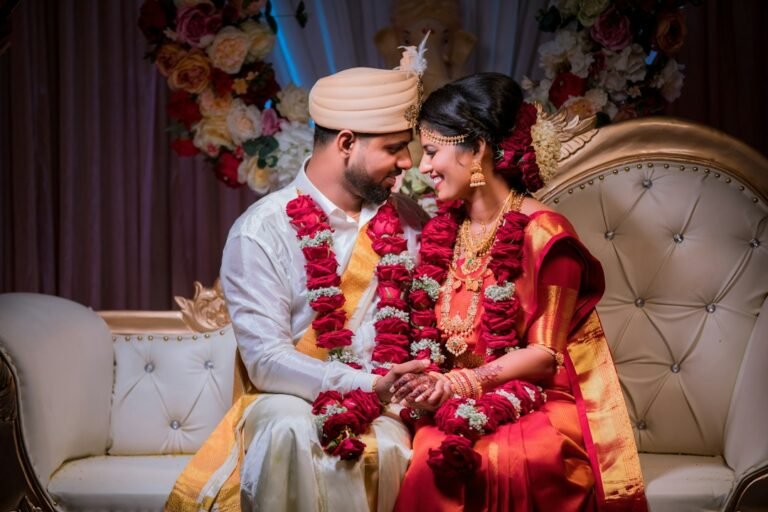
The bride’s parents wash the groom’s feet as a mark of respect. Then the bride and groom exchange garlands three times in Maalai Maatral. Each is lifted onto the shoulders of their uncles or cousins, so the other has to reach high to place the garland. It is noisy, it is fun, and every guest wants a photo of it.
4. Oonjal, the Swing
The couple sit side by side on a decorated swing while married women sing traditional oonjal songs. They are fed milk and banana. Coloured rice balls are circled around them and thrown in the four directions to ward off the evil eye, and the women circle the swing with a lamp and water (a step-by-step note on the South Indian wedding ceremony).
5. Kanyadanam, Giving the Bride's Hand
The bride sits on her father’s lap holding a coconut. The priest recites the family lineages of both sides, and her father places her hand in the groom’s hand. Her mother pours water over their joined hands to give her consent. This is the most emotional moment for the bride’s family.
6. Muhurtham, Tying the Thaali
The groom’s family gives the bride the koorai pudavai, the wedding saree, usually a nine-yard silk. She changes into it and sits on her father’s lap again. At the exact muhurtham time, as the nadaswaram plays the getti melam (a loud, fast drum roll that drowns out any bad omen), the groom ties the thaali (the sacred wedding pendant on a yellow thread) around the bride’s neck.
The groom ties the first knot, and in many families his sister helps tie the rest. Guests shower the couple with akshathai, rice mixed with turmeric, as a blessing.
7. Saptapadi, the Seven Steps
Holding the bride’s hand, the groom leads her around the sacred fire, and she takes seven steps, each with a vow: food, strength, prosperity, happiness, children, long life together and friendship. In Hindu custom, the marriage is complete after the seventh step.
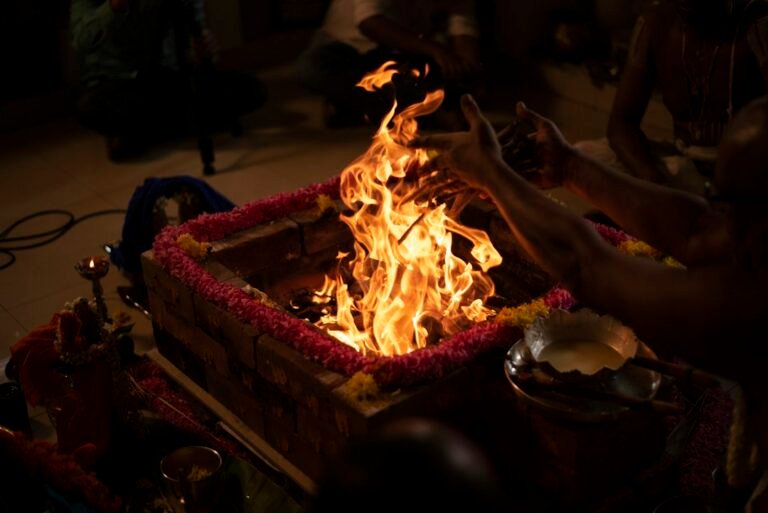
8. Ammi Midhithal and Arundhati Darshanam
The groom places the bride’s right foot on a grinding stone (ammi) and slips toe rings (metti) on her toes. The stone stands for a marriage that stays firm. The couple are then shown the star Arundhati, named after the sage Vasishta’s wife, who is held up as the ideal of a faithful partner.
After the Muhurtham: Nalangu and Grihapravesam
Nalangu, the Wedding Games
In the afternoon, the mood turns light. In Nalangu, the couple play games in front of relatives: rolling a coconut to each other, breaking a papad over each other’s heads, and searching for a ring hidden in a pot of water. In the days of arranged marriages with very short engagements, these games helped two near strangers relax with each other.
Sammandhi Mariyadhai
The two families honour each other with gifts, often clothes for the parents. It is a public way of saying that the two families are now one.
Grihapravesam, Entering the New Home
The bride is welcomed into the groom’s home with an aarti at the door. In many families she steps in with her right foot first and lights the lamp in the pooja room. A few days later, the couple visit the bride’s home for Maruvidu.
Tamil Wedding Rituals at a Glance
| Ritual | When | What it means |
|---|---|---|
|
Nichayathartham |
Weeks or months before |
The families formally agree to the marriage |
|
Pandakkal Muhurtham |
A few days before |
Prayers start the preparations |
|
Vratham and Janavasam |
The day before |
Protective thread tied; the groom is welcomed |
|
Kashi Yatra |
Muhurtham morning |
The groom chooses married life over renunciation |
|
Maalai Maatral and Oonjal |
Muhurtham morning |
Garlands exchanged; blessings on the swing |
|
Kanyadanam |
Muhurtham morning |
The father gives the bride’s hand |
|
Thaali tying |
At the muhurtham |
The marriage is sealed |
|
Saptapadi |
Right after |
Seven vows around the fire |
|
Nalangu and Grihapravesam |
Afternoon and after |
Games, then the bride enters her new home |
Tamil Brahmin Wedding Rituals vs Other Tamil Weddings
Most guides online describe the Iyer and Iyengar (Tamil Brahmin) wedding, which is the most detailed and Vedic in form. Many other Tamil communities follow a shorter wedding with the same heart. The table below shows the general differences. Every family has its own customs, so always ask the elders on both sides.
| Aspect | Tamil Brahmin weddings | Many other Tamil weddings |
|---|---|---|
|
Length |
Two to three days of rituals |
Often one day, with an evening reception |
|
Priest and fire |
Vedic homam, Saptapadi around the fire |
Often temple-style rites; fire rituals vary |
|
Bride’s saree |
Nine-yard madisar for the muhurtham |
Six-yard silk saree, often red or maroon |
|
Who ties the knots |
Groom ties the first, his sister helps with the rest |
Varies by family |
|
Kashi Yatra |
Almost always |
Less common |
What the Bride Wears Through the Rituals
A Tamil bride changes saree several times: one for the Nichayathartham, the koorai pudavai for the muhurtham, and another for the reception. The muhurtham saree is traditionally a heavy silk in red, maroon or another auspicious colour, with a contrasting border and zari. For help choosing, read our guide on how to select silk sarees for a wedding, and see how to drape a silk saree for a wedding.
Conclusion
From the promise at the Nichayathartham to the seven steps around the fire, each Tamil wedding ritual has a clear job: to bring two families together, protect the couple, and mark the moment they become partners. Knowing the order makes the long muhurtham morning easier to follow, and a lot more meaningful.
Looking for a silk saree for a family wedding? Browse our handloom pure silk sarees, or call 9965121353 and we will help you choose.
Frequently Asked Questions (FAQ)
What are the rituals in a Tamil wedding?
The main rituals are Nichayathartham (engagement), Pandakkal Muhurtham, Vratham, Kashi Yatra, Maalai Maatral, Oonjal, Kanyadanam, the thaali tying at the muhurtham, Saptapadi, Nalangu and Grihapravesam. The exact list varies by community and family.
What is Nichayathartham?
Nichayathartham is the formal Tamil engagement. The two families agree to the wedding in front of elders, the wedding date is read out, gifts are exchanged on plates, and the bride receives a silk saree from the groom’s family.
Why are three knots tied in a Tamil wedding?
The three knots of the thaali are commonly explained as standing for the bride’s commitment in thought, word and deed. The groom ties the first knot, and in many families his sister helps tie the rest.
What is the koorai saree?
The koorai pudavai is the wedding saree given to the bride by the groom’s family. She wears it for the thaali tying. Tamil Brahmin brides drape it as a nine-yard madisar.
Why is the muhurtham usually early in the morning?
The muhurtham is picked from the couple’s horoscopes and the panchangam for the most auspicious time. Many such windows fall in the early morning hours, which is why Tamil weddings often start before sunrise.
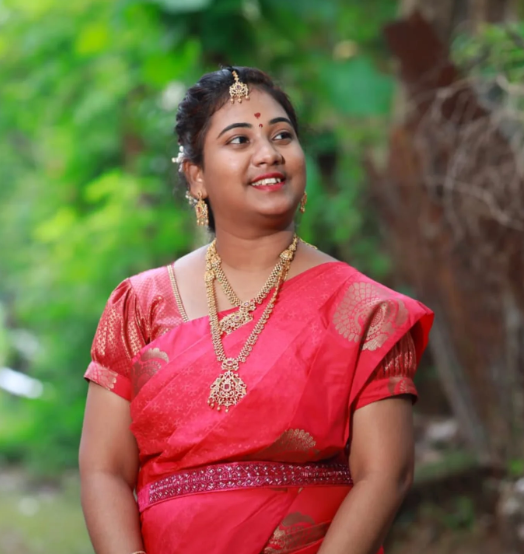
Abirami R – I grew up watching the women in my family drape themselves in vibrant colors, which made me realize that a saree carries both grace and history. With my husband Rajarajan’s encouragement, I turned this fascination into a mission to help you find truly authentic Tamil Nadu weaves. I’ve spent years learning the technical side, like zari weight and thread strength, to protect you from misinformation and help you find pieces worth passing down. My goal is to teach you the soul of the heavy Thirubuvanam silk saree so you can identify a real masterpiece for yourself.



Pingback: Seer Varisai Thattu Items List & Meaning | Varnangal